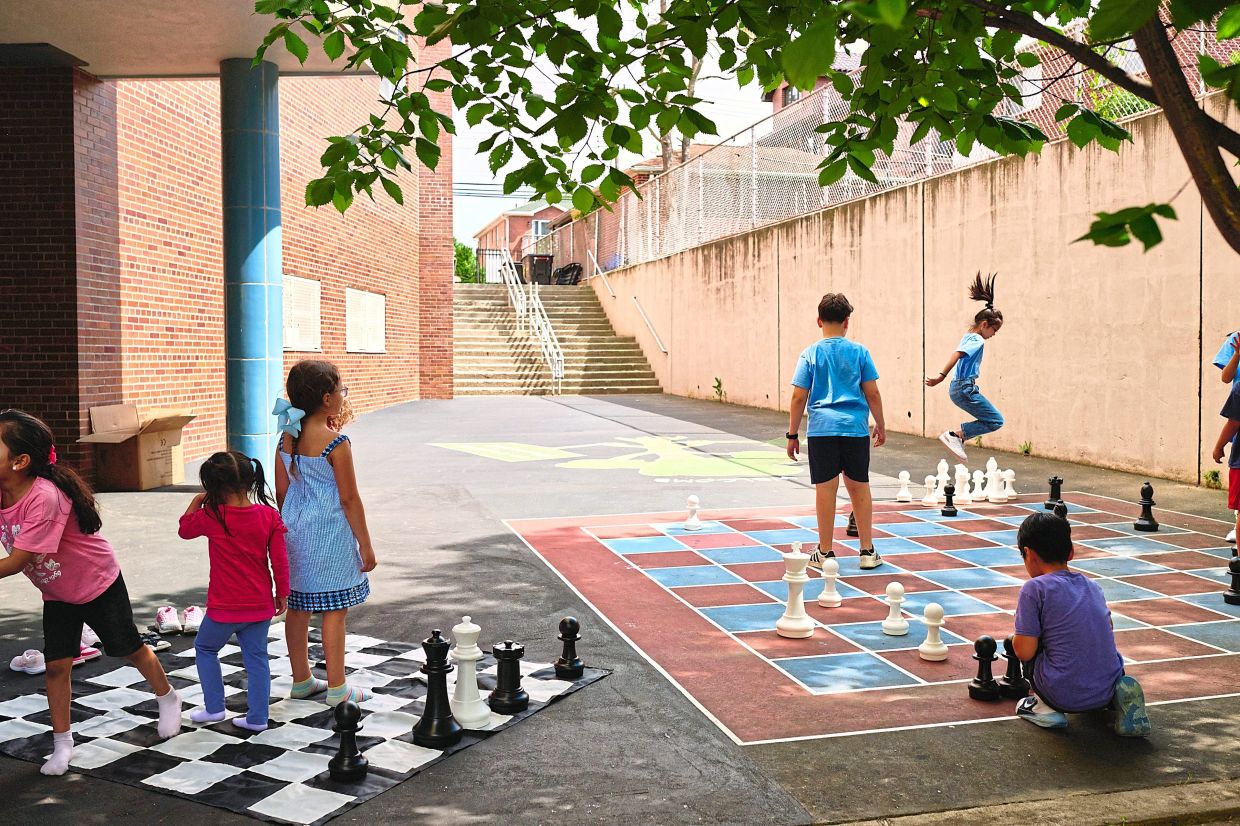
Over the past two decades, thousands of schoolchildren across New York City have undergone a remarkable transformation from passive users of concrete playgrounds to active architects reshaping their own recreational spaces. What began as a single initiative has blossomed into the Community Schoolyards programme, a collaborative effort between the Trust for Public Land, city education authorities, and environmental officials that has fundamentally reimagined how urban spaces can serve young people. The scale is impressive: 225 playgrounds have been rebuilt since 2002, with nearly US$200mil in combined public and private funding breathing new life into what were once dreary, monochromatic asphalt yards. For Malaysian urban planners wrestling with similar challenges of ageing school infrastructure and underutilised public spaces, this model offers compelling insights into participatory urban design.
The methodology underpinning these transformations diverges sharply from top-down approaches typically favoured in many Asian contexts. Rather than having architects and administrators dictate the final product, children undergo a structured design process that mirrors professional landscape architecture. Students begin by articulating their desires—pools, fountains, interactive features—then engage in realistic constraint negotiation as budgets and feasibility become apparent. This isn't simply child's play dressed up as civic participation; it involves genuine measurement, spatial mapping, and iterative feedback loops incorporating teachers, parents, and neighbours. The democratic voting process on final designs ensures multiple stakeholders feel investment in the outcome. Such participatory frameworks could prove particularly valuable in Southeast Asian cities where school communities often feel disconnected from municipal planning processes.
The resulting playgrounds reveal something unexpected: when given agency, children design spaces that are simultaneously whimsical and deeply practical. Theme parks featuring unicorns, dragons, and aliens might seem frivolous, yet each aesthetic choice reflects genuine understanding of how different students use shared spaces. This insight carries significant implications for Malaysian educators and planners. A middle school in Queens, for instance, designed an "introvert's corner" complete with gazebo and vegetation—a deliberate accommodation for students who need respite from social interaction. This demonstrates children's nuanced comprehension of neurodiversity and social anxiety, qualities rarely captured in conventional playground blueprints created by adults making assumptions about normal play patterns.
Gender equity emerges as a particularly striking outcome across multiple installations. At one Bronx facility, female students identified how boys had monopolised the basketball courts, limiting their own participation and confidence. The solution—painting half-courts pink while maintaining traditional blue courts—created psychological safety without explicit exclusion. A girl named Charlotte Lawrence, aged 11, articulated the profound impact: the dedicated space allowed her to "believe in myself because I'm not alone on this court." This spontaneous gender-sensitive design solution illustrates how youth-led planning can surface equity issues invisible to adult-dominated processes. In Malaysia, where educational facilities often reflect outdated assumptions about girls' recreational preferences, such insights could catalyse more inclusive school environments.
The literary and cultural references embedded in these spaces demonstrate how youth design incorporates their contemporary worlds. Students at North Hills School in Queens, inspired by the Harry Potter series, installed two giant painted chessboards enabling life-sized wizarding games. Ayden Chabane explained how scale fundamentally enhanced gameplay: larger pieces became visually distinctive, making strategic thinking more engaging. This integration of pop culture with functional design creates spaces where children see themselves reflected in their environment—a psychological benefit often overlooked in standardised playgrounds. Such culturally resonant design could particularly benefit Southeast Asian schools, where incorporating local folklore, gaming culture, and student interests could boost engagement with shared spaces.
Accessibility considerations also surfaced through youth input in unexpectedly sophisticated ways. When girls gathered to braid hair at a Harlem playground, students identified ergonomic limitations and designed tiered seating with differential heights to accommodate braiding positions. Kassidee Clarke and peers subsequently discovered multiple uses: parkour jumping, impromptu dance stages, imaginative car-playing. This demonstrates how inclusive design generates unexpected benefits—spaces created for one purpose become multipurpose community anchors. The flexibility inherent in youth-designed spaces stands in contrast to rigid, single-function facilities common in developing Asian contexts.
The "floor is lava" themed playground in Brooklyn transforms a basketball court into an elaborate obstacle course landscape, with volcano imagery and lava flows painted around play equipment. The genius lies in how the game mechanics unite disparate social groups. Amia Peoples noted that the accessible jumping-and-skipping game connected her with classmates she hadn't previously befriended, organically breaking down social silos. This social cohesion function—creating informal networks among students—represents an underdeveloped benefit of recreational space design. Malaysian schools struggling with social fragmentation across ethnic or socioeconomic lines might harness similar principles of game-based, visually engaging playground design to foster organic integration.
Nature integration appears throughout these installations, though often through creative rather than conventional approaches. Emanuel Kaplan School students, learning that their Queens neighbourhood had once been woodland, designed mushroom stools with bright red tops and white spots. Six-year-old Jack Henshaw described using them for sequential hopping games, transforming functional seating into kinetic play equipment. Meanwhile, Pacific School students abandoned their initial petting zoo aspirations (goats, donkeys, llamas) for a pollinator garden managed by Team Tomato and enriched through school-wide participation. These nature-focused solutions represent sustainable, lower-maintenance alternatives to ambitious initial designs while maintaining educational value. For Malaysian schools with limited budgets, such pragmatic nature integration—combining play, learning, and ecological benefit—could serve multiple institutional goals simultaneously.
The Community Schoolyards programme's financial model—nearly US$200mil across two decades through government and philanthropic sources—demonstrates the substantial resource commitment required for systemic change. Yet this averaged across 225 projects represents roughly US$890,000 per playground, a figure that encompasses complete renovation of often-substantial areas. For comparison and context relevant to Southeast Asia, this suggests that transformative playground design need not consume prohibitive budgets when approached through participatory planning that maximises community contribution and leverages existing infrastructure. The mixture of public funding and private donations employed in New York could inspire Malaysian philanthropic engagement with educational infrastructure, an underexplored funding avenue.
The year-round, community-serving function of these spaces distinguishes them from conventional school playgrounds. These aren't limited to recess periods or school hours; they've become genuine neighbourhood assets welcoming families and neighbours throughout seasons. This expanded role reflects how thoughtfully designed spaces naturally attract diverse users. For Malaysian urban planners confronting fragmented community spaces and underutilised public infrastructure, the model suggests that involving young people in design generates spaces with inherent social magnetism—places that communities spontaneously gather, organise, and maintain.
Beyond physical transformation, the programme embeds crucial civic education. Students experience democratic participation in real-world decision-making, learn spatial reasoning through mapping and measurement, navigate compromise between ideals and feasibility, and witness their designs become tangible community assets. This comprehensive pedagogical benefit—combining civics, mathematics, environmental awareness, and social-emotional learning—rarely features in traditional curricula. Malaysian educators increasingly recognise that meaningful learning transcends classroom walls; participatory playground design offers an exemplary model integrating multiple learning domains through authentic community engagement.
The implications for Southeast Asian cities extend beyond playgrounds. This approach—positioning young people as design collaborators rather than passive recipients—could revolutionise how cities approach public infrastructure broadly. From transport hubs to community centres, youth perspectives offer distinctive insights into functionality, safety, and inclusive design. The New York programme demonstrates that such participation needn't be tokenistic; genuine youth agency in design produces measurably better outcomes and stronger community attachment. As Malaysian cities pursue smart city initiatives and sustainable urban development, centering young people's voices in shaping the spaces they inhabit represents both an equity imperative and a practical pathway toward more humane, functional, and beloved public infrastructure.

