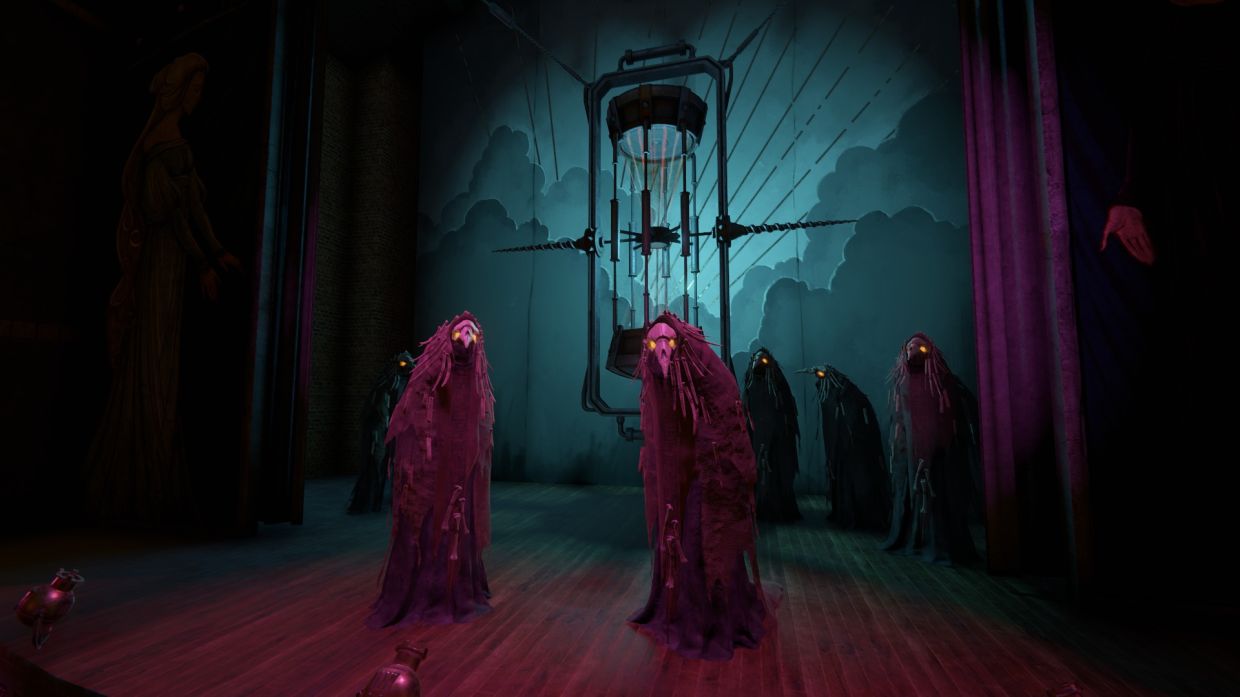
The debate over what video games should accomplish has shifted in recent years, with many players and creators questioning whether digital entertainment must always comfort and reward. A new philosophy emerging from independent developers suggests the opposite: that games possess a unique capacity to make players profoundly uncomfortable, and that this discomfort serves a vital artistic purpose. Russian studio Ice-Pick Lodge, under the creative direction of Alexandra Golubeva and other visionary designers, has embraced this challenging aesthetic to create experiences that linger far longer than typical commercial releases.
Golubeva and her collaborators craft narratives set in alternative historical timelines, such as an early 20th century world wracked by plague and social collapse. These settings provide more than mere backdrop; they establish a tone of inevitable loss and moral ambiguity that permeates every interaction. The worlds feel deliberately sparse and artificial, with townspeople rendered from limited character models and recycled animations. Rather than viewing this limitation as a shortcoming, the developers weaponise the aesthetic repetition itself, creating an unsettling sameness that mirrors the dehumanisation of crisis and desperation. This approach echoes the deliberate minimalism employed by other mediums—the bare-set theatricality that filmmaker Lars von Trier has used to amplify emotional intensity rather than diminish it.
What distinguishes these games from mainstream narratives is their fundamental refusal to coddle players. From the outset, players encounter dialogue emphasising the inevitability of failure: judges intone that great dreams dissolve into dust when opportunity passes, whilst theatre directors suggest that genuine artistic expression should leave audiences traumatised. The games then systematically burden players with impossible choices—save lives whilst managing scarce resources, investigate supernatural mysteries without complete information, and navigate social interactions where every dialogue option carries potential consequences. Characters pursue their own agendas independently, frequently deceiving the player and subverting expectations about who can be trusted or helped.
The mechanical design reinforces this philosophy of discomfort. Players gain access to time manipulation and save-file loading, seemingly standard quality-of-life features in modern gaming, but these abilities come tethered to limited in-game resources. Exhaust your temporal currency and progression halts entirely. Certain quests deliberately erase save files, eliminating the traditional safety net that video games have offered since the 1980s. This design choice transforms failure from a temporary setback into something consequential and permanent, mirroring how actual human lives unfold with irreversible decisions and missed opportunities.
Golubeva articulates a philosophical position that positions discomfort as therapeutic rather than punitive. She argues that video games represent a perfect medium for deliberate psychological destabilisation, offering something increasingly rare in contemporary media consumption. Where platforms like TikTok and many modern games construct engagement around thirty-second loops designed to stimulate constant dopamine hits, Ice-Pick Lodge's approach inverts this entirely. By immersing players in jarring, emotionally demanding experiences, these games paradoxically function as counterweights to everyday digital overstimulation. The argument holds particular resonance in Southeast Asia, where mobile gaming dominates and quick-consumption media shapes leisure habits for millions.
Other industry voices support this counterintuitive approach. Gabriel Winslow-Yost, a contributor to gaming criticism, contends that video games possess direct access to negative emotional states that other artistic mediums struggle to activate as effectively. A film viewer experiences tragedy passively; a novel reader contemplates conflict from distance. But a player inhabiting a game avatar must actively participate in failure, making choices that lead to suffering. This participatory dimension transforms emotional experience into something uniquely potent and memorable.
Alexander Souslov, who leads design decisions at Ice-Pick Lodge, frames failure as an essential component of human experience that games uniquely capture and dramatise. In conventional life, people encounter setbacks constantly yet typically recontextualise them as learning opportunities or temporary obstacles. Video games traditionally mirrored this optimistic framing—restart, learn, overcome. But by removing or severely limiting recovery mechanisms, and by tying consequences to permanent loss, these designers force players to sit with genuine failure rather than immediately transcend it. The distinction proves crucial: players don't simply experience their avatar's failure as external challenge; they internalise the loss as personal.
This psychological investment explains why such games generate intense emotional responses despite their sparse presentation. A player whose character starves due to poor resource management doesn't blame the game; they blame themselves for insufficient planning, for moral compromises, for choices that seemed reasonable at the time. The game creates space for self-reflection and accountability that most entertainment deliberately avoids. This mirrors how literature and theatre function at their most powerful—not through spectacular presentation but through forcing audiences to confront their own complicity and limitations.
The philosophy extends to how these games treat player agency and consequence. Rather than offering a false sense of freedom through branching paths that ultimately converge, Ice-Pick Lodge's narratives acknowledge that meaningful choice requires real stakes. A player cannot simultaneously save everyone, pursue every mystery, and maintain moral purity. The games refuse to allow that fantasy. Instead, they create situations where thoughtful, well-intentioned decisions still produce suffering. This reflects actual ethical reality more honestly than most narrative art—the recognition that many situations contain no correct answer, only degrees of acceptable loss.
For Southeast Asian players accustomed to games emphasising progression, achievement, and reward systems, such experiences present a stark alternative. The region's gaming culture has traditionally favoured action-heavy titles, competitive multiplayer experiences, and mobile games structured around continuous reward loops. Ice-Pick Lodge's narrative approach suggests a different possibility: that games can function as artistic tools exploring human limitation and failure with the same seriousness that literature, theatre, and film have historically commanded. These games demand patience, emotional resilience, and willingness to sit with discomfort rather than overcome it.
Golubeva's rhetorical question about failure as power fantasy reveals the inversion at these games' heart. Rather than fantasising about overcoming obstacles, players fantasise about surviving complete collapse and catastrophe. The power lies not in victory but in continuing to make meaningful choices whilst drowning. This reframes what games can offer beyond entertainment: they become spaces for moral rehearsal, emotional education, and confrontation with human fragility. In pressing players toward absolute failure and then asking them to proceed anyway, these designers suggest that acknowledging limitation and loss constitutes its own form of triumph.

