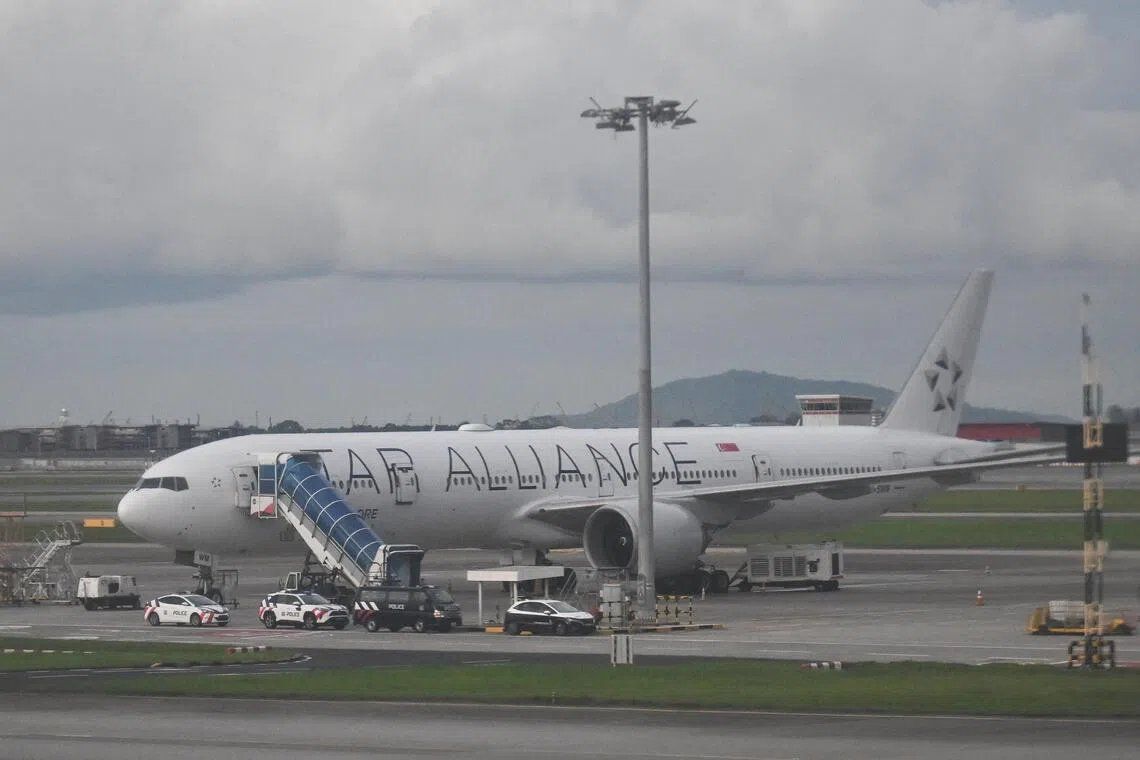
Linda Kitchen, a 74-year-old widow from Britain, has commenced legal proceedings at the High Court seeking compensation from Singapore Airlines following the death of her husband and the serious injuries she sustained during a catastrophic turbulence event aboard Flight SQ321 in May 2024. The case has renewed international scrutiny into aviation safety protocols and the airline's emergency response capabilities during one of the most severe in-flight incidents in recent memory.
The flight, carrying 211 passengers and 18 crew members from London to Singapore, encountered extreme weather conditions whilst crossing airspace over Myanmar on May 21, 2024. The aircraft experienced a dramatic vertical plunge exceeding 54 metres within a five-second timeframe, an occurrence so sudden and violent that it caught crew and passengers completely unprepared. The incident occurred without warning during what should have been a routine breakfast service, transforming an ordinary morning into a traumatic emergency that would claim at least one life and injure dozens of others.
Geoffrey Kitchen, 79, a theatre director with whom Linda had shared 52 years of marriage, suffered a fatal heart attack during the descent. Eyewitness accounts describe how the sudden plunge threw passengers and loose objects throughout the cabin with tremendous force. During the violent motion, Geoffrey fell directly onto his wife, crushing her into the armrest with such severity that she sustained critical spinal injuries requiring extended hospitalisation. Other passengers intervened to separate them, and a medical professional travelling on board immediately began cardiopulmonary resuscitation in a desperate attempt to save his life.
The aircraft was immediately diverted to Suvarnabhumi Airport in Bangkok, Thailand, where it made an emergency landing. The scale of medical emergencies became apparent as rescue teams found that 79 individuals aboard required urgent medical attention. Linda Kitchen spent ten days in Thai medical facilities before being airlifted back to the United Kingdom, where she endured additional hospitalisation and required substantial ongoing care at her Bristol home. The couple had been embarking on an extended six-week holiday encompassing Singapore, Indonesia, and Australia when the tragedy unfolded.
Kitchen did not learn of her husband's death until two days after the incident, a delay that compounded the psychological trauma of her physical injuries and the chaos of separation during the emergency. In testimony reported by British media outlets, she described the anguish of being unaware of her husband's fate whilst recovering from severe pain, stating that the journey back to the United Kingdom remained largely a blur due to her condition. She characterised the period following her discharge as requiring intensive domestic support, highlighting the long-term impact that the incident has had on her quality of life and independence.
Anthe Korelidou, a specialist aviation lawyer representing Kitchen and her family, has framed the High Court proceedings as essential to obtaining transparency about the circumstances that allowed the tragedy to occur. The legal representative emphasised that more than two years after Geoffrey's death, fundamental questions remain unanswered about what could have been done to mitigate the consequences of the severe turbulence. Korelidou stated that the family's primary objective is securing thorough investigations that will provide the answers that Geoffrey's loved ones deserve, suggesting that accountability and prevention of future incidents are the driving motivations behind the legal action.
The case extends beyond Kitchen's claims. Court filings indicate that at least seven additional passengers have initiated separate legal actions against Singapore Airlines, including Bradley Richards, Jack Jenkins, Hannah Fullerton, Andrew Dawood, Bryan Matthews, and the couple Pauline and Michael Rainey. This collective legal response signals a broader assessment among those affected that the airline bears responsibility for failings that contributed to or exacerbated the injuries sustained during the incident.
Singapore Airlines has responded to the crisis through a comprehensive compensation programme, offering US$10,000 to passengers who sustained minor injuries and advance payments of US$25,000 for those experiencing serious injuries requiring ongoing medical intervention. The airline has also committed to refunding airfares for all passengers aboard the flight and issued a formal apology expressing sincere regrets for the traumatic experience endured by passengers and crew. However, these measures have not deterred legal action from those seeking greater accountability and more substantial redress for their suffering.
Investigations conducted by Singapore's Transport Safety Investigation Bureau have provided partial explanations for the incident. The TSIB determined that storm clouds responsible for generating the severe turbulence likely evaded detection by the aircraft's on-board weather radar system, thereby surprising the captain and preventing any opportunity for advance warning or evasive action. Nevertheless, the investigation remains inconclusive regarding whether the weather radar system itself experienced technical malfunctions that might have contributed to the undetected threat. This uncertainty has fuelled concerns within the aviation community and among affected passengers about potential systemic vulnerabilities in aircraft instrumentation and safety protocols.
The legal action by Kitchen and other survivors represents a significant development in holding airlines accountable for passenger safety during extraordinary circumstances. For Malaysian and Southeast Asian aviation stakeholders, the case underscores the importance of rigorous maintenance standards, investment in advanced weather detection systems, and transparent accident investigation procedures. The incident also raises questions about international standards for crew training and emergency response protocols, areas where regional aviation authorities may need to reassess current regulations and best practices.
The broader implications of this case extend to regional airlines and aviation regulators throughout Southeast Asia, where tropical weather patterns and sudden atmospheric disturbances present recurring challenges. The fact that weather radar systems can fail to detect severe weather phenomena suggests potential vulnerabilities in equipment certification and maintenance procedures that deserve scrutiny across the industry. As Singapore Airlines navigates the legal consequences of the May 2024 incident, its responses will likely influence how regional carriers approach similar challenges and liabilities.

