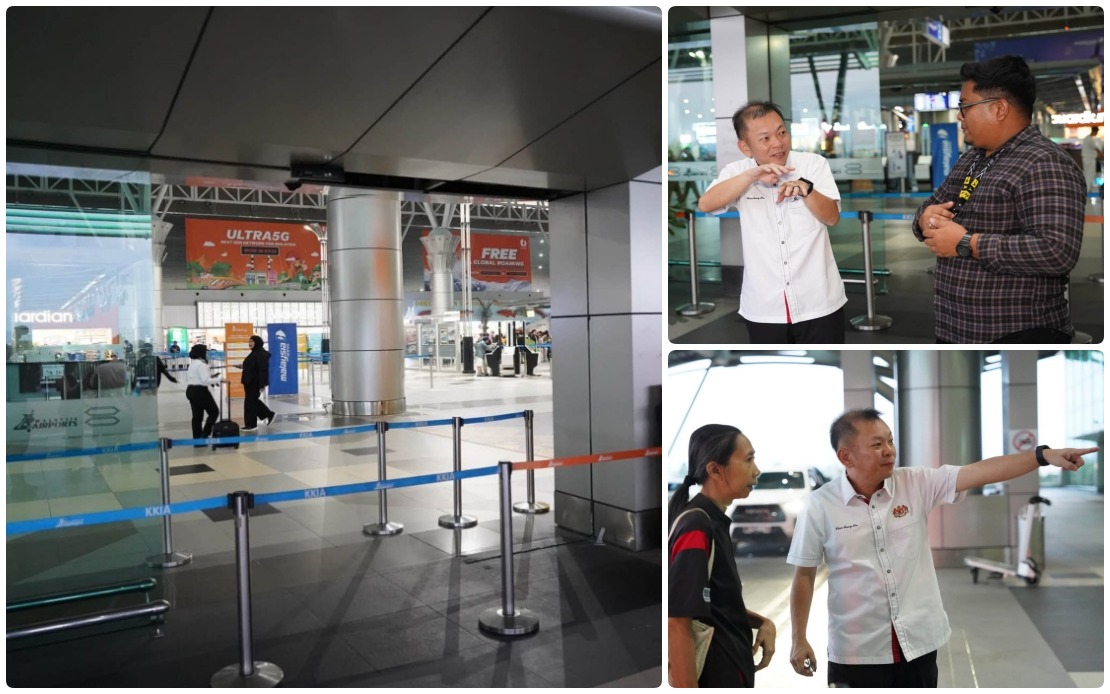
A woman driver was taken to hospital with minor injuries after her sports utility vehicle veered out of control and crashed into the glass entrance doors of the departure hall at Kota Kinabalu International Airport on Wednesday afternoon. The accident occurred at approximately 4:20 pm on Level 3 of the terminal's kerbside entrance, causing the glass door structures to shatter and inflicting severe damage to the front of the vehicle. Fortunately, no other passengers or airport staff members sustained injuries in the collision, though the impact left visible damage to the terminal's entry point.
The Kota Kinabalu District Police Chief ACP Shahrudin Mat Husain confirmed the incident and indicated that investigations are continuing to establish the precise circumstances that led to the vehicle's loss of control. Police have not yet released preliminary findings regarding whether mechanical failure, driver error, or other factors contributed to the crash. The investigation will likely examine whether the driver experienced a medical episode, whether visibility or road conditions played a role, or whether any mechanical defect in the vehicle caused the loss of traction.
Malaysia Airports, which operates the facility, moved quickly to manage the situation and minimize disruption to passenger flow. Aviation Security and Customer Service personnel responded immediately upon learning of the collision and coordinated medical assistance for the injured driver. The vehicle and associated debris were fully cleared from the departure hall entrance by 6:00 pm, demonstrating efficient emergency response procedures. Repair works on the damaged entrance doors commenced that evening, with the airport operator committing to restoring the facility to full operational status in the coming days.
Despite the dramatic nature of the incident, airport operations proceeded without interruption throughout the afternoon and evening. Malaysia Airports confirmed in an official statement that the crash did not affect the broader functioning of Kota Kinabalu International Airport or compromise passenger movement through other entry and exit points. Alternative automatic doors at the departure hall entrance remained fully operational, allowing travellers to continue checking in for their flights without significant delays or congestion. This operational resilience reflects the terminal's design, which incorporates multiple access points to manage visitor flow during peak hours.
Deputy Minister of Agriculture and Food Security Datuk Chan Foong Hin, who was present at the airport having just arrived for a commitment, publicly praised the airport management and staff for their swift and coordinated response. Speaking through a social media post, he commended the efficiency with which the situation was contained and the affected area secured, emphasizing that such incidents underscore the importance of well-trained personnel and rapid response protocols. His remarks reflected satisfaction that despite the initial shock of a vehicle crashing through a main entrance, the incident was managed without escalating into a more serious situation that might have jeopardized passenger safety.
The incident has been referred to the Royal Malaysia Police for full investigation, with Malaysia Airports pledging complete cooperation with law enforcement authorities. The police investigation will establish the cause of the loss of control and determine whether any charges or citations are warranted. This collaborative approach between airport authorities and the relevant law enforcement agency ensures that findings will inform any necessary policy adjustments or infrastructure improvements to prevent similar occurrences in the future.
Such incidents at major airport terminals, while uncommon, raise questions about vehicular access control and barrier systems at airport kerbs. Kota Kinabalu International Airport, like most regional aviation hubs in Malaysia, manages a significant daily volume of arriving and departing passengers, with numerous vehicles regularly navigating the drop-off and pick-up zones. The crash occurred in a high-traffic area where concentration lapses or mechanical failures can have immediate consequences, as this incident demonstrates.
From a broader perspective, this accident highlights the importance of robust emergency response systems at critical infrastructure sites. Airports serve as busy public spaces where hundreds of people gather throughout the day, and any incident that could potentially endanger public safety demands swift action. The quick response from aviation security, customer service, and medical personnel, coupled with the operational flexibility demonstrated by the airport's management, suggests that Kota Kinabalu International Airport maintains adequate emergency preparedness protocols.
The incident also underscores the ongoing importance of vehicle safety standards and driver awareness at airport facilities. Airport kerbs and entrance zones are high-risk areas where pedestrians, luggage handlers, and passengers congregate, making vehicle control paramount. Both individual driver responsibility and infrastructure design play roles in preventing such collisions. Malaysia Airports and other regional airport operators may review whether additional safety measures, such as reinforced barriers or modified entrance design, could further reduce the risk of vehicles breaching secure areas.
As the investigation proceeds, the focus will likely extend to understanding any systemic factors that could have prevented the crash. Whether the driver was distracted, experiencing a medical emergency, or encountered a mechanical failure will shape the recommendations emerging from the police inquiry. Airport management may also conduct an internal review to assess whether any operational or design modifications could enhance safety for the thousands of daily users of Kota Kinabalu International Airport's departure and arrival facilities.

