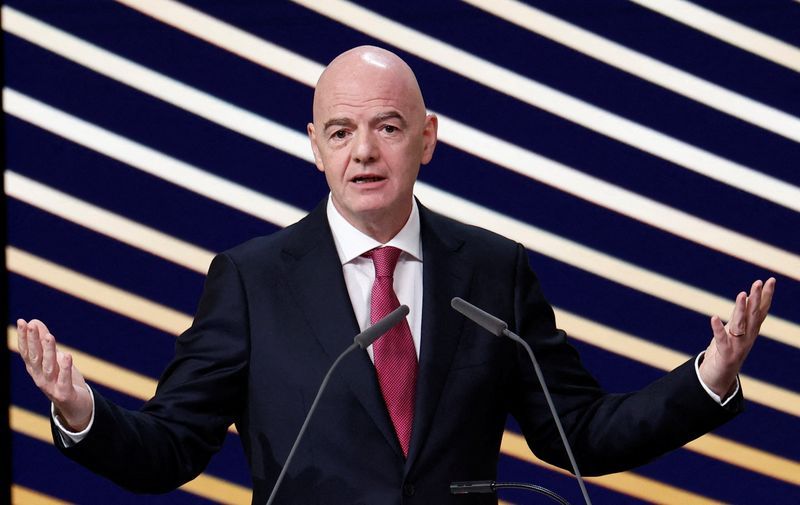
The governance crisis engulfing FIFA has unexpectedly thrust female administrators to the forefront of institutional challenge, with two women emerging as vocal critics of President Gianni Infantino's leadership during his most precarious period in power. Laura McAllister of Wales and Lise Klaveness of Norway, both serving on UEFA's executive committee, have galvanised opposition to Infantino's ill-fated FIFA Football Enterprises initiative, a private equity-backed scheme that collapsed under sustained pressure from regional governing bodies across Europe and beyond.
The implosion of Infantino's flagship project has catalysed wider questioning about the sport's fundamental governance structures and, intriguingly, opened a parallel conversation about whether football might finally be ready to elect a woman to its highest office. McAllister, who holds the position of UEFA vice-president, has publicly mused about the possibility while simultaneously cautioning against simplistic assumptions about merit-based advancement in global football politics. Her comments reflect a pragmatic understanding that institutional barriers in sport remain formidable, despite growing momentum for reform in other sectors.
Infantino's troubles intensified when Wales became the first national association to withdraw support for his re-election bid, with dissent rapidly spreading through FIFA's internal structures and regional confederations. An emergency summit scheduled in Morocco underscored the severity of the institutional turbulence. McAllister's proposal for a UEFA-wide boycott of FIFA events garnered unanimous backing at an emergency meeting last week, demonstrating the unprecedented unity mobilised against the incumbent president's agenda and signalling potential fractures that could fundamentally reshape global football governance.
When former FIFA President Sepp Blatter publicly endorsed Klaveness this week, declaring that football governance should embrace female leadership, the remarks provided external validation to the emerging movement. Yet McAllister's scepticism about the path forward reveals sophisticated understanding of how institutional power operates within international sports bureaucracies. She stressed that football's decision-making machinery remains fundamentally shaped by geopolitical considerations and entrenched interests that transcend individual qualification or competence. Advancement of women leaders, in her assessment, cannot rely on straightforward meritocratic principles but instead requires sustained institutional transformation alongside cultural shifts in how football addresses governance more broadly.
The crisis extends far beyond the private equity dispute, reflecting accumulating erosion of trust in Infantino's stewardship. McAllister identified multiple systemic failures that have compounded concerns about FIFA's direction: the federation's controversial entanglement with the failed European Super League project, governance controversies surrounding World Cup decision-making, and a particularly troubling instance in which FIFA rescinded a red card decision after political pressure from the United States, following Donald Trump's direct intervention with Infantino. These episodes collectively illustrate how FIFA has become vulnerable to political interference and commercial pressures that compromise the integrity of competition and democratic processes within the sport.
For McAllister and Klaveness, the institutional revolt transcends procedural objections to Infantino's leadership style. Both women bring distinctive perspectives shaped by careers as international players in the women's game before transitioning into governance roles. McAllister, trained as a political scientist, and Klaveness, a qualified lawyer, have grounded their opposition in fundamental questions about football's social purpose and values. They argue that the sport exists fundamentally for universal participation from grassroots through elite levels, spanning both genders and reaching every geographic corner of the world regardless of economic development status. From this perspective, FIFA's apparent willingness to allow private capital and state interests to influence governance structures represents an existential threat to football's democratic essence.
The women's prominence in the resistance movement also highlights a broader pattern within the global sport: female leaders, perhaps less enmeshed in football's traditional commercial and political networks, tend to prioritise questions of institutional legitimacy and values preservation. McAllister suggested that women in governance often maintain clearer focus on what football fundamentally represents rather than becoming absorbed in commercial machinations. This distinction could prove consequential as football confronts whether its future will be shaped primarily by financial interests or by commitment to the sport's foundational principles of universal access and democratic administration.
However, the pathway toward female leadership within FIFA remains structurally constrained. Among FIFA's 211 member associations, merely ten are headed by female presidents, including Klaveness in Norway. Any serious presidential challenge would require constructing support networks extending well beyond UEFA's European base, necessitating mobilisation of associations from Africa, Asia, South America and other regions. McAllister has explicitly rejected the notion of forcing accelerated change, preferring instead a measured strategy of gradual momentum-building that sustains long-term institutional shifts rather than attempting revolutionary transformation that might provoke backlash and entrench resistance to female leadership advancement.
Comparative analysis with other major sports organisations underscores football's relative institutional backwardness regarding gender equity in leadership. Michael Payne, formerly the International Olympic Committee's marketing director, contrasted FIFA's trajectory with the IOC's pioneering commitment to gender balance. The Olympic movement has championed women's advancement in leadership for two decades and now features equal gender representation among competing athletes. By contrast, the FIFA World Cup remains starkly unequal in competitive opportunities and investment between men's and women's tournaments, reflecting deeper governance disparities.
The timing of this governance crisis and the prominent role of female leaders may ultimately prove consequential for global football's future direction. McAllister's emphasis on incremental progress rather than revolutionary rupture suggests a strategic recognition that sustainable institutional change requires building consensus across diverse global constituencies. Yet the very emergence of McAllister and Klaveness as credible alternative voices to Infantino's authority demonstrates that football's leadership structures are becoming permeable to challenge from unexpected quarters. Whether this governance turbulence catalyses genuine transformation toward more inclusive leadership or merely represents cyclical institutional turbulence remains uncertain, but the conversation itself marks a significant departure from football's historical insularity regarding gender representation in senior decision-making.
For Southeast Asian football stakeholders, these governance developments carry particular significance. Regional associations have generally deferred to European and FIFA's established hierarchies, yet the current crisis presents opportunities for non-European voices to shape institutional reforms. Should the Infantino challenge succeed and alternative leadership emerge, regional confederations could potentially exercise greater influence over governance priorities and resource allocation. The advancement of female leaders within global football governance could similarly incentivise parallel changes within Southeast Asian football structures, potentially unlocking talent pools and governance perspectives currently marginalised within national and regional football associations.

