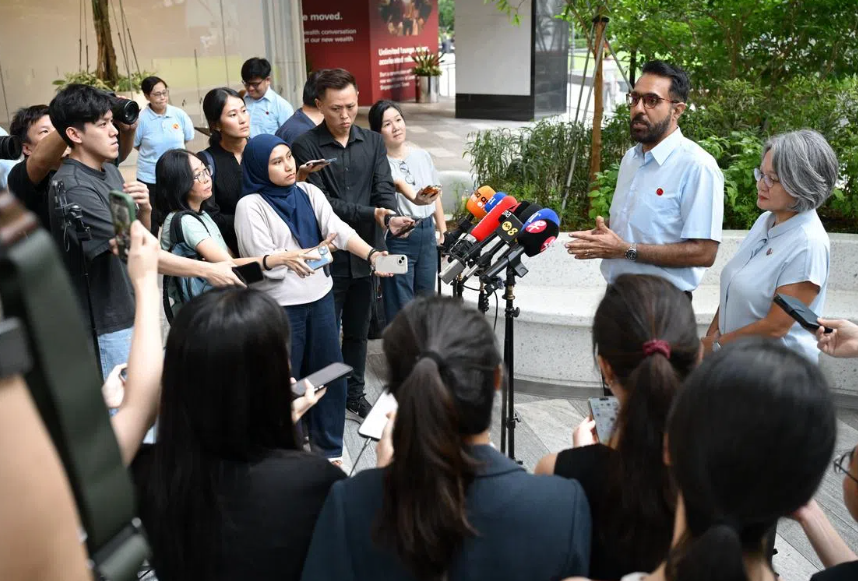
Singapore's opposition Workers Party has decisively settled its leadership turmoil by rallying behind Secretary-General Pritam Singh following his conviction for misleading Parliament over the Raeesah Khan fabrication scandal. After two meetings spanning nearly six hours on June 28, Singh secured overwhelming support from party cadres, surviving a vote of no confidence with a supermajority before returning unopposed as party chief. The clear backing, with 82 of 106 eligible cadres voting in his favour, marks the definitive end to months of internal uncertainty that have shadowed the party since 2021.
The crisis that prompted Sunday's confrontation originated when former Sengkang GRC Member of Parliament Raeesah Khan made a false statement in Parliament regarding alleged police mistreatment of a sexual assault victim. Parliamentary investigations determined that Singh had known about Khan's fabrication yet allowed her misstatement to persist without immediate correction. Charged and convicted of lying to Parliament, Singh saw his guilty verdict upheld by Singapore's High Court in December 2025 on appeal. The conviction triggered a parliamentary motion declaring him unsuitable to remain as Leader of the Opposition, leading Prime Minister Lawrence Wong to formally remove him from that specific position, though he retained his secretary-general role.
What made Sunday's internal party proceedings particularly significant was the organised challenge mounted by dissident cadres who had hoped to use the special conference to hold Singh accountable for his actions. This faction had successfully triggered the meeting by petition and spent weeks lobbying for a challenger to contest his leadership position. However, their effort ultimately foundered when no credible alternative candidate emerged willing to stand against him. The internal questioning that did occur proved less confrontational than anticipated, with several speakers actually voicing support for Singh rather than pursuing the inquisition the dissidents had envisioned. The supermajority support that followed made clear that the party's grassroots membership, despite reservations some may harbour, preferred unity over destabilisation.
The endorsement from Low Thia Khiang, the architect of modern Workers Party and former party chief, proved particularly symbolically important in securing Singh's position. When asked by journalists ahead of the vote, Low publicly affirmed his continued backing of Singh, lending his considerable institutional authority to the reaffirmation. This gesture from one of Singapore's most respected opposition figures signalled to rank-and-file members that senior party leadership remained united. The unified front also served to prevent the kind of damaging public infighting that has plagued numerous opposition parties in democracies across Southeast Asia and beyond, where leadership crises frequently spiral into protracted internal wars that erode voter confidence.
Although the party's formal disciplinary processes found Singh had violated party constitutional provisions, the leadership's response—a letter of reprimand from the top governing body—has been widely characterised as lenient. Critics have noted the disparity between the gravity of the misconduct and the mildness of the sanction, suggesting the party hierarchy prioritised preserving leadership cohesion over enforcing stricter accountability measures. This calculation reflects a tactical choice to move past the scandal quickly rather than prolong internal recriminations. For some observers, the measured discipline raises uncomfortable questions about whether institutional loyalty has superseded the principle of consequence, potentially sending a message that serious infractions can be absorbed if the offender commands sufficient internal support.
The Workers Party now faces the complex task of rebuilding public confidence while capitalising on recent electoral momentum. The May 2025 general election, held after Singh's initial conviction but while legal appeals were ongoing, paradoxically yielded positive results for the party. Beyond consolidating its existing constituencies, the Workers Party expanded its parliamentary footprint by securing two Non-Constituency Member Parliament seats, suggesting portions of the electorate have already discounted or forgiven the scandal. This performance provides party strategists with evidence that voter judgment has not been overwhelmingly negative, even if the episode remains politically sensitive.
Nevertheless, the question of whether the Workers Party can effectively appeal to middle-ground voters—a crucial demographic for opposition parties seeking to expand beyond their core base—remains unresolved. Many pragmatic Singaporean voters remain willing to overlook personal or character flaws if they believe a politician or party serves their economic and policy interests. For the Workers Party's base of supporters, Singh's legal troubles are often filtered through an explicitly political lens rather than viewed as matters of abstract principle. However, middle-ground voters who lack deep partisan commitment may prove less forgiving, viewing a sitting opposition leader's conviction for parliamentary dishonesty as disqualifying regardless of party rank-closing.
Party chair Sylvia Lim has signalled that leadership renewal ranks among the Workers Party's strategic priorities going forward. In acknowledging her own 23-year tenure as chair, Lim indicated that the party consciously recognises the necessity of developing new leaders capable of shouldering senior responsibilities. This emphasis on succession planning reflects awareness that overconcentration of power and responsibility in individuals carries institutional risk. Yet the very fact that Singh faced no viable challenger and emerged essentially unopposed also indicates the party currently lacks figures with sufficient public stature and parliamentary depth to credibly contest the top position, a constraint that limits democratic contestation within the party structure.
When asked directly about criticism that the Workers Party was now being led by a convicted liar, Singh deflected to his website and stated his position remained consistent with parliamentary statements he had previously made. This defensive response, rather than engaging substantively with the legitimacy of public concern, likely reinforced perceptions among some voters that the party prioritises political survival over principled accountability. The unwillingness to engage deeply with the reputational damage suggests potential vulnerability on this issue during future electoral campaigns, particularly when contesting seats held by People's Action Party candidates who can point to Singh's conviction as a liability.
The Workers Party's current structural advantage—operating as the political underdog against the dominant People's Action Party and thus receiving proportionally less voter scrutiny—provides some insulation from the full consequences of the Raeesah Khan scandal. Voters often apply different standards to opposition and ruling parties, expecting higher ethical standards from those already in power while extending somewhat more charitable interpretations to challengers. This dynamic works to the Workers Party's benefit in the immediate term, allowing Singh to consolidate his position despite his conviction. However, should the party's electoral fortunes improve substantially in future contests, voters may increasingly apply more exacting standards to opposition figures and demand higher accountability thresholds.
The resolution of the Raeesah Khan saga within party structures marks a crucial turning point for Workers Party strategy. With internal leadership stability restored and the threat of destabilising public infighting averted, the party can redirect attention and resources toward parliamentary performance, policy development, and expanding its electoral base. Singh can now focus on establishing a record of effective opposition scrutiny and constructive alternative governance proposals without the distraction of internal leadership challenges. However, whether this party unity translates into sustainable middle-ground voter appeal will depend on whether the Workers Party can demonstrate that backing Singh represents a judgment about his parliamentary value rather than a choice to subordinate principle to political convenience.

