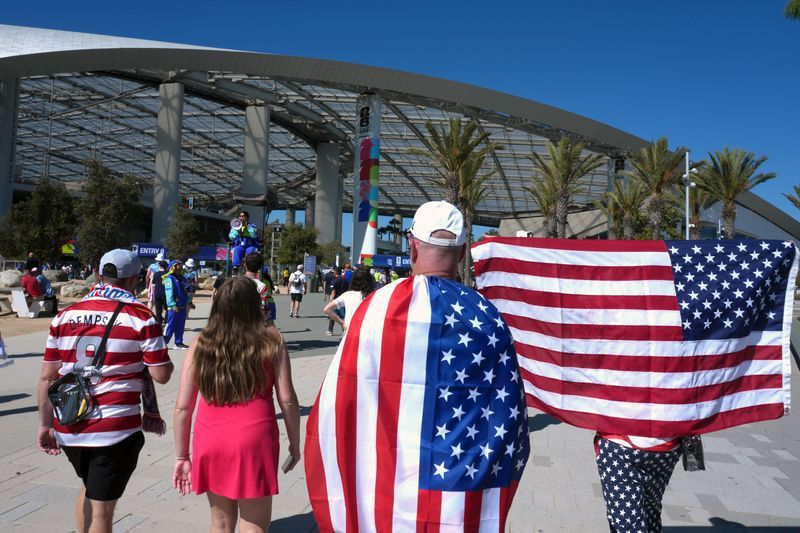
The festive promise of witnessing international football's greatest spectacle dissolved into disappointment for countless fans when the secondary ticket marketplace StubHub cancelled orders without notice, mere hours before kickoff. Jeremy Wright had gifted his wife Sarah tickets to the Netherlands versus Japan match scheduled for June 14, a carefully planned Christmas present purchased nearly a year in advance. The couple's 250-kilometre journey from Austin to Dallas ended not in celebration at their Dallas hotel but in a car journey back home through rain after StubHub's support system offered only refunds instead of promised replacement seats.
The Wright family represents merely the visible surface of a much larger problem rippling through the FIFA World Cup 2026 ticketing ecosystem. Multiple fans across the United States have vented their frustrations on social media platforms following similar experiences where StubHub's "FanProtect Guarantee" proved hollow when delivery failures materialized. Dacy Gillespie, who had surprised her two sons with tickets to Argentina's June 16 clash against Algeria, discovered via email on match day that sellers could not deliver her four seats. Like the Wrights, she had invested substantial travel costs and emotional investment in the experience, making the cancellation far more damaging than a simple refund could remedy.
StubHub operates as a resale-only marketplace, a critical distinction that defines both its business model and its limitations. The platform does not hold inventory directly or control pricing mechanisms; instead, it functions as an intermediary connecting buyers with secondary market sellers. When delivery failures occur, the company attributes these to seller issues rather than platform deficiencies. Company representatives have pointed toward FIFA's ticketing infrastructure as a contributing factor affecting ticket transfers across all resale platforms, creating a blame-shifting dynamic between the two organizations.
FIFA, however, has pushed back forcefully against such suggestions, defending its official ticketing system as reliable and operating at scale. The world football governing body has consistently urged fans to utilize only its sanctioned resale platform, citing superior security guarantees and proper delivery assurances. Yet FIFA's platform carries a significant financial barrier: a 30 percent commission charged on all secondary market transactions, making tickets substantially more expensive than alternatives. This pricing structure, while FIFA claims aligns with industry standards across North America, has driven price-conscious fans toward cheaper resale platforms like StubHub despite the associated risks.
Underlying these operational failures sits a problematic practice known as speculative ticketing, where sellers list inventory they do not yet possess, betting they can purchase the same tickets at lower prices from other sellers and pocket the margin. Scott Friedman, a ticketing expert with professional experience in the sports industry, explains that this mechanism mirrors stock market short-selling. Sellers gamble that prices will decrease between when they list tickets and when they must acquire them for delivery. World Cup ticket dynamics, however, inverted this expectation entirely—prices climbed steadily as the tournament approached, leaving speculators trapped. Unable to purchase replacement inventory without absorbing crushing losses, many simply defaulted on their sales obligations.
StubHub's official policies explicitly prohibit speculative ticketing practices, yet the platform's operational structure facilitates the very behavior it purports to forbid. When sellers initially list tickets, the marketplace does not mandate they provide specific seat numbers or proof of possession. This opacity creates cover for speculative sellers who can list inventory without demonstrating they actually control access to those seats. Even the Wright family's purchase on September 6, 2025—a date preceding FIFA's official sales launch by merely four days—indicates their tickets almost certainly originated from speculative listings.
The disparity in outcomes between the Wrights and Gillespie versus thousands of other affected customers reveals how public attention shapes corporate accountability. Both families, after taking their grievances to social media with sufficient viral traction, eventually received compensation: the Wrights obtained complimentary semi-final tickets while Gillespie received $3,000 toward her replacement ticket expenses. Yet this selectivity raises uncomfortable questions about fairness and access to remedies. Sarah Wright herself articulated the discomfort many feel: achieving justice required making "holy hell" on social platforms, leaving legitimate questions about what happened to equally deserving customers whose complaints never gained algorithmic amplification.
StubHub's response to the crisis included establishing a dedicated World Cup support team and expanding capacity to source replacement inventory for affected parties. The company has publicly prioritized getting fans to their matches for the remainder of the tournament. Such measures, however, arrive after reputational damage has crystallized. Marsha-Gaye Knight, a sports industry academic, warns that these ticketing failures could inflict long-term brand consequences for StubHub's market positioning and customer trust. This assessment gains weight from recent regulatory action: the UK's Financial Conduct Authority ordered StubHub to refund more than 50,000 customers and imposed a £900,000 fine for opacity in price disclosure practices—a sign that regulatory oversight globally is intensifying around secondary ticketing platforms' consumer protection obligations.
For Malaysian and Southeast Asian football supporters contemplating participation in international tournaments, the StubHub saga illustrates broader risks inherent in secondary market transactions across borders. Fans from the region planning to attend future tournaments must navigate not only currency conversion and international payment complexities but also platform reliability questions that official ticketing sources theoretically mitigate. The FIFA platform's commission structure, while expensive, provides concrete protections unavailable through third-party resellers. Yet the documented confusing interface of FIFA's system—cited by Gillespie as her reason for selecting StubHub—suggests that tournament organizers must improve user experience on official channels rather than leaving gaps that problematic intermediaries exploit.
This broader World Cup ticketing controversy reflects how mega-event management remains vulnerable to secondary market dysfunction despite regulatory advances. The tension between accessibility (through cheaper resale platforms) and security (through official channels) remains unresolved. Speculative sellers operating across jurisdictions exploit information asymmetries and platform design weaknesses, ultimately transferring their financial losses onto individual fans who have already invested time, money, and emotional energy in attending matches. Until ticketing platforms implement mandatory inventory verification at listing time and regulators establish cross-border enforcement mechanisms, fans face perpetual uncertainty when purchasing through secondary markets.

