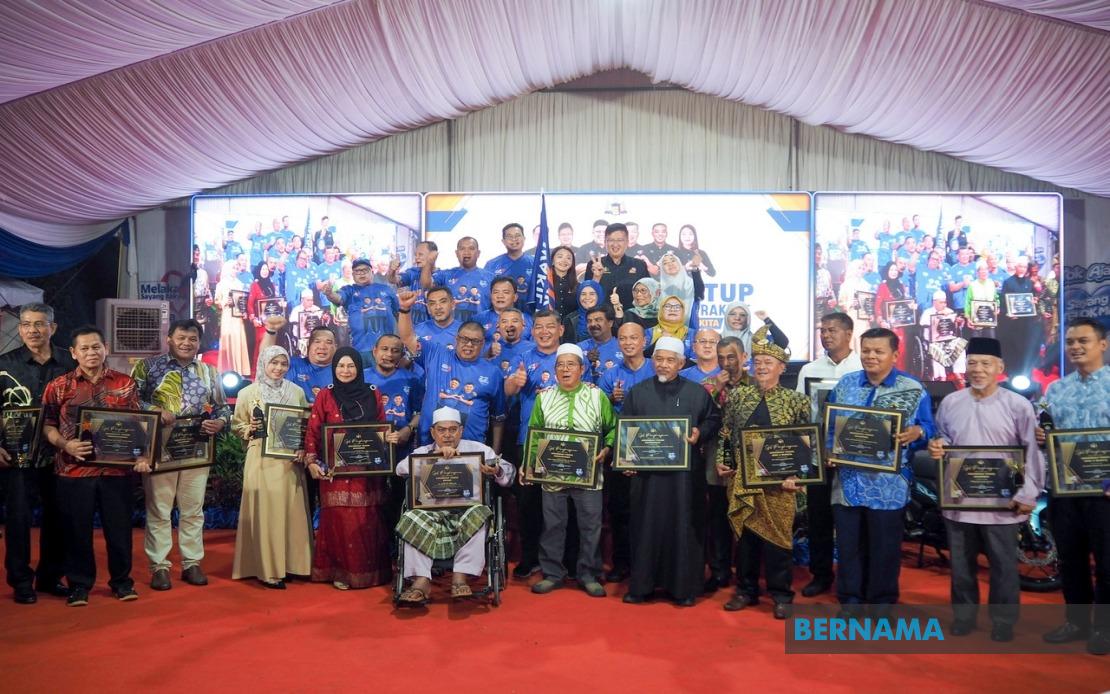
Melaka Chief Minister Datuk Seri Ab Rauf Yusoh has reframed how the success of the Wakil Rakyat Untuk Rakyat (WRUR) Programme should be evaluated, arguing that substantive impact on citizens' lives matters far more than the sheer volume of activities rolled out. Speaking at the closing ceremony of the initiative in Kota Melaka parliamentary constituency, he articulated a philosophy of governance centred on listening to communities and delivering tangible results, rather than accumulating impressive statistics through numerous but potentially superficial programmes.
The WRUR approach represents a deliberate shift toward grassroots problem-solving, with every complaint from constituents being carefully documented and systematically addressed. This methodology recognises that genuine governance impact emerges not from launching many initiatives but from ensuring that citizen concerns—regardless of their background or geographical location—receive serious attention and resolution. Across the 19 state constituencies where WRUR has been implemented to date, this ground-level engagement has generated approximately 4,027 grievances from the public. Of these, more than 2,633 complaints, representing a 65 per cent success rate, have been fully resolved, demonstrating the programme's capacity to translate citizen input into concrete action.
The Kota Melaka parliamentary constituency represents the third implementation site for WRUR within Melaka state, following Alor Gajah and Hang Tuah Jaya. During a four-week operational window, the programme generated 470 complaints specifically within Kota Melaka's jurisdiction. While only 31 issues were fully resolved during the active programme period, Ab Rauf has committed to continued resolution of remaining grievances according to priority levels, emphasising that the programme's conclusion does not signal the end of government accountability. This undertaking signals a recognition that many citizen concerns require sustained attention beyond a fixed implementation timeframe.
The broader WRUR initiative across its 19 constituencies executed more than 500 distinct programmes during the same four-week cycle, reaching over 200,000 residents across five state constituencies. This scale of engagement underscores the programme's ambition to create systematic channels for public participation in governance while maintaining quality in complaint resolution. For Malaysian readers accustomed to top-down governance models, this participatory approach offers a refreshing alternative that treats citizens as genuine stakeholders in identifying and solving local problems rather than passive beneficiaries of government action.
Abdul Razak Abdul Rahman, the State Tourism, Heritage, Arts, and Culture Committee chairman, provided additional context on complementary development initiatives in the Telok Mas state constituency. Over the preceding five years, 328 distinct local development projects valued at nearly RM68 million have been implemented across 12 areas within the constituency. These projects span essential infrastructure categories including road upgrading, river and drainage system improvements, sewerage enhancements, dilapidated house repairs, new housing construction, and upgrades to community halls, places of worship, business centres, sporting facilities, and educational institutions. This comprehensive approach to infrastructure development reflects recognition that citizen grievances often stem from inadequate physical amenities and public services.
Beyond infrastructure, the Telok Mas assemblyman highlighted welfare interventions reaching 6,098 residents through food assistance, welfare support, and health aid amounting to over RM1.2 million during the same period. The distribution of 213 medical beds to needy residents demonstrates attention to healthcare access disparities. These welfare measures acknowledge that sustainable social development requires bridging gaps in basic services, particularly for vulnerable populations who may lack resources to obtain such provisions independently. For Southeast Asian readers observing regional development patterns, such targeted assistance represents an increasingly vital component of inclusive governance.
Cost-of-living pressures dominating public discourse across the region feature prominently in Telok Mas's assistance programmes. Since 2022, the Jualan Rahmah and Jualan Murah initiatives—market-style interventions providing subsidised goods—have been conducted 70 times, offering residents direct relief from inflation impacts. The Free Petrol Programme has extended fuel assistance to approximately 15,000 residents valued at RM177,000, directly addressing transportation costs that significantly burden lower-income households. These programmes reflect evolving government strategies for mitigating inflationary pressures without relying exclusively on monetary subsidies.
Educational support represents another dimension of the Telok Mas development agenda, with particular emphasis on critical examination periods. A total of 1,694 students preparing for Sijil Pelajaran Malaysia examinations received assistance, while 255 high-performing Form Five students and pupils from public higher education institutions obtained educational incentives totalling RM244,200. This tiered approach recognises that exam preparation burdens can perpetuate educational inequality, with students from wealthier families accessing private tutoring while others lack such resources. By targeting examination candidates and high achievers, the programme addresses both equity and excellence concerns.
Tourism sector development represents an emerging priority for Telok Mas, with multiple investments approved to enhance local attractions. The Ministry of Tourism, Arts and Culture has allocated RM2.4 million for upgrading tourism facilities in Sungai Punggor and Alai areas, with completion targeted for 2027. An additional RM300,000 has been designated to transform Dataran Telok Mas into a One-Stop Centre integrating tourism services with local traditional product retail. These initiatives recognise that sustainable development increasingly depends on tourism-led growth, particularly for constituencies with heritage and natural features. Bukit Larang has been identified as a key geosite within the proposed Melaka Geopark, with national recognition assessment scheduled for October this year, positioning the area within broader regional geotourism networks.
For Malaysian observers, these Melaka initiatives illustrate evolving approaches to balancing multiple development objectives—infrastructural improvement, welfare provision, cost-of-living relief, educational support, and economic diversification through tourism—within constrained budgets. The WRUR programme's emphasis on measuring success through complaint resolution rates and citizen satisfaction rather than programme volume reflects international best-practice governance trends prioritising outcomes over outputs. As other Malaysian states evaluate their own grassroots engagement strategies, the Melaka model offers practical insights into translating citizen grievances into systematic solutions while maintaining transparency in follow-up processes.

