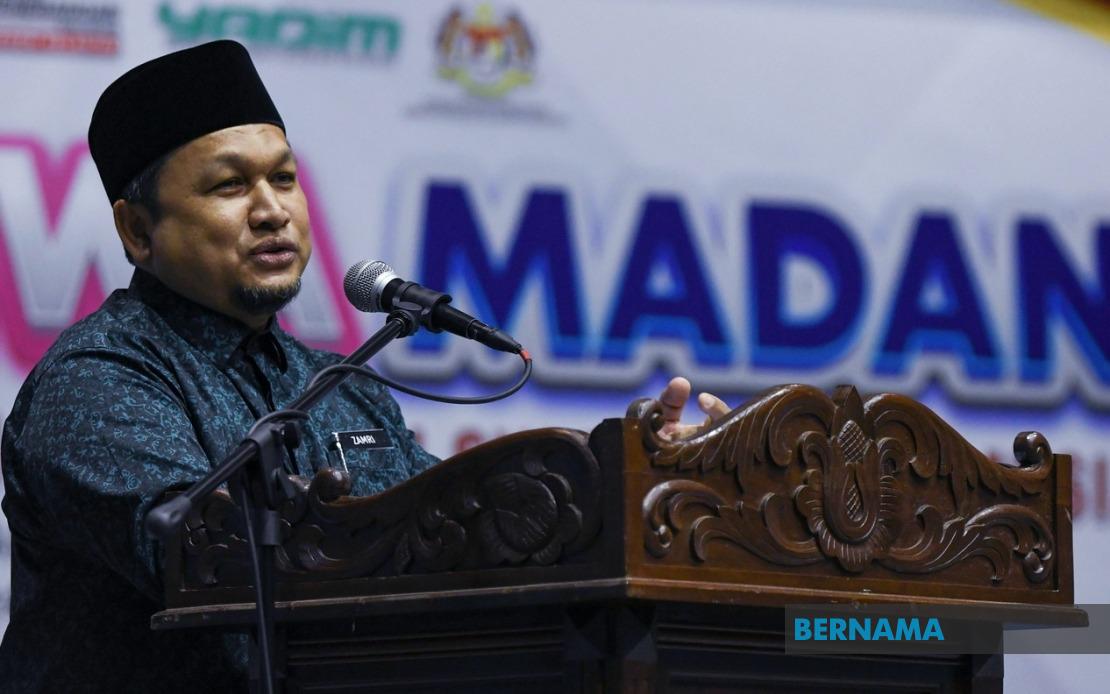
The Islamic dakwah sector in Malaysia has found a champion in Yayasan Dakwah Islamiah Malaysia (YADIM), which has publicly backed the government's initiative to introduce accreditation requirements for religious speakers active across digital platforms and social media networks. The endorsement, articulated by YADIM chief executive officer Zamri Zainal Abidin, comes after Minister in the Prime Minister's Department (Religious Affairs) Dr Zulkifli Hasan recently announced the proposal, signalling a coordinated approach between government bodies and faith-based institutions to address concerns about the quality and authenticity of Islamic instruction in online spaces.
Zamri framed the accreditation framework not as a restrictive measure but as a necessary safeguard to protect both the credibility of religious speakers and the integrity of Islamic teachings themselves. He emphasized that the framework aims to verify that individuals presenting themselves as religious educators possess sufficient grounding in Islamic knowledge and understanding, thereby reducing the risk that public audiences encounter distorted or inaccurate religious information. By establishing clear standards, the proposal seeks to distinguish between legitimately qualified teachers and self-appointed preachers who lack the foundational training required to provide accurate religious guidance.
The proliferation of unverified religious voices on social media has created a distinct challenge for Islamic institutional authority in Malaysia. Without any formal accreditation system, anyone with an internet connection and a social media account can position themselves as an Islamic teacher or ustaz, regardless of their actual qualifications or depth of theological knowledge. This democratization of religious instruction, while superficially appealing, has enabled the spread of unvetted interpretations and, in some cases, theologically questionable or misleading content that reaches vast audiences instantaneously.
Young Malaysians represent a particularly vulnerable demographic in this landscape. Increasingly, adolescents and young adults turn to social media platforms rather than traditional sources such as mosques, Islamic schools, or established religious institutions for their religious guidance and Islamic education. When these digital platforms contain unreliable or distorted religious information delivered by unqualified individuals, the consequences extend beyond mere misinformation—they can undermine young people's confidence in legitimate religious institutions and create confusion about authentic Islamic practice and belief.
Zamri articulated this concern explicitly, warning that permitting this situation to continue would progressively erode public trust in formal religious authorities and organizations. The stakes are not merely about individual misconceptions; they involve the institutional legitimacy of Malaysia's Islamic establishment and its ability to serve as a trusted source of religious knowledge for citizens navigating an increasingly complex media environment. When alternative sources offer competing religious instruction with comparable or superior reach, formal institutions risk becoming marginalized in the very domains where they maintain recognized expertise.
The proposal represents a deliberate effort to harmonize the digital religious sphere with existing standards and practices governing offline Islamic instruction and preaching. YADIM itself has long maintained accreditation practices for its own preachers and religious educators. The foundation's Daie Muda program, for instance, requires participants to obtain formal accreditation from the Federal Territories Mufti Department, adding an official credential layer to their work. By scaling this model across the broader social media landscape, the government and YADIM aim to create consistency between online and offline religious authority structures.
Zamri's statement made explicit that YADIM positions itself as a willing strategic partner in executing this initiative. As the government's principal dakwah agency operating under the Prime Minister's Department, YADIM possesses both the institutional infrastructure and the religious legitimacy required to assist in establishing, administering, and maintaining accreditation standards for online preachers. The foundation's existing networks with religious scholars, mufti departments, and Islamic educational institutions position it as a natural implementing partner for such a nationwide framework.
The regulatory approach reflected in this proposal differs from outright censorship or content removal in that it focuses on speaker credibility rather than message policing. By establishing who is qualified to teach rather than determining which teachings are permissible, the framework attempts to address the root cause of religious misinformation—unqualified individuals presenting themselves as authoritative sources—rather than addressing symptoms through reactive content takedowns. This preventive approach may prove more sustainable and less vulnerable to accusations of suppressing legitimate religious speech.
Implementing such a framework across Malaysia's diverse digital ecosystem presents substantial practical challenges. Social media platforms operate globally and according to corporate policies often misaligned with national regulatory interests, making enforcement difficult. Additionally, defining precisely what qualifications constitute adequate Islamic knowledge, and determining which institutions hold authority to certify such knowledge, involves nuanced theological and bureaucratic questions that different stakeholders may answer differently. The proposal will likely require detailed operational guidelines, coordination between multiple government agencies and religious authorities, and potentially new legislation to establish legal authority for enforcement mechanisms.
Regional context further illuminates the significance of this initiative. Across Southeast Asia, online misinformation and the spread of unvetted religious content through social media platforms have emerged as shared challenges affecting multiple countries with Muslim-majority or substantial Muslim populations. Malaysia's experience in addressing this problem through institutional accreditation frameworks could serve as a model or cautionary lesson for neighbors facing similar pressures, from Indonesia to Brunei to Thailand's southern provinces where Islamic institutions grapple with digital-age authenticity questions.
The proposal also reflects broader recognition among Malaysian policymakers that religious authority in the digital age cannot be established through institutional gatekeeping alone. Young people's media consumption patterns have fundamentally shifted, and ignoring this reality would render religious institutions increasingly irrelevant to the populations they seek to serve and guide. By developing frameworks that legitimize qualified individuals operating within digital spaces rather than restricting digital religious activity entirely, policymakers acknowledge this structural reality while attempting to maintain standards.
Looking forward, the success of this accreditation framework will depend on sustained coordination between government agencies, established religious institutions, social media platforms, and the broader public. Zamri's emphasis that the proposal is not intended to create unnecessary hurdles suggests the government intends a measured approach balancing quality assurance with accessibility for genuine religious educators. How these competing objectives are balanced in practice will significantly determine whether the framework achieves its intended purpose of protecting religious discourse quality without inadvertently suppressing legitimate dakwah activities in Malaysia's increasingly digital religious landscape.

