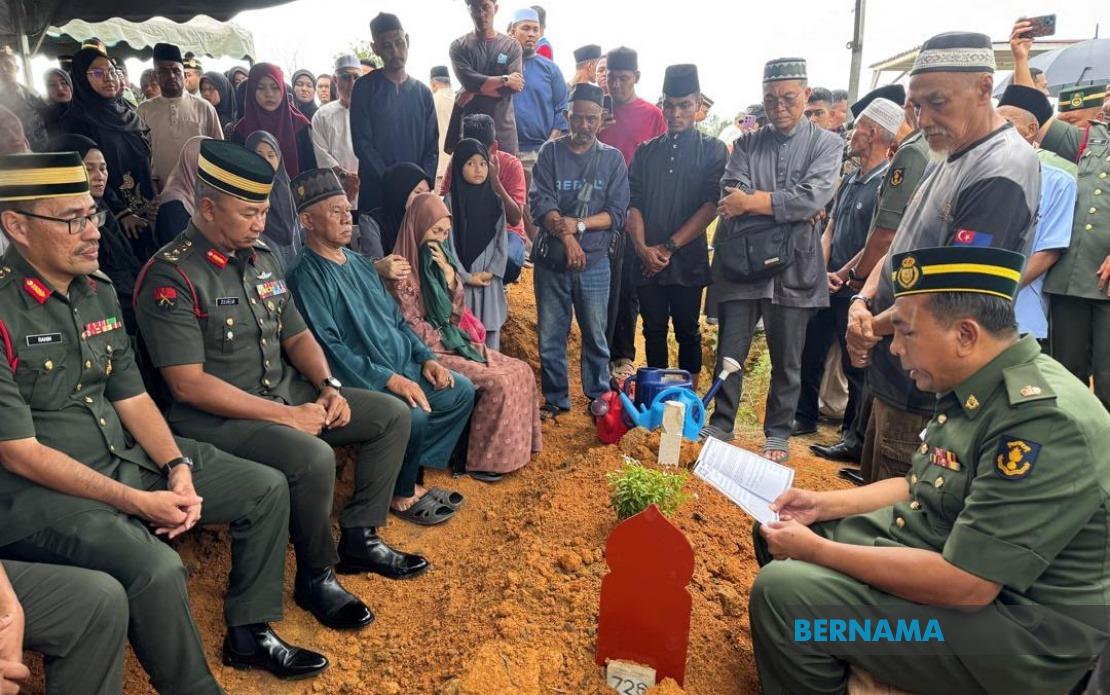
A promising young officer's determination to follow her father into military service ended tragically on June 16 when Private Siti Khadijah Sungip, 24, was killed during a grenade training exercise at Hobart Camp in Gurun, Kedah. The fatal incident, which also claimed the life of Corporal Norazmi Abu Bakar, occurred at approximately 10.57 am, with both personnel succumbing to their injuries en route to Sultan Abdul Halim Hospital in Sungai Petani. The loss has devastated her family in Kluang, who had watched her pursue the same career path that defined her father's life.
Sungip Jais, 65, the deceased's father, spent decades serving in the Royal Artillery Regiment (RAD) before retirement. When recounting his daughter's decision to enlist, he spoke of how Siti Khadijah's ambition stemmed from childhood admiration of his military career. Having completed her Diploma in Civil Engineering—Highways and Transportation at Mara Higher Skills College in Sri Gading, she had deliberately chosen to join the Malaysian Army instead of pursuing conventional engineering employment. Her choice reflected not merely professional aspiration but a deep-rooted commitment to continuing family tradition and serving the nation through the armed forces.
The youngest of seven siblings, Siti Khadijah had expressed priorities that extended beyond personal advancement. According to her father, she had consciously postponed thoughts of marriage, preferring instead to concentrate on her military duties while also caring for her aging parents. This sense of filial responsibility, combined with her passion for soldiering, painted a portrait of a young woman balancing multiple commitments and family expectations. Her dedication to these values remained evident even during recent home leave around Hari Raya Aidiladha, when family members observed no signs of concern or unusual behaviour.
Siti Khadijah's brief military career, spanning just over a year since joining the Malaysian Army, had already brought recognition and achievement. In January, she received the Best Female Recruit (Academic) Award during her basic military training at the Army Basic Training Centre in Port Dickson, Negeri Sembilan. This accolade highlighted her intellectual capabilities and commitment to excellence during the demanding foundational phase of military preparation. Born on September 19, 2002, in Kluang, she had progressed through Juliet Company's female recruit training before her assignment to the Royal Army Engineers Regiment.
Her elder sister, Siti Zaihah, 39, provided insight into Siti Khadijah's character during her service. The last meaningful contact came via WhatsApp at midnight on June 15, when Siti Khadijah sent a photograph from a shooting practice session—the aspect of her training that she had found most fulfilling. In that final message, she mentioned upcoming exercises scheduled for the following morning, including the grenade exercise that would commence around 8 am. The photograph has now become the family's most precious final keepsake, a frozen moment capturing their youngest member engaged in the profession she had chosen with such conviction.
The shock of receiving news of the accident unfolded gradually for the family. Around 1 pm on June 16, Siti Zaihah received a call indicating that Siti Khadijah had been involved in an incident. Her initial reaction presumed a minor mishap or perhaps a traffic accident—the kind of routine emergency one might expect in any busy institution. This assumption proved catastrophically wrong when a second call arrived confirming that the accident had occurred during training operations and that her sister had not survived. The rupture of hope between those two telephone conversations encapsulates the sudden, irreversible nature of the tragedy.
For the family in Taman Sri Lambak, the loss presents a particular anguish rooted in unfulfilled potential. Siti Khadijah had deliberately chosen a path less conventional than her engineering qualifications might have suggested, driven by genuine conviction rather than parental pressure. Her decision to prioritise her parents' welfare over marriage prospects demonstrated maturity and filial piety that aligned closely with traditional values. The completion of her training, the recognition she received, and her posting to the Royal Army Engineers Regiment all represented milestones toward a career that might have spanned decades of service to nation and family alike.
The grenade exercise accident raises questions about training protocols and safety measures that will undoubtedly occupy military and government attention in coming weeks. Incidents during weapons training, though statistically uncommon given the volume of exercises conducted annually across Malaysian armed forces facilities, carry profound consequences when they do occur. Both Siti Khadijah and Corporal Norazmi Abu Bakar died under circumstances that warrant thorough investigation to determine whether procedural, supervisory, or equipment factors contributed to the tragedy. Such scrutiny is essential not only for accountability but also for identifying potential improvements to prevent future incidents.
Siti Khadijah's funeral took place on the same day of her death, with her remains interred at Taman Sri Lambak Islamic Cemetery in her hometown. The swift return to her birthplace afforded her final resting place a symbolic closure—completing a brief but remarkable arc from childhood dreams of military service through her father's influence to achievement and recognition within the armed forces. Her father's retirement from military service meant he never witnessed his youngest child graduate through the ranks, yet her determination to carry forward the family legacy through her own service ensured that the Sungip family's connection to Malaysia's military would continue, albeit cut short by tragic circumstance.
The broader implications of this tragedy extend beyond one family's grief. Female recruitment into the Malaysian Army has evolved significantly over recent decades, with women now serving across diverse specialisations including the Royal Army Engineers Regiment. Siti Khadijah's achievement as Best Female Recruit (Academic) suggests she represented the calibre of women entering military service—educated, committed, and capable. Her death underscores both the genuine risks inherent in military training and the courage required of young Malaysians, regardless of gender, who commit themselves to national defence. That she died pursuing the same professional path her father had navigated throughout his career adds poignant resonance to questions about how institutions can better protect those under their care while maintaining the rigorous standards necessary for military effectiveness.

