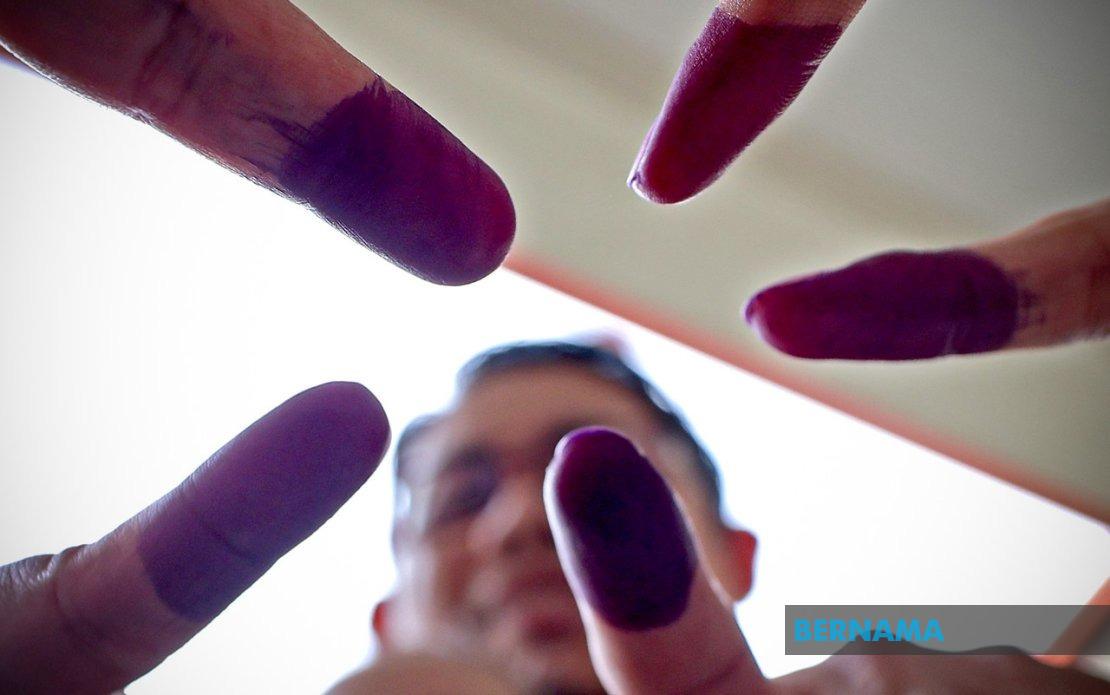
The 16th Johor state election, slated for 11 July, is poised to showcase the growing influence of a demographic that has traditionally occupied the periphery of electoral calculations: young and first-time voters mobilised through Undi18 and automatic voter registration mechanisms. Political strategists increasingly recognise that these voters, drawn from constituencies across the state, could function as kingmakers in hotly contested marginal seats where victory margins remain razor-thin. Unlike their predecessors, these voters demonstrate weaker ideological anchoring to established political parties, creating both opportunity and uncertainty for campaign strategies.
According to Ilham Centre research chief Associate Prof Dr Mohd Yusri Ibrahim, the surge in first-time voter numbers across constituencies has fundamentally altered the calculus of electoral competition. In marginal seats where traditional support bases prove insufficient to guarantee victory, the preferences of these voters could determine which candidate ultimately prevails. Ibrahim emphasised to Bernama that campaign machinery must now accommodate substantially different voter demographics, requiring simultaneous execution of multiple communication strategies tailored to distinct audience segments. The heterogeneity of the electorate demands flexibility and sophistication previously unnecessary in Johor's political contests.
The digital versus grassroots divide represents perhaps the most significant strategic challenge facing political parties navigating this changed landscape. Ibrahim noted that social media platforms have become essential tools for reaching urban youth populations, yet ground-level engagement remains indispensable for persuading older rural voters. This split demands parties simultaneously maintain strong digital presence and traditional on-the-ground operations. The integration of these two channels—converting online momentum into actual votes through disciplined grassroots machinery—will likely determine which organisations successfully translate campaign visibility into electoral success.
Dr Mohammad Tawfik Yaakub from Universiti Malaya's Department of Political Science, Public Administration and Development Studies reinforced this assessment, characterising the 1.2 million voters aged between 18 and 39 as the election's most consequential voting bloc. Tawfik identified a fundamental shift in voter evaluation criteria: these younger voters increasingly assess candidates through lenses of demonstrated performance, personal credibility, and concrete problem-solving ability rather than inherited party loyalty or identity-based considerations. This represents a marked departure from voting patterns observed in earlier Johor elections, where party machinery and communal identity typically exercised dominant influence over voter behaviour.
Geographic divides in information exposure and social influence remain pronounced despite digitalisation's expansion. Urban voters, Tawfik explained, generally maintain greater exposure to national political narratives and participate more actively in social media discourse surrounding elections. Conversely, rural voter preferences continue reflecting influence from localised grassroots networks and the relationship between candidates and their communities. These divergent information environments necessitate distinct campaign messaging approaches—a challenge compounded when parties attempt coordinated statewide campaigns across diverse constituencies with fundamentally different voter profiles and communication preferences.
The relationship between online activity and electoral outcomes defies simple linear progression, Tawfik cautioned. While social media can generate campaign momentum and visibility, converting this digital energy into actual votes depends critically upon functioning grassroots organisation. He observed that parties exhibiting strong online presence but weak on-the-ground capacity frequently underperform relative to their digital visibility, suggesting that technological sophistication alone cannot substitute for traditional organisational capacity. This dynamic particularly advantages parties with established networks capable of rapid mobilisation in local communities.
Young voters' receptiveness to new political faces represents another dimension of Johor's shifting electoral terrain. However, Tawfik warned against over-interpreting this openness as guaranteed support for inexperienced candidates. Youth alone—absent demonstrated competence, credible track records, or substantive policy positions—remains insufficient foundation for securing voter backing. Candidates must combine generational appeal with clear evidence of capability and commitment to constituent interests. The electorate appears increasingly discerning regarding qualifications and suitability, demanding more than novelty or demographic proximity.
Election Commission data illuminates the scale of this demographic transformation. Johor's registered voter population below 40 years exceeds 1.29 million, comprising 587,888 voters aged 30-39, 544,657 voters aged 21-29, and 165,386 voters aged 18-20. These figures represent a historically unprecedented concentration of younger voters within the overall electorate, fundamentally altering power dynamics within constituencies. The proportional weight of this demographic suggests that electoral outcomes increasingly reflect younger voter preferences rather than older constituencies' traditional dominance.
Tawfik identified three critical factors that will shape final electoral outcomes: voter turnout rates, fence-sitter voting behaviour, and parties' demonstrated capacity to address bread-and-butter economic concerns. Johor voters are becoming increasingly responsive to tangible policy responses addressing immediate livelihood pressures rather than abstract political narratives. Rising living costs, wage stagnation, housing accessibility, and employment opportunities have emerged as dominant voter preoccupations. Political parties capable of articulating credible, implementable solutions to these economic pressures will likely achieve significant advantage among younger voters for whom economic security constitutes an urgent priority.
The primacy of economic concerns over political ideology represents a fundamental reorientation of Johor's electoral dynamics. Tawfik argued that voters increasingly evaluate parties and candidates through instrumental criteria: will this candidate deliver tangible improvements to my economic circumstances and quality of life? This pragmatism reflects generational experience of economic constraints and limited social mobility relative to previous generations. Traditional identity-based or ideological appeals prove less persuasive when voters confront concrete financial pressures affecting daily existence. Campaign messaging that ignores this practical focus likely fails to resonate with younger voters prioritising material security.
Early voting commences 7 July ahead of the 11 July polling date, providing campaign strategists final opportunities to mobilise their respective voter bases. The convergence of unprecedented numbers of young voters, sophisticated digital communication capabilities, traditional grassroots competition, and voters' pragmatic focus on economic solutions creates an exceptionally complex electoral environment. No single strategic approach guarantees success; rather, political parties must navigate simultaneously across multiple channels and voter demographics while maintaining coherent messaging regarding their economic capabilities and policy commitments. The outcome will likely reflect which organisation most effectively synthesises these diverse requirements into comprehensive electoral strategy.

