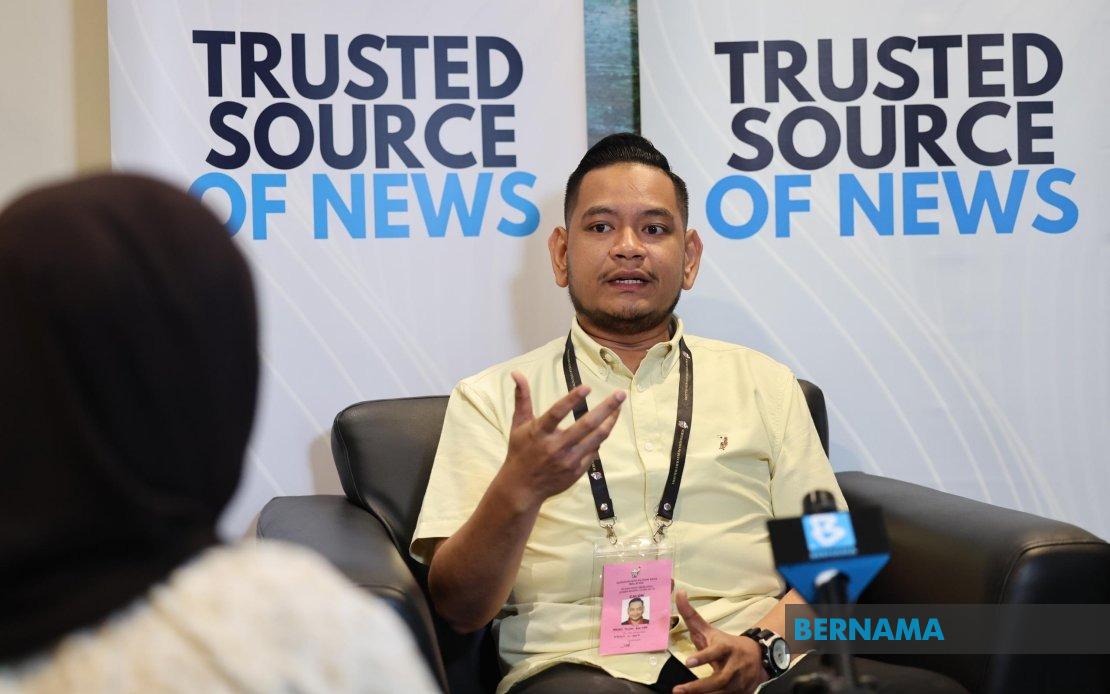
The Sedili state constituency in Johor presents a generational test case for Malaysian politics. Amirul Huzni Onn, the 29-year-old Pakatan Harapan candidate and national youth leader of Parti Amanah Negara, is staking his campaign on the argument that inexperience in electoral politics is precisely what voters in this traditionally Barisan Nasional stronghold need. Rather than viewing his newcomer status as a disadvantage, the younger candidate frames it as liberation from the accumulated baggage of long-serving politicians, betting that Sedili residents will reward fresh perspectives over tested credentials.
Facing him are two opponents with substantially deeper political pedigrees. The BN has fielded Muszaide Makmor as its incumbent candidate, while Perikatan Nasional has nominated Rasman Ithnain, a former assemblyman who held the seat for three consecutive terms before the 2018 general election altered the political landscape. This three-way contest encapsulates broader shifts within Malaysian electoral politics, where younger voters increasingly favour candidates who represent change over continuity, yet older voters remain sceptical of untested newcomers.
Amirul Huzni's strategic framing of youth as an asset rather than a liability reflects evolving campaign messaging across Southeast Asia. He articulates a vision of candidates as "blank canvases" without the historical baggage of previous administrations, an appealing proposition in constituencies where incumbent promises have consistently gone unfulfilled. This positioning acknowledges the traditional power dynamics that favour established political networks while simultaneously challenging their relevance in modern governance. His argument that every generation possesses distinct capabilities and roles speaks to demographic realities within Johor, where younger and older voters hold increasingly divergent political preferences.
The practical dimension of his campaign centres on tangible infrastructure deficits rather than grand ideological promises. Amirul Huzni has identified the absence of a fuel station in Sedili as his primary campaign objective, a particularly resonant issue given the constituency's significant fishing community and angling tourism sector. The candidate notes that site selection and land clearance occurred over a year ago, yet implementation stalled—a common frustration across Malaysian constituencies where public works projects languish in bureaucratic limbo. This focus on concrete, achievable deliverables rather than expansive policy statements suggests a campaign calculated to appeal to pragmatic voters evaluating candidates on tangible results rather than rhetoric.
For Sedili's fishing industry specifically, fuel accessibility directly impacts operational costs and economic viability. Anglers and commercial fishermen must travel considerable distances to refuel, increasing expenses and reducing time on water. The fuel station thus becomes more than a convenience; it represents acknowledgment of the community's economic foundation and willingness to address long-standing grievances. This granular approach to campaigning reflects lessons learned from numerous constituencies where broad promises of development yield to silence once elections conclude.
Amirul Huzni's emphasis on respectful, mature electioneering presents an implicit critique of increasingly polarised political discourse in Malaysian campaigns. His stated commitment to positive engagement with opponents and preservation of community harmony distinguishes his approach from more confrontational strategies deployed elsewhere. Such positioning may resonate with Sedili voters fatigued by heated partisan exchanges, though it remains unclear whether civility campaigns translate into electoral advantage when voters evaluate policy substance and track records.
The timing of this contest within the broader Johor state election cycle matters considerably. The July 11 polling date follows extended national political turbulence and government transitions, creating space for candidates presenting stability through fresh voices rather than experienced hands. Voters exhausted by factional infighting within established parties may view younger, less ideologically entrenched candidates as potential circuit-breakers. Amirul Huzni's Amanah affiliation connects him to PH's reform narrative while potentially distancing him from internecine conflicts that have plagued PKR and DAP in recent years.
However, Sedili's historical voting patterns present substantial obstacles. The constituency's longstanding preference for BN candidates reflects deeper structural factors—effective local machinery, established patronage networks, and traditional communal relationships that independent or younger candidates struggle to replicate quickly. Rasman Ithnain's prior tenure means PN also possesses name recognition and residual support infrastructure. Amirul Huzni's challenge transcends rhetoric about generational change; he must overcome entrenched political machinery built across multiple electoral cycles.
The fuel station pledge, while practical and locally focused, also carries implicit acknowledgment that state and federal development allocation mechanisms favour incumbent parties. If elected, Amirul Huzni would need to navigate these bureaucratic realities and demonstrate influence with federal authorities controlled by different coalitions. This complexity often escapes younger candidates' initial campaign calculations, becoming apparent only when implementation begins. His assertion that winning or losing represents the fundamental contest outcome suggests awareness of these challenges, yet also hints at realistic expectations regarding what individual candidates can accomplish within Malaysia's centralised governance structure.
Amirul Huzni's campaign encapsulates broader questions facing PH in Johor specifically and Malaysia generally: whether generational change resonates with voters holding diverse priorities across age, occupation, and socioeconomic lines, and whether fresh energy and practical focus can overcome the institutional advantages enjoyed by established political organisations. The Sedili contest offers a microcosm of these tensions, with polling set for July 11 and early voting commencing July 7. Results will likely inform calculations across other constituencies regarding optimal positioning for younger candidates challenging entrenched political strongholds.
The broader implication extends beyond single constituencies. If voters increasingly reward inexperienced but energetic candidates over established politicians, Malaysian politics faces rapid generational transition. Conversely, if Sedili voters retain traditional preferences for proven administrators, the appeal of youth-focused campaigns may prove demographically narrow or regionally specific. Amirul Huzni's campaign therefore serves as political testing ground, with ramifications extending well beyond this Johor constituency toward understanding contemporary Malaysian electoral preferences.

