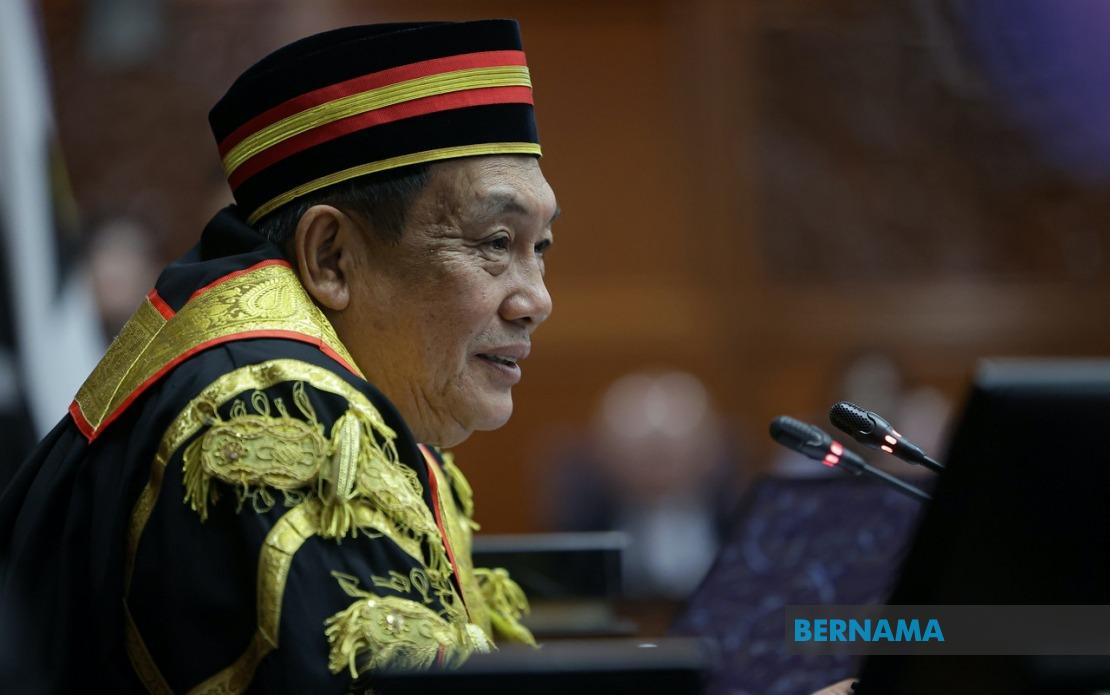
Malaysia's Youth Parliament, or PBMy, represents far more than a ceremonial platform for younger citizens, according to Dewan Negara President Datuk Awang Bemee Awang Ali Basah, who characterizes it as nothing less than a foundational institution for democratic development. Speaking at the "Tranung Mari! From Campus to Parliament: Youth Voices Shaping Malaysia's Future" programme held at Universiti Malaysia Terengganu, Awang Bemee articulated a compelling vision of youth political engagement as essential to the nation's democratic maturation and future governance.
The Senate president's designation of Youth Parliament as a "school of democracy" reflects a deeper philosophical commitment to preparing emerging generations for meaningful civic participation. Beyond mere symbolic representation, he emphasized that the institution furnishes young Malaysians with hands-on exposure to parliamentary procedures, collaborative debate, constructive disagreement, and the vital democratic principle of accepting collective decisions even when individual preferences diverge. These experiential learning opportunities, Awang Bemee suggested, represent the crucible in which democratic values are forged into the character of future national leaders.
Central to Awang Bemee's framework is a reconceptualization of leadership itself, moving away from conventional definitions rooted in oratorical prowess or hierarchical authority. Instead, he positioned effective leadership as fundamentally relational—an interplay between articulation and listening, directive ability and problem comprehension, positional power and constituent responsibility. This reframing carries particular significance for Malaysian youth navigating increasingly complex governance challenges, suggesting that tomorrow's leaders must develop empathy and systems thinking alongside traditional political acumen.
The Senate president articulated three interconnected pillars undergirding youth empowerment in democratic societies. The first pillar addresses governance architecture itself: creating institutional and cultural conditions where young people encounter genuine opportunities to express themselves, experience their voices being heard, and witness their perspectives influencing decision-making. This requires more than superficial consultation mechanisms; it demands authentic transparency, demonstrated respect for minority viewpoints, and deliberate cultivation of pluralistic discourse that honors Malaysia's exceptional ethnic, religious, and cultural heterogeneity as an asset rather than an obstacle.
The second pillar concentrates on educational transformation and skills development extending well beyond conventional academic benchmarks. Awang Bemee advocated for curricula that cultivate analytical rigor, technological literacy encompassing artificial intelligence and digital tools, creative problem-solving capacity, entrepreneurial orientation, effective communication, and sophisticated civic awareness. Notably, he connected this educational agenda to emerging economic frontiers, particularly the Blue Economy encompassing maritime sectors from sustainable fisheries and aquaculture to marine renewable energy development, positioning youth as stakeholders in Malaysia's economic evolution while emphasizing parallel obligations to marine conservation and coastal community welfare.
The third pillar addresses the paradoxical relationship between liberty and responsibility in digital democracies. Awang Bemee underscored that freedom of expression, however foundational to democratic governance, carries non-negotiable correlates: the prohibition against deliberate disinformation, the obligation toward factual verification before amplification, and ethical engagement across social media platforms. His formulation—"before sharing, verify; before believing, scrutinise; before judging, understand; and before acting, consider the consequences"—acknowledges contemporary challenges where information velocity and algorithmic distribution can weaponize speech against democratic norms themselves.
The Youth Parliament roadshow, orchestrated by Parliament Malaysia and featuring contributions from Parliament's chief administrator Datuk Dr Ahmad Husaini Abdul Rahman, represents an intentional effort to bridge institutional distance between Malaysia's legislature and university communities where nascent civic consciousness develops. Such direct engagement between senior parliamentary officials and student populations serves multiple functions simultaneously: it demystifies legislative processes, validates youth perspectives within formal power structures, and provides Parliament itself with unfiltered insight into emerging generational concerns and aspirations.
For Malaysian context specifically, this initiative arrives amid broader regional conversations about democratic resilience and youth disengagement. Youth voter participation patterns across Southeast Asia reveal concerning disconnection between younger demographics and formal political processes, often attributed to perceived irrelevance of parliamentary institutions to immediate lived experiences. By establishing tangible mechanisms for youth voice integration and demonstrating parliamentary responsiveness to student concerns, Malaysia's Youth Parliament initiative directly addresses this legitimacy challenge.
Awang Bemee's framing of young people as potential "bridge-builders" who unite divided communities carries particular resonance in Malaysia's context of persistent ethnic and religious sensitivities. The implicit argument suggests that youth, less constrained by historical grievances and more accustomed to multicultural collaboration through digital and campus environments, possess distinctive capacity to model and advance interfaith and intercommunal understanding. This vision positions youth political participation not merely as personal development but as essential infrastructure for maintaining Malaysia's social cohesion during periods of potential polarization.
The programme's emphasis on cultivating "leadership with integrity" signals recognition that technical parliamentary competence divorced from ethical moorings generates governance failure. This emphasis resonates with contemporaneous global concerns regarding institutional trust deficits, where procedural regularity alone proves insufficient to maintain democratic legitimacy when public corruption, elite capture, or moral compromise undermine institutional credibility. By institutionalizing integrity as a foundational value within Youth Parliament experience, the initiative attempts to shape not merely competent legislators but ethically grounded public servants.
The roadshow component targeting higher education institutions reflects strategic recognition that universities represent critical junctures in civic consciousness formation. University years typically coincide with cognitive development enabling sophisticated political reasoning and social perspective-taking. By engaging students within campus environments where peer influence and intellectual discourse predominate, Parliament Malaysia positions itself as participant in organic democratic learning rather than imposing civic instruction from remote institutions.
Looking forward, the sustainability of Youth Parliament's transformative potential depends upon whether parliamentary institutions genuinely implement recommendations and perspectives generated through youth consultation forums. If youth engagement becomes performative theater rather than substantive input mechanism, institutional cynicism among younger citizens will deepen precipitously. Conversely, demonstrable instances where youth-generated policy proposals advance through parliamentary processes or where parliamentary responses to youth concerns prove tangible would substantially validate the institution's legitimacy.
Awang Bemee's multivalent vision ultimately presents Youth Parliament as simultaneously a leadership development institution, a democratic practice laboratory, and a generational bridge between established power structures and emerging constituencies. Success hinges upon parliamentary commitment to authentic youth integration rather than tokenistic representation, coupled with sustained investment in the education and value formation that transforms political participation into vectors for national progress and social cohesion.

