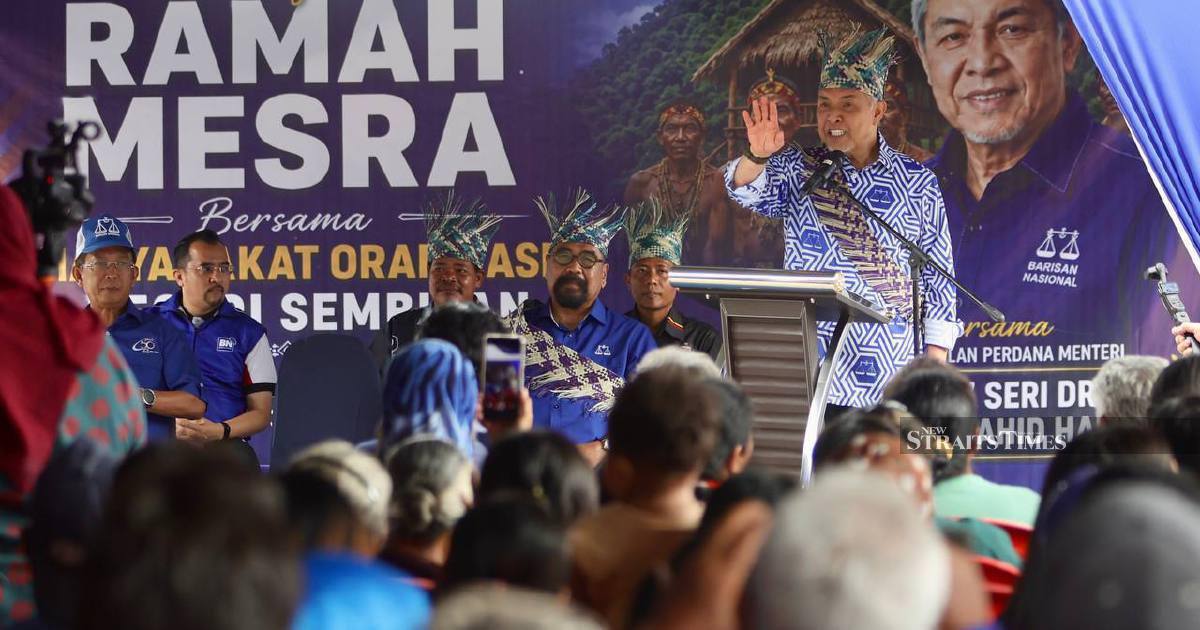
Deputy Prime Minister Datuk Seri Dr Ahmad Zahid Hamidi has proposed the creation of a dedicated officer position within the Negri Sembilan Menteri Besar's Office to represent and advocate for Orang Asli community interests. Speaking in Jelubu, Zahid indicated that such an appointment could be implemented administratively, without necessitating a formal commitment through party or government manifesto pledges, suggesting a more flexible pathway to establishing dedicated indigenous representation in state governance structures.
The proposal reflects growing recognition within federal leadership of the need for institutional mechanisms to address Orang Asli concerns at the state administrative level. By positioning this initiative as an executive decision rather than a manifesto obligation, Zahid has indicated that the government views the appointment as an operational matter falling within the discretion of the state administration, potentially enabling faster implementation than would occur through formal policy channels.
Orang Asli communities in Peninsular Malaysia have historically experienced underrepresentation in formal governance structures, despite constituting an important segment of the population with distinct cultural, economic, and land rights concerns. The creation of a dedicated liaison officer would address a persistent gap in institutional responsiveness to indigenous affairs at the state level, where many critical development and resource management decisions affecting Orang Asli lands are made. Negri Sembilan, encompassing areas with significant Orang Asli populations, would serve as a testing ground for this administrative innovation.
The initiative carries implications beyond symbolic representation. Such an officer would theoretically function as an accessible point of contact for Orang Asli grievances, land disputes, and development proposals affecting indigenous communities. In practice, the effectiveness of such a position would depend heavily on its actual authority, budgetary allocation, and reporting lines within the state bureaucracy. Without adequate institutional backing, the role risks becoming a cosmetic gesture rather than a meaningful mechanism for indigenous advocacy.
Zahid's emphasis on achieving this without a manifesto commitment also suggests pragmatism regarding implementation timelines. Manifesto pledges typically require endorsement across party structures and campaign commitments, which can slow bureaucratic action. By framing this as an administrative appointment, the Deputy Prime Minister has signalled that the federal government is prepared to move forward on this initiative independently, potentially applying pressure on Negri Sembilan's leadership to establish the position promptly.
The proposal arrives amid broader national discussions regarding indigenous rights and land protection. Malaysia's Orang Asli community continues to face pressures from land encroachment, development projects, and limited access to social services and economic opportunities. While awareness of these issues has grown among policymakers, translating awareness into substantive institutional change has proven challenging. The proposed officer position represents a modest but concrete step toward integrating indigenous representation into state administrative frameworks.
For Malaysian observers of indigenous affairs policy, this development merits attention to implementation details. The scope of authority granted to such an officer would determine whether the role functions as a genuine advocate capable of influencing policy decisions or remains confined to informational and advisory capacities. Additionally, the appointment process—whether through transparent recruitment or political patronage—will signal whether the government views this as a serious governance initiative or primarily a public relations exercise.
Regionally, Malaysia's approach to institutionalising indigenous representation could influence how other Southeast Asian nations with substantial indigenous populations address similar governance gaps. Countries throughout the region grapple with balancing development imperatives against indigenous land rights and cultural preservation. Documenting Malaysia's experience with dedicated state-level indigenous liaison officers could provide valuable precedents or cautionary examples for neighbouring governments considering comparable institutional arrangements.
The Negri Sembilan context makes this proposal particularly noteworthy. The state encompasses areas with diverse Orang Asli groups, and its administration has previously navigated complex questions regarding land use and development affecting indigenous communities. Establishing a dedicated officer position there could generate practical experience regarding how such roles function within existing state bureaucratic structures and how they interact with federal indigenous affairs frameworks.
Moving forward, stakeholders will likely scrutinise the actual establishment of this position, including the qualifications, appointment process, and operational authority granted to the officer. Community organisations representing Orang Asli interests may seek to define expectations regarding the role's scope and influence before the position is formalised. The federal government's readiness to implement this proposal administratively rather than through manifesto channels could either expedite the initiative or render it vulnerable to shifting political priorities if implementation stalls.
Zahid's proposal ultimately reflects a recognition that Malaysia's existing governance structures have historically marginalised indigenous communities and that targeted institutional reforms are necessary to address this gap. Whether this specific proposal translates into meaningful improvements in Orang Asli representation and advocacy within state administration will depend on implementation quality and political commitment across multiple government levels.

