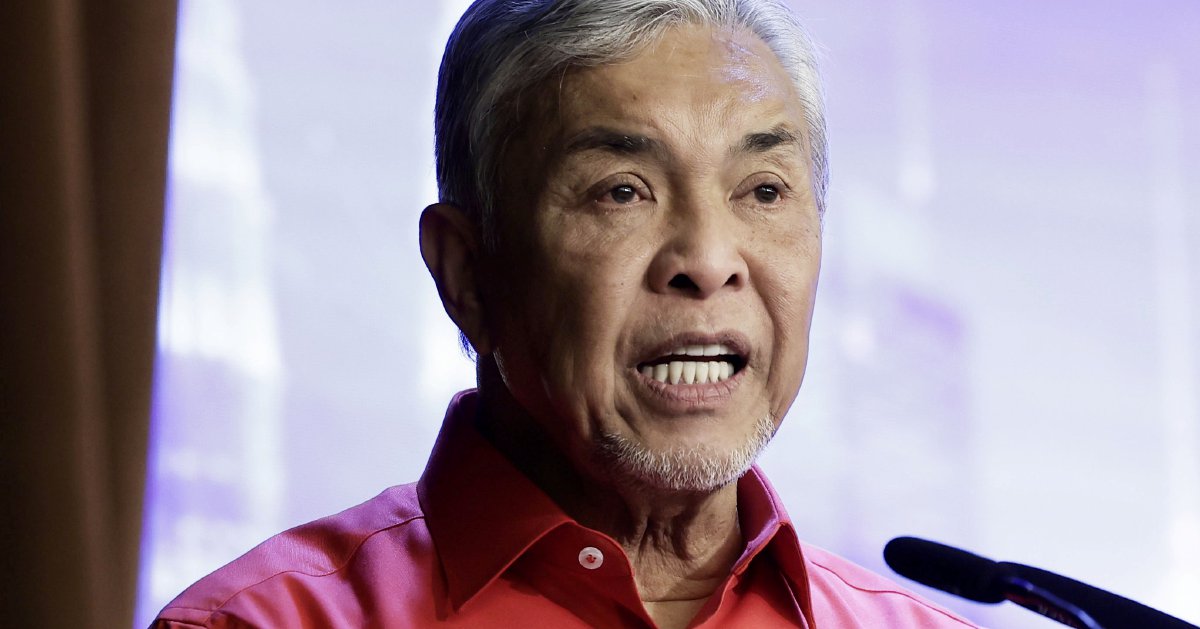
Deputy Prime Minister Datuk Seri Dr Ahmad Zahid Hamidi has issued a stark rebuke to what he characterises as a continuing pattern of unverified claims and unfounded public perceptions regarding Lembaga Tabung Haji, Malaysia's premier savings institution for Islamic pilgrims. Speaking with evident frustration, Zahid stressed the importance of moving beyond narrative-driven criticism that lacks substantive foundation, signalling an official effort to reset public confidence in an institution that has faced considerable scrutiny in recent years.
Tabung Haji has occupied an uneasy position in Malaysian public discourse since the 1MDB crisis exposed governance vulnerabilities across state-linked entities. The institution, which holds deposits from over 8.5 million Malaysians saving for the hajj pilgrimage, suffered significant reputational damage amid revelations of investment losses and management questions. Even as operational reforms have been implemented, public scepticism has persisted, fed by social media commentary, speculation, and recurring concerns about the security of ordinary Malaysians' savings.
Zahid's intervention appears designed to differentiate between legitimate oversight and what officials view as corrosive rumour-mongering. This distinction carries weight: Tabung Haji's credibility directly affects the willingness of millions of middle and lower-income Malaysians to entrust their life savings to the scheme. For many account holders—particularly retirees and low-wage workers—Tabung Haji deposits represent accumulated sacrifices, making trust not merely an abstract concept but a material concern affecting family finances and spiritual obligations.
The deputy prime minister's remarks also reflect broader tensions within Malaysia's governance landscape regarding institutional accountability. Critics argue that calls to curtail "baseless allegations" risk muting legitimate public scrutiny, particularly when official transparency mechanisms remain limited. Conversely, government defenders contend that unsourced allegations can cause disproportionate damage to public institutions without triggering proportional correction when claims prove unfounded. This tension is particularly acute in Malaysia, where trust in institutions has eroded considerably over the past decade.
Since assuming greater operational oversight in recent reforms, Tabung Haji management has emphasized portfolio diversification, stricter risk management protocols, and enhanced disclosure practices. Yet these improvements have not entirely assuaged public anxiety. Malaysia's retail investors retain memories of previous iterations when governance lapses went undetected for extended periods, creating a psychology of wariness that outlasts any individual reform announcement. Rebuilding institutional trust requires not just structural changes but patient, consistent communication and demonstrable performance over time.
Zahid's framing of the issue as a matter of evidence-based discourse rather than perception management suggests recognition within government circles that crude dismissals of public concern are ineffective. Instead, the approach aims to establish a boundary between legitimate questioning and speculation, inviting media and civil society to focus on verifiable facts. This approach assumes that public scepticism will naturally diminish when individuals can distinguish between substantiated risk and unfounded rumour.
For Malaysian pilgrims and their families, the stakes of this reputational contest are tangible. Hajj preparation often involves decades of disciplined saving, with Tabung Haji serving as a dedicated vehicle for accumulation in an environment where alternative investment vehicles may appear riskier or less accessible. Any sustained erosion of public confidence could prompt account holders to withdraw funds, creating liquidity pressures that would, ironically, validate the very concerns officials are attempting to dispel.
The institutional landscape surrounding Tabung Haji has shifted measurably since its peak vulnerabilities in the mid-2010s. International auditors now conduct comprehensive reviews, governance committees include independent directors, and reporting standards align more closely with international practice. These changes represent genuine reform, though government officials acknowledge they require time to demonstrate tangible impact in market conditions and portfolio performance metrics.
Regionally, Malaysia's experience with Tabung Haji resonates across Southeast Asia, where many countries maintain similar hajj savings schemes. Indonesia's equivalent institution, for instance, has faced comparable reputational challenges, suggesting these credibility gaps reflect broader vulnerabilities in how developing economies manage large, retail-focused savings pools with religiously motivated participation. Malaysian lessons—both regarding failures and subsequent reforms—carry instructive value across the region.
Zahid's intervention, while seeking to constrain unsubstantiated criticism, simultaneously underscores official recognition that Tabung Haji's standing remains fragile. Institutions with robust public confidence rarely require high-level political statements defending them against "baseless allegations." The fact that Malaysia's deputy prime minister felt compelled to address the issue publicly suggests officials perceive meaningful ongoing reputational vulnerability that administrative reforms alone have not entirely resolved.
Moving forward, the challenge for Tabung Haji involves complementing governance improvements with sustained performance outcomes. Account holders require not declarations that allegations are unfounded, but consistent evidence through audited returns, transparent reporting, and accessible grievance mechanisms that their savings are secure and productively deployed. Trust regeneration depends less on rhetorical recalibration than on institutional behaviour that systematically exceeds expectations across multiple reporting cycles, a process that necessarily unfolds over years rather than months.

