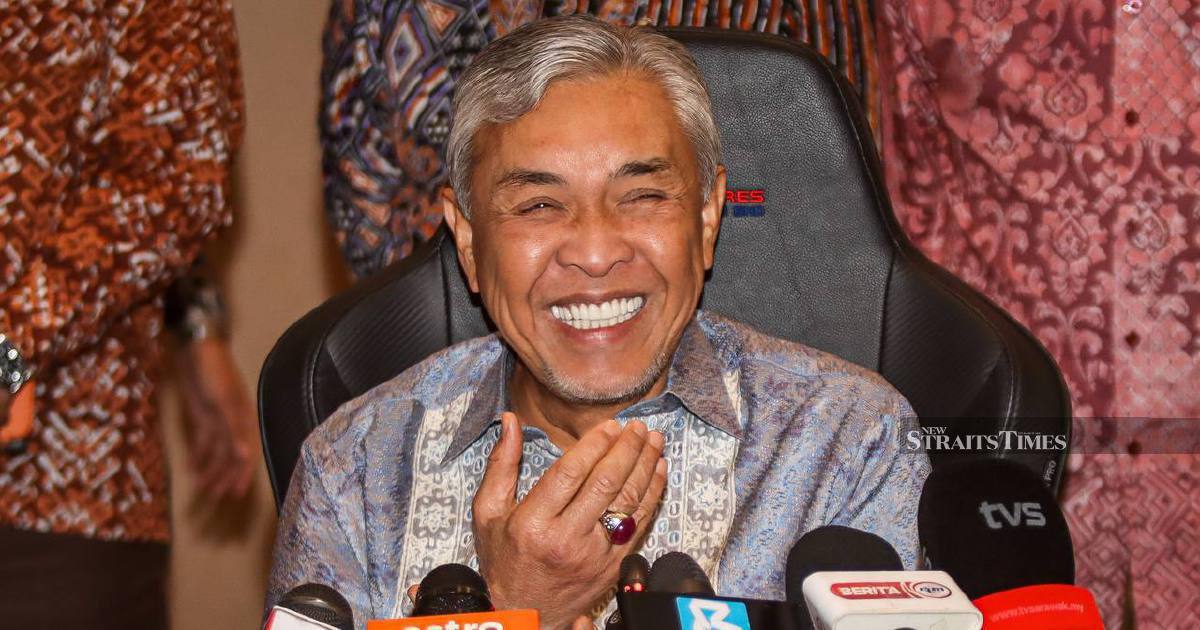
The symbolic verbal exchange between Deputy Prime Minister Datuk Seri Dr Ahmad Zahid Hamidi and Prime Minister Datuk Seri Anwar Ibrahim unfolded in Penang today, with both senior leaders employing pantun—the classical Malay poetic form—to communicate positions on national direction and leadership.
Zahid's composition arrived as a direct riposte to an earlier verse from Anwar, demonstrating how Malaysia's top two officials are channelling traditional literary forms into contemporary political discourse. The exchange carries particular weight given the careful dynamics between the two leaders and their respective political constituencies.
The pantun, a four-line rhyming verse structure that has anchored Malay literary tradition for centuries, carries symbolic and practical significance in Malaysian political communication. When deployed by national leaders, such exchanges transcend mere wordplay, functioning as measured public statements that convey nuance without the confrontational tone of direct political speech. This method allows both Anwar and Zahid to address substantive matters—unity, governance, institutional stability—through metaphorical language that appeals to cultural sensibility while maintaining diplomatic restraint.
Zahid's pantun employed imagery of roofs and storms, according to reports from George Town where the exchange was documented. This meteorological symbolism likely references the buffeting winds facing the government—whether internal political pressures, economic headwinds, or institutional challenges—and gestures toward questions of shelter and protection that resonate with citizen concerns about leadership stability and policy direction.
The use of traditional verse forms by Malaysia's highest executive offices reflects a broader cultural strategy within governance circles. Rather than engaging through formal statements or confrontational press conferences, allowing these traditional forms to carry political messaging acknowledges the enduring cultural authority of Malay literary conventions while permitting interpretation and dialogue without rigid commitment to single meanings.
Anwar's initial pantun, which prompted Zahid's response, evidently centred on themes of unity—a consistent rhetorical priority for the Prime Minister since assuming office. By framing national cohesion through traditional poetic language, Anwar invokes both the historical unity-seeking rhetoric of Malaysia's founding generation and contemporary aspirations for cross-party or cross-community cooperation.
For Malaysian observers and regional analysts, such exchanges signal the relational temperature between senior government figures. In systems where coalition governments depend on careful balance between multiple political forces, these public symbolic gestures serve as barometers of institutional health. When top leaders engage through mutually respectful traditional forms rather than through acerbic criticism or silence, it suggests operational continuity rather than breakdown.
The geographical context of George Town, Penang's capital and a city with significant political history as a DAP stronghold allied with Anwar's reformist faction, adds another layer. Zahid's presence and participation in this exchange in such a location suggests outreach across peninsular political divides and reinforces the cross-coalition narrative that the government continues to project.
Pantun exchanges among political leaders are not unprecedented in Malaysian history, though modern instances remain relatively rare, making today's occurrence newsworthy. The form demands craft and cultural knowledge, suggesting both leaders wished to demonstrate sophistication and respect for literary tradition while communicating substantive political messages.
The imagery of weather—particularly storms—recurs frequently in governance pantun, as it permits discussion of crisis, resilience, and collective shelter without explicit policy criticism. Zahid's choice of this metaphorical register allows him to acknowledge challenges facing the administration while positioning himself as engaged with practical problem-solving rather than partisan obstruction.
For Southeast Asian observers monitoring Malaysian political stability, such cultural diplomatic moments offer reassurance that competition within the government remains bounded by institutional norms and shared cultural reference points. These verses represent a form of political communication that, while oblique to outsiders, carries considerable meaning within Malaysia's political establishment and among Malay-speaking publics attuned to pantun's traditional registers.
The continuation of this poetic dialogue between Anwar and Zahid will likely feature in coming weeks, as both leaders navigate their distinct constituencies while managing the coalition government's ongoing operations. Such exchanges, conducted in Malaysia's classical literary language, demonstrate that even amid political complexity, channels for measured, culturally grounded communication remain open among the nation's senior leadership.

