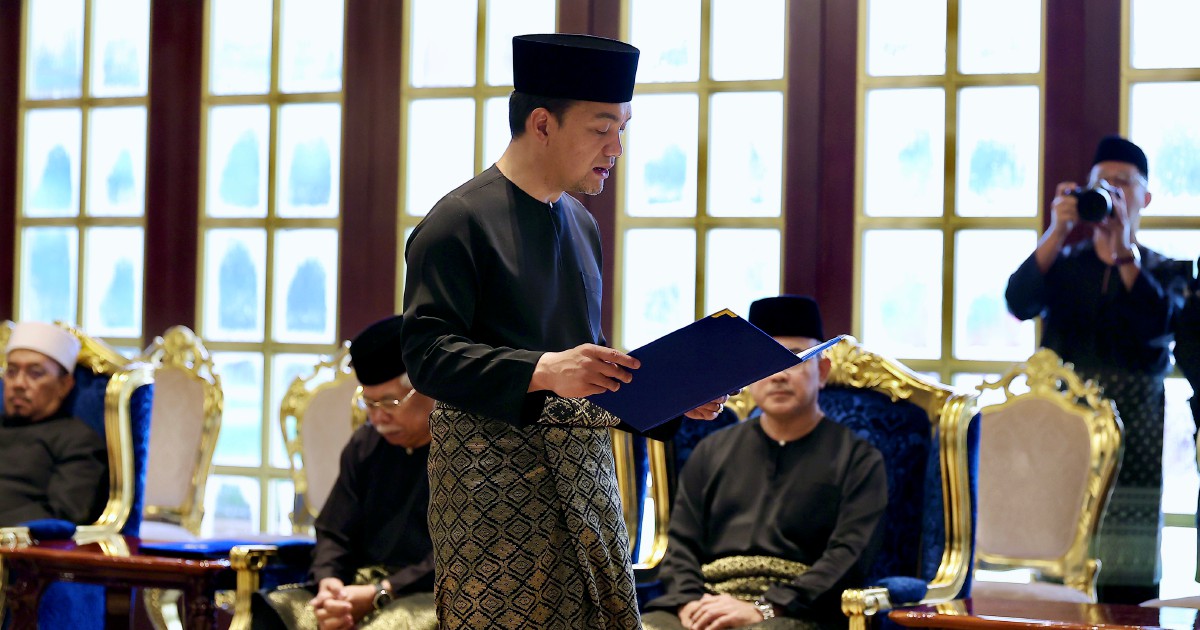
The highest-ranking federal government officials have begun formally acknowledging Datuk Onn Hafiz Ghazi's return to the helm of Johor state government. Deputy Prime Minister Datuk Seri Dr Ahmad Zahid Hamidi marked the occasion by offering his public congratulations to the menteri besar, reflecting the national administration's position on the leadership transition in Malaysia's southernmost peninsular state.
Onn Hafiz's reappointment carries particular significance given the complex political dynamics that have characterised Johor's governance in recent years. The state has experienced considerable shifts in its political alignment and leadership structures, with various coalitions vying for influence. His return to the menteri besar position represents a consolidation of authority within Johor's administration and signals continuity in the state's policy direction moving forward.
The gesture from the Deputy Prime Minister underscores the federal government's alignment with the current Johor administration. Such formal acknowledgements from senior federal leaders serve multiple purposes in Malaysian politics: they legitimise the state leadership, signal federal-state cooperation on key matters, and provide reassurance to stakeholders that governance frameworks remain stable. For a state as economically significant as Johor—which sits as a major contributor to Malaysia's GDP and serves as a crucial economic link to Singapore—maintaining stable governance relationships with federal authorities proves essential.
Johor's economic importance cannot be overstated in the Malaysian context. The state houses critical manufacturing sectors, a thriving property market, and serves as a vital transportation hub. Any disruption to administrative continuity or deterioration in federal-state relations could potentially impact investor confidence and development initiatives. Zahid's public endorsement suggests that the federal administration views the current state leadership as a reliable partner in pursuing national economic objectives and maintaining investor confidence in the region.
The reappointment itself reflects broader patterns in Malaysian state governance, where leadership transitions are often carefully managed through consultation with federal authorities. While state governments maintain constitutional autonomy, the acknowledgement from senior federal figures invariably carries weight in shaping perceptions of legitimacy and strength. Onn Hafiz's ability to secure backing from the Deputy Prime Minister positions him favourably for navigating the complex political environment that characterises Johor's current makeup.
Political observers in Malaysia have watched Johor closely in recent years, as shifting power dynamics have created scenarios of political uncertainty. The state has witnessed various coalition configurations, and maintaining stability has been a priority for both state and federal leaderships. Onn Hafiz's reappointment, coupled with high-level federal endorsements, suggests that key political stakeholders have reached a consensus on his continued leadership. This consensus-building approach—whilst sometimes slow and opaque to outside observers—represents the traditional method through which Malaysian politics manages transitions at the state level.
For Malaysian readers and investors monitoring developments in Johor, the message conveyed through Zahid's congratulations is clear: the state government has federal support and therefore enjoys the institutional backing necessary to implement long-term policies and development projects. This stability matters considerably for businesses considering investments in the state and for residents planning their futures within Johor's jurisdiction.
The timing of such public acknowledgements in Malaysian politics often signals that broader political arrangements have been finalised. When senior federal leaders offer formal congratulations following a state appointment, it typically indicates that consultations behind the scenes have concluded and political parties have aligned themselves behind the incoming or continuing administration. For Onn Hafiz, this represents a clear green light to proceed with his governance agenda without the constant threat of federal political interference or undermining.
Looking ahead, the strength of the federal-state relationship established through such gestures will prove crucial as Johor addresses pressing issues ranging from infrastructure development to economic competitiveness in an increasingly crowded regional marketplace. The state faces competition from other Malaysian states and from Singapore for investment and talent. A menteri besar operating with explicit federal support can more effectively champion Johor's interests in national policy discussions and secure federal resources for state priorities.
The broader Malaysian political context also shapes the significance of this moment. In a federal system where coalition politics remain fluid and factional tensions frequently emerge within and between parties, high-level acknowledgements of state leadership help stabilise the political environment. They create clarity regarding which political actors wield influence and which coalitions maintain control over particular jurisdictions. For a state as politically important as Johor, such clarity benefits all stakeholders from businesses to ordinary residents.
As Malaysia continues navigating post-pandemic economic recovery and grapples with questions about long-term competitiveness in Southeast Asia, strong and stable state administrations become increasingly valuable. Johor, positioned strategically at the southern tip of the peninsula and with deep economic ties to Singapore, carries outsize importance in these national conversations. Onn Hafiz's reappointment, backed by federal endorsement from the Deputy Prime Minister, therefore represents more than a routine administrative matter—it constitutes a significant statement about governance continuity and political stability in one of Malaysia's most economically consequential states.

