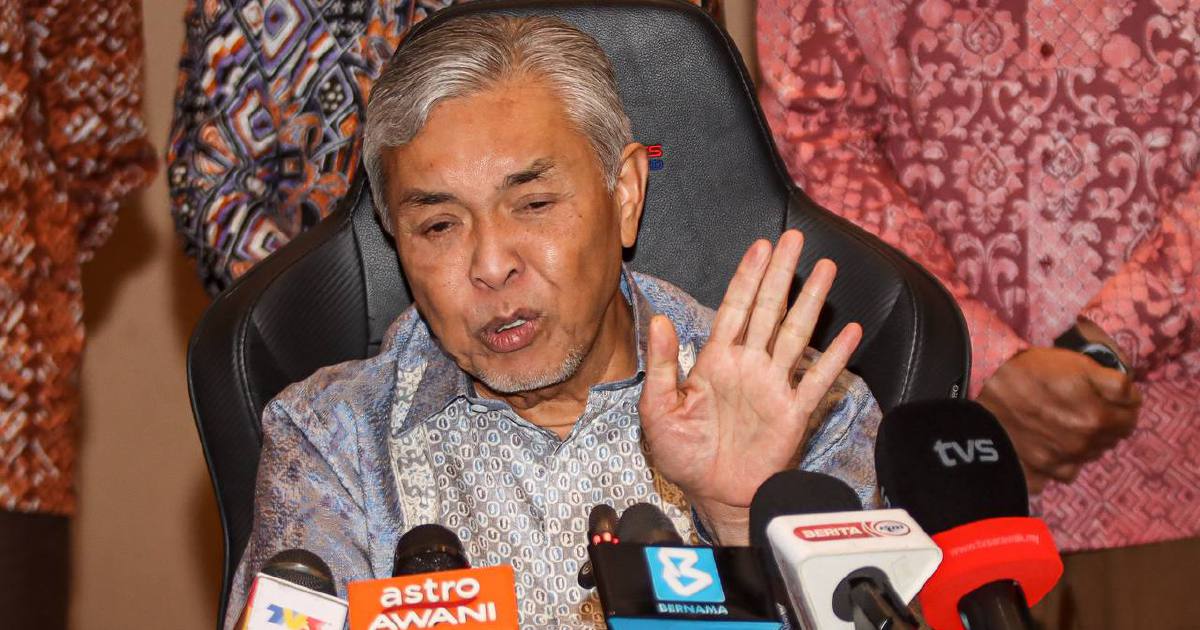
Datuk Seri Dr Ahmad Zahid Hamidi has moved to extinguish persistent speculation about potential moves against Prime Minister Datuk Seri Anwar Ibrahim's leadership, declaring that the stability of the unity government remains paramount. Speaking in George Town, the UMNO deputy president made clear that Barisan Nasional intends to maintain its partnership within the governing coalition for the remainder of the current parliamentary cycle, effectively shutting down mounting chatter about political realignments.
The statement carries particular weight given the ongoing undercurrents of tension within Malaysia's political establishment. Since the formation of the unity government following the 2022 general election, there have been periodic murmurs about the durability of the arrangement between Barisan Nasional, Pakatan Harapan, and other coalition partners. Such whispers intensified during periods of policy disagreement or when faction leaders faced setbacks, making Zahid's explicit reaffirmation significant for investors and analysts tracking Malaysia's political stability.
Barisan Nasional's public commitment to the status quo reflects a pragmatic calculation about the costs and benefits of maintaining the current arrangement. The coalition, anchored primarily by UMNO, has secured ministerial portfolios and policy influence that would be difficult to replicate through opposition ranks. For UMNO specifically, the unity government framework has provided a pathway to rehabilitate its political standing after the 2018 electoral drubbing and subsequent legal challenges faced by senior party figures.
The timing of Zahid's dismissal of toppling speculation suggests an attempt to preempt any narrative that could unsettle foreign investors or trigger market jitters. Political uncertainty remains one of the factors that international observers monitor when assessing Malaysia's risk profile, particularly as the country navigates economic challenges and strives to maintain its position as a regional investment hub. Clear signals of governmental continuity serve the administration's broader economic agenda.
Zahid's position as UMNO deputy president amplifies the significance of his remarks. While UMNO president Zahid Hamidi occupies a different role from the federal government's top leadership, the party remains the largest coalition component and a kingmaker in any parliamentary calculus. His explicit statement effectively locks Barisan Nasional into the unity framework, making sudden reversals politically costly for the party's leadership.
The unity government itself represents an unusual political configuration for Malaysia. The formal partnership between the traditionally opposed Barisan Nasional and Pakatan Harapan occurred partly because neither bloc commanded an independent parliamentary majority after 2022. This arrangement, while pragmatic, has required continuous management of competing interests and policy divergences. Zahid's statement suggests the senior coalition leadership has determined that maintaining this equilibrium remains preferable to the uncertainties of pursuing alternative arrangements.
For Malaysia's regional standing, the stability signal carries implications beyond domestic politics. Southeast Asian governments and international partners prefer predictability in Malaysian governance, as domestic political turbulence can complicate bilateral relations and regional initiatives. The Anwar administration has been actively engaged in regional diplomatic efforts and economic partnerships, and continuity in government composition facilitates consistent foreign policy implementation.
The reaffirmation also reflects awareness among Barisan Nasional leaders that attempting to destabilize or unseat the sitting prime minister would likely trigger a broader political crisis with uncertain outcomes. Historical precedent from Malaysian politics shows that moves to withdraw coalition support from a sitting prime minister often spiral into protracted constitutional disputes and can damage the parties initiating such moves. Zahid's public commitment to stability effectively insulates the government from speculation that might otherwise weaken Anwar's negotiating position on key policy matters.
Looking ahead to the 15th Parliament's conclusion, Malaysia's political actors are already positioning themselves for the subsequent general election cycle. Zahid's statement can be read as Barisan Nasional's indication that it prefers to contest the next general election as a coalition partner with an established track record, rather than as an opposition force seeking to rebuild credibility. This positioning suggests internal calculations that the unity government framework has enabled policy successes that can be translated into electoral assets during campaign season.
The broader context of Malaysian politics encompasses persistent questions about institutional reform, economic inequality, and social cohesion. The unity government was partly justified by Anwar and his allies as necessary to maintain political stability while pursuing reform agendas that might otherwise be blocked by a fragmented parliament. Zahid's reaffirmation of commitment implies that Barisan Nasional believes sufficient progress on these fronts justifies continued partnership rather than reverting to traditional adversarial positioning.
For ordinary Malaysians, the stability assurance carries practical implications. Prolonged political uncertainty can affect consumer confidence, corporate investment decisions, and government policy implementation. Zahid's clear statement removes one source of speculative anxiety about the near-term political environment, allowing businesses and households to plan with greater confidence about the governmental framework within which they operate.

