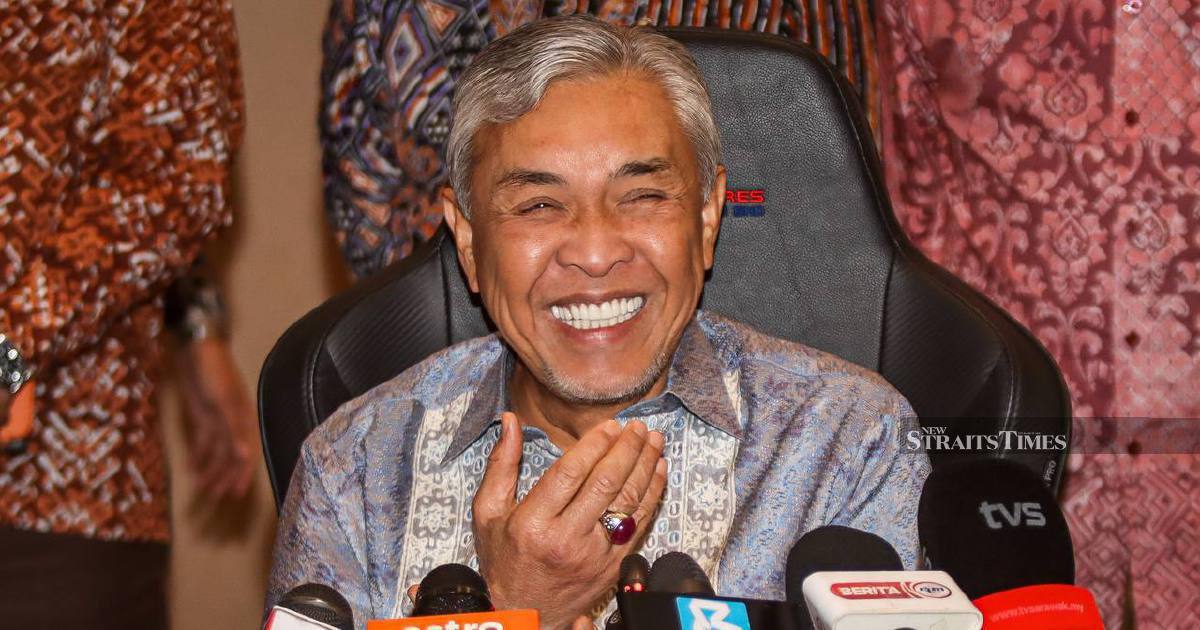
Deputy Prime Minister Datuk Seri Dr Ahmad Zahid Hamidi has replied to Prime Minister Datuk Seri Anwar Ibrahim's recent pantun composition with his own traditional four-line Malay verse, demonstrating the continued use of classical literary forms in contemporary political discourse. The exchange, which unfolded in George Town, reflects a distinctive feature of Malaysian political culture where leaders occasionally resort to traditional poetry as a medium for conveying messages about national unity and governance.
The pantun, a centuries-old form of Malay verse characterised by its alternating rhyme scheme and often witty or metaphorical content, has long held significance in Malaysian cultural and political communication. When deployed by senior government figures, the form carries particular weight, as it signals both respect for tradition and an attempt to connect with Malaysians on a deeper cultural level. The exchange between Zahid and Anwar represents more than mere pleasantries; it underscores how established political figures navigate their public relationship through culturally resonant means.
Anwar Ibrahim's initial pantun had carried themes centred on national unity, a message that aligns with the government's broader policy agenda under his administration. By responding in kind, Zahid demonstrated both an appreciation for the Prime Minister's gesture and a willingness to engage in the symbolic language of solidarity. This back-and-forth communication style, while unusual in Western political contexts, reflects the nuanced diplomatic manoeuvres that characterise Malaysian politics at the highest levels.
The specific content of Zahid's four-line response appeared to address metaphors related to roofs and storms—conventional pantun imagery often drawing from nature to convey deeper political or social meanings. In the Malaysian context, such metaphors frequently carry implicit references to stability, protection, and weathering challenges, themes particularly relevant to a government managing competing interests and maintaining coalition cohesion. The choice of such imagery suggests Zahid was not simply engaging in poetic banter but offering substantive commentary on the current state of national affairs.
The exchange comes at a juncture when the relationship between Anwar and Zahid has been subject to ongoing scrutiny. Both men hold positions of immense influence within the government, and their public interactions are closely observed by political analysts, media commentators, and the broader Malaysian public for signs of harmony or discord within the leadership. The pantun exchange, therefore, serves a communicative function that extends well beyond the poetic form itself—it signals to stakeholders that the top two figures in Malaysian governance are aligned and functioning effectively together.
Pantun exchanges among political leaders are not unprecedented in Malaysian history, though they have become less common in recent decades as modernisation and Western-style politics have increasingly dominated the landscape. The revival of this tradition by Anwar and Zahid thus represents a deliberate choice to invoke cultural elements that resonate with Malaysian identity and heritage. Such choices often carry strategic implications, as they can enhance a leader's standing among voters who value cultural continuity and the preservation of Malay-Islamic traditions.
The George Town setting, in Penang, adds another layer of context to this exchange. Penang has historically been a centre of intellectual and cultural activity in Malaysia, home to various literary and artistic traditions. Conducting such an exchange in this location may have been intentional, lending additional cultural gravitas to the moment and connecting it to the state's heritage as a locus of Malay literary endeavour.
From a broader perspective, the pantun exchange illustrates how Malaysian political communication operates across multiple registers and registers simultaneously. While policy debates occur in parliamentary settings and media interviews, parallel conversations happen through cultural codes that are instantly recognisable to culturally attuned audiences. This multi-layered approach to political messaging allows leaders to communicate on intellectual and emotional levels that purely factual discourse cannot achieve.
The response from Zahid also carries implications for understanding coalition dynamics within Malaysia's ruling administration. The composition of Malaysia's government requires careful management of various political interests and personalities, and public gestures of mutual respect and understanding help maintain the stability necessary for governance. The pantun exchange, in this sense, functions as a safety valve for tensions that might otherwise manifest in more damaging ways.
Looking forward, such cultural exchanges between political leaders may become more prevalent as Malaysia navigates complex governance challenges that require broad consensus-building. The pantun tradition, with its capacity for conveying nuanced messages in aesthetically pleasing and culturally embedded forms, offers Malaysian politicians a distinctive tool for communication that distinguishes their discourse from that of their regional and global counterparts. Whether this represents a broader trend toward cultural reassertion in Malaysian politics remains to be seen, but the Zahid-Anwar exchange suggests that classical forms retain relevance in contemporary political life.

