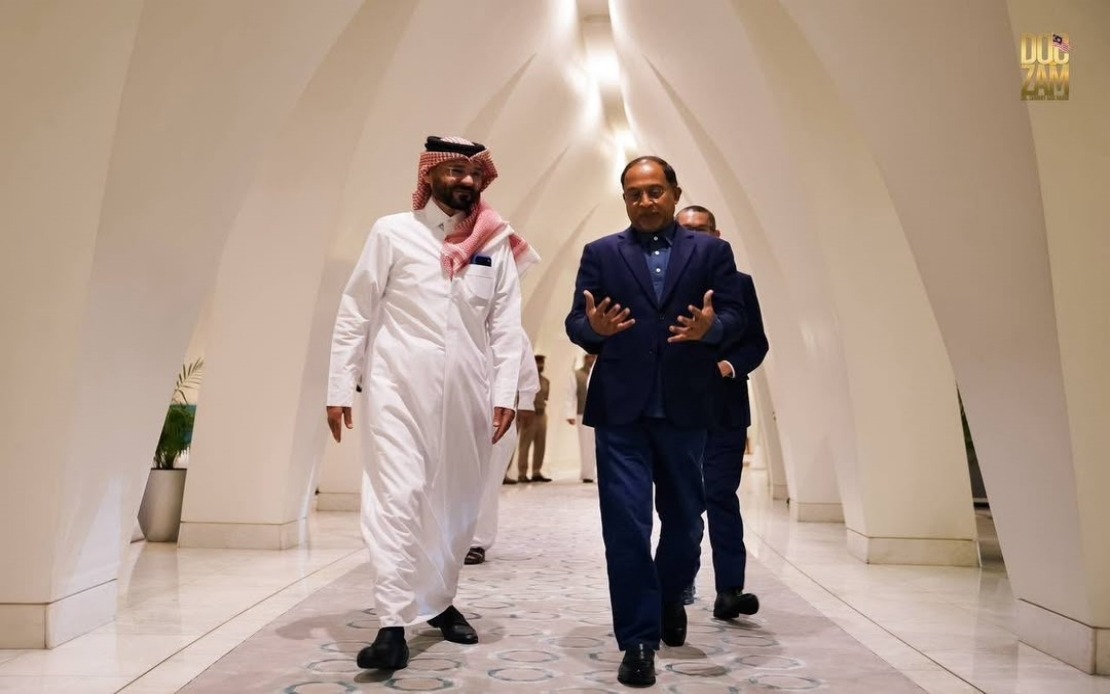
Datuk Seri Dr Zambry Abd Kadir, Malaysia's Higher Education Minister, touched down in Doha early on Tuesday to fulfil an important diplomatic responsibility: representing the Malaysian government as it pays final respects to Sheikh Hamad bin Khalifa Al Thani, the Father Amir of Qatar. The arrival underscores the enduring diplomatic ties between Kuala Lumpur and Doha, particularly as both nations maintain close strategic and economic partnerships across multiple sectors. Sheikh Hamad, who shaped Qatar's transformation into a regional powerhouse over nearly two decades, passed away on Sunday at the age of 74, prompting the Qatari leadership and the international community to mourn the loss of a pivotal Gulf figure.
Zambry announced through social media that he would be meeting with the current Emir, Sheikh Tamim bin Hamad Al Thani, at the Lusail Palace later on Tuesday. This scheduled engagement reflects customary diplomatic protocol, allowing Malaysia to express formal condolences directly to the reigning ruler whilst also honouring the legacy of his predecessor. The visit demonstrates Malaysia's commitment to maintaining strong bilateral relations with Qatar during a period of significant national transition for the Gulf state. The engagement at the palace venue, one of Doha's most prominent state locations, signals the importance Malaysia places on this relationship.
In an official statement released via Facebook, Zambry conveyed Malaysia's heartfelt sympathy, saying the nation "extends its deepest condolences to the leadership and the people of Qatar for the passing of the Father Amir, Sheikh Hamad bin Khalifa Al Thani." This formal expression of sympathy is standard practice in diplomatic affairs, yet carries particular weight given the historical significance of Sheikh Hamad's rule and his central role in transforming Qatar into a major global player. Malaysia's prompt and high-level response to his passing reflects the mutual respect and cooperation that has characterised relations between the two countries across trade, education, culture, and tourism.
Sheikh Hamad's 18-year reign from 1995 until 2013 fundamentally reshaped Qatar's global standing. During his leadership, he oversaw the nation's emergence as a major energy exporter, established the influential Al Jazeera media network, and positioned Qatar as a key regional mediator in Middle Eastern affairs. He also spearheaded ambitious development projects that transformed Doha into a modern metropolis. His peaceful transition of power to his son Sheikh Tamim in 2013 set a precedent for orderly succession in Gulf monarchies, establishing a model that many regional observers viewed positively. The elder emir's influence extended beyond his formal term, as he continued to wield significant influence in Qatari affairs as the Father Amir following his retirement from executive governance.
Quatar's government declared four days of official national mourning commencing Sunday, July 12, a measure that reflected the profound respect held for the deceased leader throughout the country. The mourning period saw the closure of all ministry buildings, government departments, and public sector institutions, effectively bringing much of the nation's formal operations to a standstill. This ceremonial pause underscores the cultural importance of honouring departed leaders in Gulf Arab society and demonstrated the widespread recognition of Sheikh Hamad's contribution to modern Qatar. The four-day period provided the nation and its international partners with a defined timeframe for paying respects and reflecting on his legacy.
The Amiri Diwan, Qatar's royal court administrative body, made the official announcement of Sheikh Hamad's death, confirming that he passed away on the morning of Sunday, July 12. His passing, whilst not entirely unexpected given his advanced age, nevertheless marked a significant moment for the region. Sheikh Hamad had largely withdrawn from public life in recent years, allowing Sheikh Tamim to consolidate his leadership and implement his own vision for Qatar's future. The transition had been smooth and stable, suggesting strong institutional continuity within the Qatari state apparatus. Nevertheless, his death represented the end of an era for those who had witnessed his transformative leadership across three decades.
Malaysia's dispatch of a senior cabinet minister to attend the funeral ceremonies reflects the bilateral relationship's depth and the importance both nations attach to their partnership. Beyond formal diplomatic protocol, the gesture demonstrates Malaysia's recognition of Qatar's strategic importance in the broader Gulf and Middle Eastern context. Southeast Asian nations like Malaysia have developed increasingly sophisticated engagement strategies with Gulf countries, recognising their economic clout, investment capacity, and cultural affinity with Muslim-majority populations. Zambry's presence in Doha forms part of this broader strategic alignment.
The Higher Education Ministry's leadership being selected to represent Malaysia also carries symbolic weight. Education represents an area of substantial cooperation between the two nations, with numerous Malaysian students pursuing tertiary qualifications in Qatar and vice versa. The ministry serves as a natural bridge between the countries' academic and research institutions. By selecting Zambry for this diplomatic mission, Malaysia signalled that it views the relationship with Qatar as encompassing multiple dimensions beyond traditional political and economic ties. Education and knowledge exchange have become increasingly central to Gulf-Southeast Asia relations in recent years.
For observers tracking regional diplomatic dynamics, the various international delegations arriving in Doha for Sheikh Hamad's funeral provide insights into the network of relationships Qatar has cultivated over decades. Malaysia's participation in these ceremonies places the country squarely within Qatar's circle of valued international partners. As Qatar continues to navigate its strategic positioning amid broader regional tensions and global shifts, maintaining strong relationships with economically dynamic and diplomatically influential nations like Malaysia becomes ever more important. The funeral thus served as a platform for reaffirming bonds and signalling mutual commitment to sustained cooperation.
Sheikh Tamim now faces the responsibility of consolidating his own vision for Qatar whilst honouring his father's legacy. The transition appears secure given the elder emir's earlier retirement and the current ruler's growing international profile. Nevertheless, international partners like Malaysia are signalling their support for continuity and stability by participating visibly in the mourning process and maintaining active diplomatic engagement. The relationship between Malaysia and Qatar, built over decades of consistent diplomatic effort, appears positioned to deepen further under Sheikh Tamim's continued leadership. Malaysia's participation in this solemn occasion therefore looks backward to honour past cooperation whilst looking forward to strengthening future partnerships.

