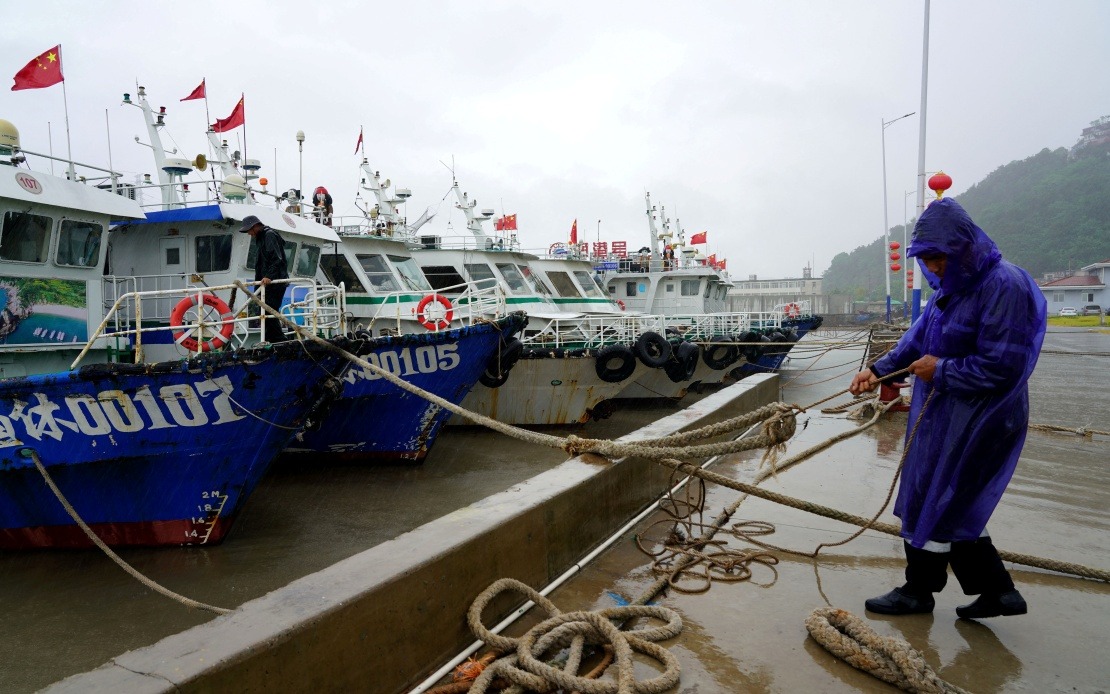
Zhejiang Province in eastern China has ratcheted up its emergency preparedness to Level III following upgraded forecasts for Typhoon Dolphin, which is bearing down on the country's densely populated coastal region. The decision to elevate the response came at midday Friday as meteorological authorities confirmed the severe tropical system continues its westward advance toward the mainland. Officials expect the typhoon to make landfall somewhere along the coast between Shanghai and Fuqing in Fujian Province on either Sunday or Monday, bringing with it the prospect of significant disruption across one of China's most economically vital regions.
At the time of the alert upgrade, Typhoon Dolphin was positioned approximately 763 kilometres east of Wenling, a city in central Zhejiang, according to readings from the Zhejiang Meteorological Observatory. The system is moving westward at a deliberate pace of between 15 and 20 kilometres per hour, which meteorologists expect will maintain or potentially amplify its destructive potential. China's National Meteorological Centre issued a yellow-level alert on Thursday evening, indicating the threat warrants significant public attention and preparedness measures across affected regions.
The trajectory and intensity projections suggest Zhejiang faces the highest concentration of risk. Lou Xiaofen, the chief forecaster at the Zhejiang Meteorological Observatory, emphasized that the province lies directly in the typhoon's path and stands a substantial probability of experiencing a direct hit. This positioning between Shanghai to the north and Fujian to the south creates a particularly vulnerable geographic situation, as the typhoon's landfall impact would be concentrated rather than dispersed. The potential for severe damage across infrastructure, agriculture, and populated areas has prompted authorities to shift into a more aggressive response posture.
The provincial government has already implemented sweeping precautionary measures to safeguard lives and maritime operations. All 162 passenger ferry routes operating throughout Zhejiang have been suspended, effectively halting tourism and civilian water transport across the province. Simultaneously, authorities have ordered all 193 offshore industrial and construction projects to cease operations, removing workers from exposed positions vulnerable to the storm surge and extreme winds expected with the typhoon's passage. Additionally, 474 construction vessels that normally operate in coastal waters have been recalled to port, consolidating them in safer harbours away from the typhoon's predicted track.
Maritime authorities have undertaken an extensive notification and inspection campaign to ensure vessels and offshore installations are properly prepared. The provincial maritime administration has dispatched over 86,000 early warning messages to vessel operators, port authorities, and maritime stakeholders. Beyond communication efforts, inspectors have visited 24,000 vessels to verify they meet safety standards and are adequately secured or relocated. High-powered tugboats equipped for emergency rescue operations have been positioned on standby, ready to respond to any vessels or personnel requiring urgent assistance during the storm.
The Level III response protocol mandates that local authorities maintain rigorous monitoring of the typhoon's development and trajectory. Forecast updates are being issued at frequent intervals to keep the public and relevant agencies informed of any shifts in the storm's path or intensity. Evacuation procedures have been activated in vulnerable areas, with government personnel working to move residents from flood-prone zones and exposed coastal communities to designated shelters. Public guidance is being disseminated through multiple channels to ensure citizens understand protective actions they should take and when to seek refuge.
For Malaysian and Southeast Asian observers, Typhoon Dolphin's impact on China's eastern provinces holds significant regional implications. The disruption to Chinese manufacturing centres and ports ripples through regional supply chains, affecting production and shipping timelines for goods destined for ASEAN markets. The scale of China's economic output in provinces like Zhejiang means that any significant typhoon impact creates temporary but measurable disruptions in regional trade patterns and commodity prices. Additionally, the meteorological systems that produce typhoons in the western Pacific operate across a broad geography that occasionally influences weather patterns throughout Southeast Asia, making the monitoring of major storm systems relevant to regional weather forecasting.
The typhoon represents the 13th significant tropical cyclone to affect China during 2026, reflecting an active storm season in the western Pacific basin. The frequency and intensity of such systems continue to present ongoing challenges for coastal management strategies. China's institutional response capabilities have become increasingly sophisticated, leveraging real-time meteorological data and coordinated evacuation procedures to minimize casualties from extreme weather events. The comprehensive nature of Zhejiang's preparations—spanning maritime operations, construction activities, and civilian evacuation—demonstrates the systematic approach authorities employ when facing confirmed severe weather threats.
Authorities in other provinces likely to experience indirect impacts from Typhoon Dolphin are monitoring developments closely, preparing to activate their own response protocols if the storm's track or intensity changes. The coordination between the Zhejiang Meteorological Observatory and the National Meteorological Centre ensures consistent messaging and synchronized emergency responses across administrative boundaries. As the typhoon continues its westward movement over the coming hours, updated forecasts will clarify whether the intensity remains stable or strengthens further, potentially influencing the severity of impacts upon landfall and the scope of necessary precautionary measures.

