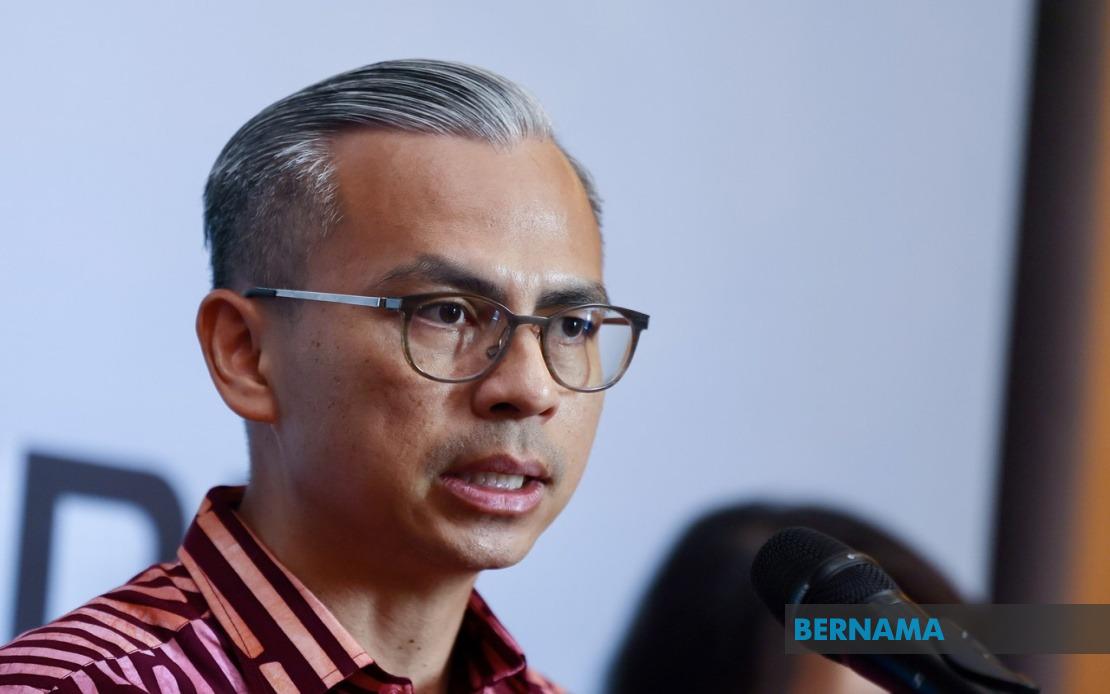
Bank customers who find themselves still paying the RM1 interbank ATM withdrawal fee should immediately escalate their grievances to Bank Negara Malaysia, Communications Minister Datuk Fahmi Fadzil announced this week. The directive came as the central bank's long-awaited fee waiver entered force, a consumer-friendly policy designed to reduce transaction costs across the financial system. Speaking at the Communications Ministry's weekly briefing, Fahmi emphasised that BNM possesses the regulatory authority to initiate enforcement procedures against any banking institution that resists compliance with the new framework.
The waiver represents a significant shift in Malaysia's retail banking landscape, particularly for customers who regularly access funds through rival banks' machines. Under the previous arrangement, users incurred a RM1 penalty whenever they withdrew cash from an ATM not operated by their primary financial institution—a cost that accumulated rapidly for frequent transactors. By eliminating this fee across participating networks, policymakers aimed to enhance financial inclusion and reduce the hidden charges that eat into household budgets. The policy emerged from sustained consumer advocacy and recognition that such fees disproportionately affected lower-income Malaysians who lack consistent access to their own bank's machine network.
However, the implementation framework carries important nuances that customers must understand to navigate the system effectively. BNM clarified that the waiver applies exclusively to ATMs owned and directly operated by banks enrolled in Malaysia's shared network infrastructure. This distinction proves critical because not all machines bearing banking branding necessarily qualify for the fee exemption. The central bank's announcement specifically encompassed approximately 16,000 bank-owned machines representing roughly 84 percent of the national total, leaving a meaningful subset of automated tellers outside the waiver's protective scope. This partial coverage reflects Malaysia's complex banking ecosystem, where traditional institutions share space with alternative operators functioning under distinct commercial frameworks.
The remaining 16 percent of ATMs operate under the management of non-bank private companies that maintain separate business arrangements with their banking partners. These third-party operators, who charge RM1 withdrawal fees under their existing contracts, fall outside BNM's regulatory remit for this particular initiative. The distinction underscores a broader reality in Malaysian financial services: while the central bank can mandate conduct among licensed banks, it possesses limited leverage over independent vendors who function as service providers rather than regulated entities themselves. Fahmi advised consumers to verify machine ownership before attempting withdrawals, recommending they inspect the logos and branding displayed on each ATM to confirm direct bank operation.
The implementation timeline created an information vacuum that spawned confusion across social media platforms and customer service channels. Members of the public questioned whether the fee waiver applied universally or whether specific conditions governed its applicability. This uncertainty reflected broader communication challenges that typically emerge when multifaceted financial policies encounter a customer base accustomed to straightforward, uniform rules. Fahmi acknowledged these public enquiries directly, indicating that the government had taken note of consumer bewilderment and sought to provide clarity. His ministry worked alongside the central bank to issue supplementary guidance explaining the policy's precise scope and limitations.
The Association of Banks in Malaysia and the Malaysian Islamic Banking and Financial Institutions Association have undertaken to release a coordinated statement providing operational details about the waiver's rollout. This joint communication from industry bodies carries particular weight because banks themselves serve as primary contact points for millions of retail customers. When banking associations speak with unified voice, their messaging typically carries greater credibility than government pronouncements alone, particularly among segments of the population sceptical of official channels. The pending industry statement offers opportunity to clarify implementation practices, highlight participating institutions, and establish transparent complaint mechanisms for customers discovering that charges persist despite supposed compliance.
Beyond the immediate ATM fee question, Fahmi seized the platform to highlight Malaysia's expanding role as a regional fintech destination. An international financial technology enterprise recently established its Global Development Centre at Tun Razak Exchange, signalling confidence in the country's digital infrastructure and regulatory environment. The company's decision to locate its first such facility in Malaysia rather than Singapore, Hong Kong, or other regional alternatives reflects strategic assessment that the nation offers competitive advantages for technology-driven financial innovation. The investment particularly targets capabilities in Agentic AI, representing next-generation applications of artificial intelligence within banking and financial services sectors.
This foreign investment carries symbolic importance beyond its immediate economic footprint. Tech companies conducting global operations typically site major centres in jurisdictions offering stable governance, predictable regulatory frameworks, and skilled workforces capable of executing sophisticated development projects. Fahmi positioned the investment decision as validation of the MADANI Government's political stability and economic policy coherence, particularly concerning foreign investor perceptions. The framing suggests that beyond traditional manufacturing or infrastructure sectors, Malaysia increasingly competes for knowledge-intensive, high-value financial technology operations that generate substantial employment and intellectual capital development.
The convergence of consumer protection initiatives like the ATM fee waiver with foreign direct investment in cutting-edge fintech illustrates contrasting dimensions of Malaysia's financial system modernisation. On one hand, policymakers prioritise making banking services more affordable and accessible for retail customers managing everyday transactions. Simultaneously, they pursue ambitious goals to position Malaysia as a global innovation hub attracting elite technology enterprises and their high-skilled workforces. These parallel trajectories reflect recognition that sustainable financial system development requires both bottom-up improvements benefiting ordinary users and top-down infrastructure enhancements supporting sophisticated institutional players.
For Malaysian consumers navigating this transitional landscape, immediate action centres on verifying their banks' compliance with the fee waiver and reporting instances of persistent charges to BNM. The regulatory mechanism exists and authorities have explicitly invited customer participation in enforcement. However, the policy's partial coverage across approximately 84 percent of machines means that some withdrawal locations will continue imposing charges regardless of customer complaint mechanisms. Awareness of this limitation becomes essential for trip planning and cash management strategies, particularly for individuals frequenting areas where alternative ATM operators predominate. The coming weeks will prove instructive as industry bodies issue clarifications and customers discover real-world implementation outcomes across diverse banking networks and geographic regions.

