British alpinist Fay Manners has etched her name into mountaineering history by becoming the first British woman to establish a new climbing route on the Eiger North Face. Working alongside Swiss partner Roger Schaeli, the 39-year-old spent 13 days in August constructing what they named "Solar Eclipse," a formidable 900-metre route comprising 33 pitches. The accomplishment represents far more than a personal triumph—it signals a significant shift in representation within a sport long dominated by male pioneers whose names fill guidebooks across the climbing world.
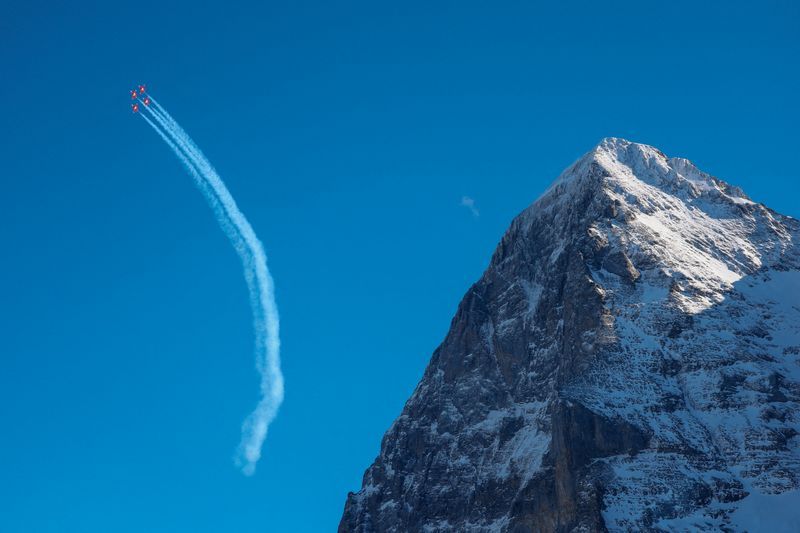
The Eiger's North Face stands as one of the world's most notorious mountaineering challenges. Rising 1,800 metres above the Swiss Alps, this wall of rock and ice has claimed countless lives throughout its climbing history. Extreme weather, rockfall, and the sheer technical difficulty of the terrain have combined to forge its fearsome reputation. The first successful ascent came only in 1938, when a German-Austrian team finally conquered the face after years of deadly failures. In the decades since, the North Face has attracted elite climbers seeking to test themselves against one of nature's most unforgiving testing grounds.
Manners was not a novice returning to the Eiger. Four years prior, she had climbed the Heckmair Route, one of the established lines on the face. Rather than remaining satisfied with following in others' footsteps, that experience sparked an obsession. She studied the wall intensively, absorbing its geology, weather patterns, and existing routes until a vision formed—a path through previously untouched terrain that only she could see. This shift from repetition to creation marks a fundamental difference in mountaineering endeavour. Climbers repeating established routes benefit from accumulated knowledge: they understand the difficulty rating, know which sections present cruxes, and can prepare accordingly. Route establishment offers none of these comforts. Each decision about which way to go, what protection will hold, and whether the wall permits passage remains uncertain until the moment of confrontation.
"You don't know how hard it's going to be," Manners explained to Reuters, capturing the existential uncertainty that defines new route establishment. "You don't know the sort of protection that you'll need to put in, you really don't know if you're going to be able to make it to the top." This vulnerability—the honest acknowledgment that failure remained possible until the final pitch was topped out—characterises the creative act that separates route openers from those who follow.
For Manners, the significance of her achievement transcends personal accomplishment. She articulated a concern that extends beyond climbing: the cumulative message sent when every name in the guidebook belongs to a man. In mountaineering, as in many male-dominated pursuits, representation shapes aspiration. Young climbers scanning route descriptions absorb not just technical information but a subtle cultural narrative about who belongs in this sphere. "If you're looking in the guidebook and every single name of the person that's opened a route is male, somehow that's telling you that men are opening routes and women aren't," she observed. The presence of female names in these records matters because it communicates possibility—that women do not merely repeat what others have created but generate new possibilities themselves.
Women have participated in Eiger climbing for far longer than many might assume. Daisy Voog achieved the distinction of being the first woman to successfully climb the North Face in 1964, an era when the mountaineering establishment actively excluded women from serious climbing pursuits. Contemporary accounts noted that Voog had sought admission to a mountaineering club devoted to extreme climbing but was rejected outright because the organisation admitted only men. Just five years after Voog's historic ascent, Japanese climber Michiko Imai became the sole female member of a six-person team that established the "Japanese Summer Direttissima" route. These pioneers demonstrated capability and vision, yet their names remain less prominent in climbing consciousness than those of their male contemporaries—a pattern Manners seeks to disrupt through her own work.
Manners' perspective on these historical patterns extends to examining the psychological architecture of gender limitation. She questions how women internalise societal assumptions about capability, noting that doubt becomes embedded so deeply it feels like personal limitation rather than external constraint. "Maybe if I never grew up with someone saying to me, 'You can't carry as much as me, so I'll carry more,' maybe if it was just always equal from the beginning, then you just never have that doubt in your mind," she reflected. These subtle messages accumulate across childhood and adolescence, shaping not just what women attempt but what they believe possible. The stereotypes operate with such quietness that their subjects rarely recognise them until examining their own thinking.
Manners' route to professional mountaineering itself illustrates these systemic barriers. Growing up in England with genuine athletic passion, she imagined a sporting career. Yet those around her—family, peers, mentors—consistently communicated a limiting message: women could not sustain careers in sport because insufficient money or opportunity existed. The repeated discouragement proved sufficiently persuasive that she charted a different course, pursuing data science while working as a consultant. It was only after relocating to Chamonix, France, that climbing transformed from weekend passion into livelihood. When The North Face approached her about sponsorship, initially she continued splitting time between data work and climbing. The transition to full-time mountaineering arrived almost by accident rather than through deliberate ambition—because, as she admitted, part of her still believed women could not sustain such careers.
This trajectory resonates powerfully with Southeast Asian contexts where gender expectations similarly constrain aspiration. While Malaysia and neighbouring nations have produced accomplished mountaineers, women's participation in elite climbing and outdoor adventure remains limited partly by cultural narratives about suitable female pursuits. Manners' insistence on establishing new routes—on the creative rather than merely reproductive level—offers a model for how representation functions. She did not simply repeat what men had done; she added something new to the collective heritage of climbing.
Manners views her accomplishment as an opening rather than a conclusion. She explicitly hopes to see all-female teams return to Solar Eclipse, continuing to climb and refine the route she established. This vision extends the significance beyond personal achievement into something generational. She is creating not just a new climb but a new possibility—a tangible demonstration that women belong in the creative space where mountains are first understood through a climber's eye. The guidebook will now contain a woman's name, and future climbers—regardless of gender—will see that women do indeed establish routes and possess the vision to find lines through previously untouched terrain.
The broader implications for mountaineering and beyond centre on how visibility shapes possibility. When institutions, sports, and professions contain no representation of women in creative leadership roles, absence becomes naturalised as inevitability. Manners disrupts that narrative through direct action—by investing 13 days of her life establishing Solar Eclipse, she has demonstrated that women not only participate in mountaineering's apex experiences but envision and create them. In doing so, she challenges the subtle but persistent gender assumptions that shape who believes themselves capable of extraordinary achievement.

