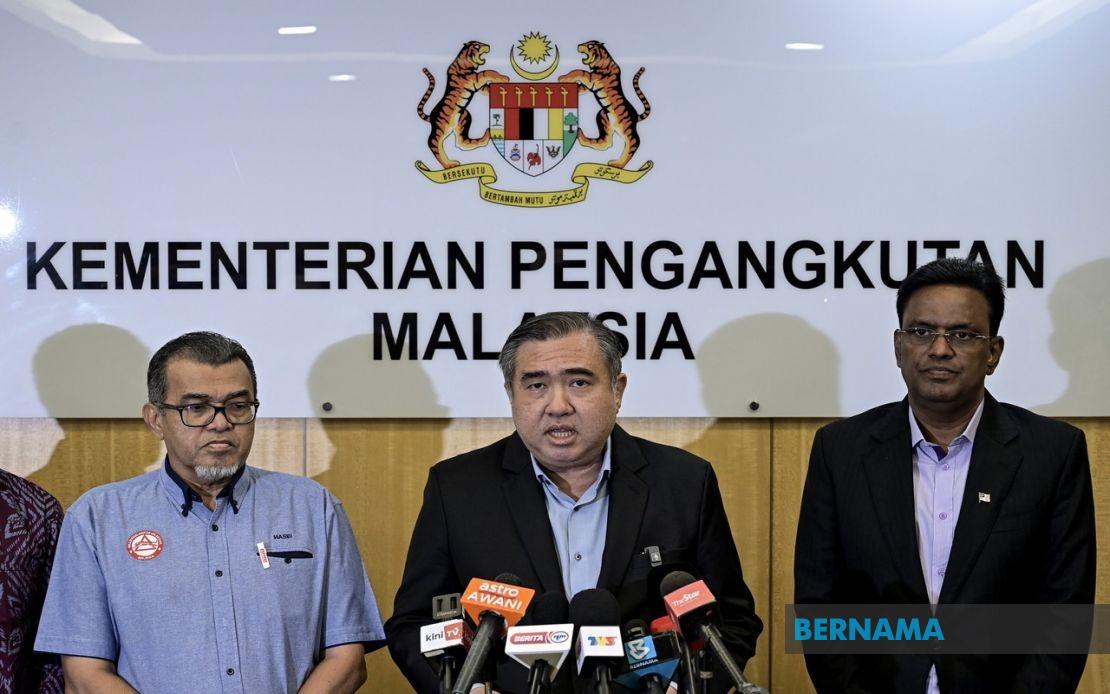
The Malaysian Cabinet has given the green light to proposed amendments to the Road Transport Act 1987 that would empower the courts to impose compensation orders against road offenders as part of their punishment regime. Transport Minister Anthony Loke announced the decision following the Cabinet meeting on Wednesday, signalling a significant shift in how the country addresses the consequences of negligent driving behaviour. The move represents an attempt to bridge the gap between criminal penalties and civil remedies, making offenders directly accountable for the tangible harm caused to victims and their families.
Under the current legal framework, victims of road accidents must pursue separate civil actions to claim damages, a process that can be lengthy and costly. The proposed amendments would streamline this by allowing the court handling the criminal case to simultaneously order compensation as part of the sentencing process. This dual-track approach aims to provide faster relief to injured parties and bereaved families while simultaneously reinforcing the principle that criminal accountability extends beyond imprisonment and financial penalties imposed by the state.
The compensation mechanism will apply to various categories of road offences, with particular emphasis on serious violations such as driving under the influence of alcohol or drugs and reckless driving. Rather than establishing a fixed compensation scale, the government intends for amounts to be determined on a case-by-case basis, taking into account the severity of the offence, the extent of injuries or fatality, documented losses suffered by the victim or surviving family members, and the offender's financial capacity to pay. This individualized approach reflects recognition that road accidents vary enormously in their circumstances and consequences.
Anthony Loke stressed that compensation would constitute an additional punishment layer, not a replacement for existing penalties. Prison terms, driving disqualifications, and fines would remain intact and enforceable. This clarification is important given concerns that introducing compensation requirements might be seen as a soft option or as a substitute for more stringent traditional penalties. The minister's emphasis underscores that the government views victim compensation as complementary to the existing criminal justice response, creating a more comprehensive accountability framework.
The proposal also encompasses measures to strengthen the Road Offence Demerit Points System, known locally as KEJARA, which tracks traffic violations and driver behaviour. By coupling mandatory compensation with enhanced demerit point mechanisms, the government appears to be building a more integrated system for managing road safety. The demerit system serves as a graduated enforcement tool that can lead to license suspension or revocation for chronic offenders, creating consequences that accumulate over time rather than relying solely on individual incident penalties.
Implementation of the compensation framework will require careful coordination across multiple stakeholder groups. The Ministry of Transport plans to conduct extensive engagement sessions with relevant government agencies, the insurance industry, and other stakeholders before drafting the formal bill. These consultations will address several unresolved technical questions, including the precise scope of offences that will trigger compensation obligations, the definition of serious injuries versus minor harm, and the mechanism for situations where an offender lacks sufficient financial resources to meet a compensation order.
The insurance industry's involvement in these pre-legislative discussions is particularly significant, as the interaction between court-ordered compensation and insurance claims requires careful clarification. The government has confirmed that compensation orders would not interfere with victims' rights to pursue insurance claims through existing channels or to lodge separate civil lawsuits. However, insurers will understandably want to understand how these multiple compensation streams might intersect and whether they could face double-payment scenarios or disputes over primary liability.
Geographically and demographically, road accidents impose substantial costs on Malaysian society. The country has experienced significant fatalities and serious injuries from traffic incidents, with vulnerable road users including motorcyclists, pedestrians, and young drivers disproportionately affected. Compensation mechanisms that place direct financial responsibility on offenders could theoretically provide stronger deterrence, particularly for individuals who might calculate the expected costs of dangerous driving behaviour. Economic burden placed directly on the individual actor creates more localized incentive structures than fines paid to the state.
Minister Loke indicated that the government aims to present the revised bill during the year-end parliamentary session, contingent on completing the drafting and stakeholder engagement phases. He also proposed establishing a special parliamentary committee to examine the bill in detail, with the explicit goal of securing cross-party consensus. This approach acknowledges that road safety reform works best when it carries broad political support rather than being perceived as a partisan initiative, and it signals the government's commitment to creating durable legislation that will withstand potential future challenges.
The retrospectivity question has been addressed in advance, with the government confirming that the amended legislation will apply only to offences committed after Parliament passes the law. This standard legal principle prevents retroactive prosecution but means implementation will occur gradually as new cases enter the system. For Malaysian road users, the amendments represent a potential shift in the financial and personal consequences of traffic violations, potentially increasing the economic burden for drivers found culpable of serious offences and creating stronger incentives for compliance with traffic regulations.
From a regional perspective, Malaysia's approach adds another data point to discussions across Southeast Asia about how to strengthen road safety enforcement. Countries in the region have experimented with various combinations of criminal penalties, demerit systems, licence suspension, and restorative justice mechanisms. The inclusion of court-ordered victim compensation positions Malaysia alongside jurisdictions that recognize the importance of making offenders directly accountable to victims, potentially influencing policy discussions in neighbouring countries facing similar road safety challenges.
The proposed amendments also reflect evolving judicial thinking about the purposes of criminal law beyond retribution and deterrence. By requiring courts to consider and articulate the actual harm caused to victims, the compensation mechanism embeds victim-centred principles into the criminal justice response. This shift acknowledges that road safety is not merely a matter of individual punishment but fundamentally concerns the protection of public welfare and the recognition of harm suffered by innocent parties. For Malaysian society, the reforms may gradually reshape how road safety is conceptualized, from a matter of state enforcement to a more comprehensive accountability system involving victims, offenders, courts, and the broader community.

