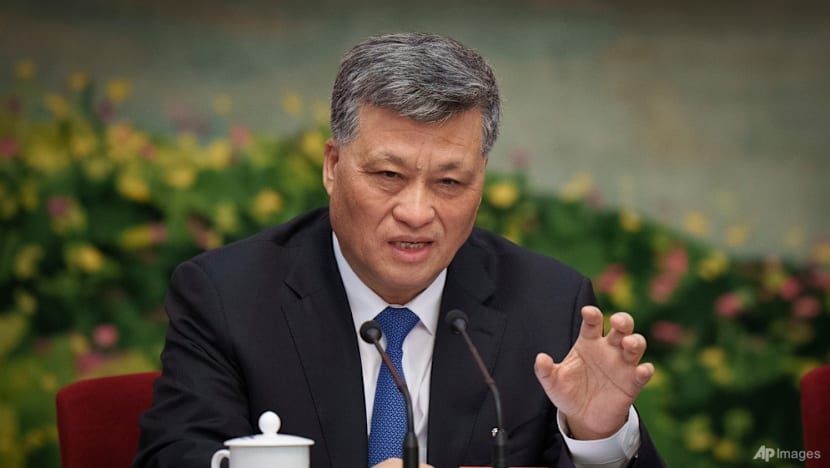
China's ruling Communist Party has purged Ma Xingrui, a 66-year-old former senior official who led Xinjiang's administration, following findings of systemic corruption spanning financial crimes, sexual misconduct, and family-centred graft. The decision to expel him from the party and strip him of all official positions came after the party's anti-corruption body submitted its damning report to the Politburo—the apex decision-making council chaired by President Xi Jinping—which unanimously approved the disciplinary action on Tuesday, July 14.
Ma's downfall represents a significant purge within China's highest echelons, given his status as a Politburo member, one of roughly two dozen individuals who comprise the party's inner circle. His fall from grace underscores President Xi's continued crackdown on party corruption, a signature policy since he came to power over a decade ago. The breadth and specificity of allegations against Ma, combined with the swift punishment, signals that Beijing takes seriously the conduct of regional leaders entrusted with managing sensitive territories.
The party's investigation uncovered an extensive pattern of personal enrichment and abuse of authority during Ma's tenure administering Xinjiang from 2021 to 2025. According to state news agency Xinhua, Ma orchestrated below-market property sales benefiting his family members, engaged in transactional sexual arrangements tied to his official power, and permitted relatives to leverage his position to accumulate substantial personal wealth. These findings paint a picture of an official who weaponised his authority for private gain and familial advancement rather than public service.
Beyond family-centred corruption, Ma allegedly bartered his influence for direct financial benefit. Xinhua's report indicates he solicited advantages for businesspeople, contractors, and job applicants in exchange for substantial sums of money and other valuables. Such conduct—characterised by the state media as particularly egregious—suggests a systematic operation wherein access to government favour became a commodity traded for personal enrichment rather than merit-based decision-making.
Ma's four-year stewardship of Xinjiang placed him at the helm during a period when the region remained under extraordinarily stringent state control. The backdrop to his administration involves Beijing's expansive security operations, framed by Chinese authorities as counter-terrorism measures but widely condemned internationally as disproportionate and discriminatory. Xinjiang had experienced multiple deadly attacks on civilians through the mid-2010s, which the Chinese government attributed to armed groups advocating separation and religious extremism, predominantly involving the Uyghur Muslim minority population.
The security apparatus deployed across Xinjiang over the past decade has drawn fierce criticism from international human rights bodies and Western governments. A landmark 2022 assessment by Michelle Bachelet, then the UN's high commissioner for human rights, raised serious allegations of crimes against humanity occurring within the region. Her findings prompted calls for independent investigations and raised questions about the legality and proportionality of China's security approach, concerns that remain contentious in international diplomatic circles and within human rights advocacy organisations.
Ma's tenure occurred precisely when these contentious policies were being implemented and refined. As the regional administrator, he wielded significant authority over security operations, resource allocation, and personnel appointments. His corruption now raises uncomfortable questions about whether misuse of power extended beyond personal enrichment to potentially influence how security policies were applied, although the party's charges focus narrowly on graft rather than policy matters.
For Malaysian readers and observers across Southeast Asia, Ma's expulsion illustrates several dynamics relevant to the region. First, it demonstrates that high-level corruption within China's system remains commonplace enough to warrant periodic purges, suggesting institutional problems persist despite anti-corruption rhetoric. Second, it highlights the concentrated power within the Politburo, where a single member's downfall results from decisions made by a small elite rather than through judicial or transparent processes, reflecting fundamental differences between China's governance model and democratic systems prevalent in Southeast Asia.
Third, Ma's case indirectly underscores ongoing international concerns regarding China's governance of Xinjiang—a territory with profound implications for regional stability, supply chains, and geopolitics. The corruption of senior officials overseeing such a sensitive region raises questions about accountability and oversight mechanisms, particularly given the scale of investment and state control concentrated there. For ASEAN nations with growing economic ties to China, understanding governance integrity at regional and local levels carries implications for business confidence and stability.
Finally, the public nature of Ma's expulsion and the detailed catalogue of charges released through state media suggest Beijing views transparency regarding elite punishment as bolstering rather than undermining its legitimacy. By openly condemning high-level corruption, the party leadership attempts to demonstrate that no official, regardless of rank, remains above the law—a messaging strategy increasingly important as economic pressures and inequality fuel potential grievances within Chinese society.
Ma's removal also occurs amid broader patterns of central authority reasserting control over regional officials, particularly those administering strategically important territories. His punishment sends implicit signals to other regional leaders that misconduct will be detected and severely punished, reinforcing the centralised power structure that characterises modern Chinese governance under Xi Jinping's tenure.

