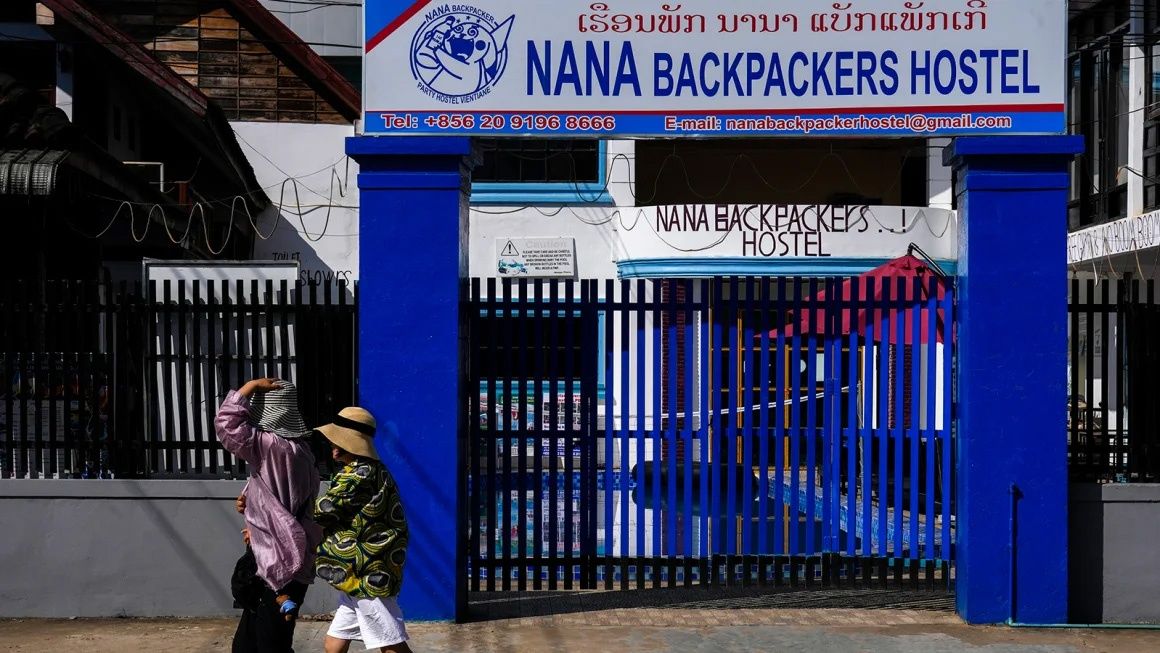
A Laotian court has filed charges against a distillery operator connected to the deaths of six foreign tourists who consumed contaminated alcohol at a backpacker hostel in Vang Vieng last November, though the severity of the accusations has provoked sharp criticism from multiple Western governments. According to Denmark's foreign ministry on Friday (July 17), the charges relate to selling food injurious to health and conducting an unlicensed business—offences carrying potential sentences of three months to four years imprisonment plus monetary penalties. The indictment has left grieving families and diplomatic representatives from affected nations deeply unsatisfied, viewing the legal action as grossly inadequate given the loss of six lives.
Among those who died were two Danish nationals, Anne-Sofie Orkild Coyman, 20, and Freja Vennervald Sorensen, 21. Australian teenagers Bianca Jones and Holly Morton-Bowles, both 19, also perished from methanol poisoning. The victim list further included British solicitor Simone White, 28, and U.S. national James Louis Hutson, 57, according to regional media reports. The tourists had gathered at the Nana Backpacker Hostel, where they consumed complimentary shots of Laotian vodka before proceeding to other entertainment venues in the town, a popular destination renowned for drawing backpackers seeking nightlife and adventure activities.
Denmark's foreign ministry noted that the case will remain formally open for 15 years, allowing for potential elevation of charges to more serious counts such as negligent homicide should sufficient evidence materialise. However, this provision offers little comfort to families who view the current charges as a reflection of how lightly Lao authorities regard the tragedy. Danish Foreign Minister Lars Løkke Rasmussen expressed his profound disappointment, acknowledging the complexity of establishing the evidentiary standards necessary for graver charges whilst emphasising the difficulty of accepting such lenient prosecution in response to such a catastrophic event. His ministry has signalled its intention to collaborate with bereaved relatives and other affected nations to determine next steps in pursuing justice.
The backlash from Australia has been particularly forceful. The country's Foreign Minister Penny Wong released a statement describing herself as deeply frustrated and bitterly disappointed by the authorities' decision not to pursue the most serious available charges. Prime Minister Anthony Albanese dispatched a special envoy to Vientiane on Friday specifically to communicate Australia's objections and to reinforce expectations for a thorough investigation yielding justice for the victims. Simultaneously, Australian officials summoned Laos's ambassador to Canberra to underscore the seriousness with which the government views the matter. These diplomatic manoeuvres represent an unusual escalation in bilateral relations, signalling that Canberra intends to maintain pressure throughout the legal proceedings.
Bianca Jones's mother, Michelle, addressed media alongside the Australian families on Friday morning, expressing her devastation at the charges' apparent triviality. She described a sense of profound betrayal, noting that her daughter had been engaged in the ordinary youthful experience of international travel when tragedy claimed her life. Her words captured the anguish permeating these families: the notion that the legal system has deemed their children's deaths insufficiently serious to warrant proportionate accountability reflects a devaluation of their loved ones' lives that cuts deeper than the loss itself. Such emotional testimony underscores why diplomatic pressure from Western capitals may ultimately matter more than the formal charges themselves in influencing Vientiane's conduct.
Parents of Freja Vennervald Sorensen have voiced their frustration through Danish public broadcaster DR, revealing that they remained uninformed throughout the investigative process. No autopsy was performed on their daughter, and her death certificate listed cardiac arrest as the cause—a classification that obscured the methanol poisoning that actually claimed her life. The family expressed their desire to raise awareness about methanol risks, acknowledging their own ignorance about how such poisoning could occur even to cautious travellers who had taken precautions throughout their journey.
Methanol contamination in alcoholic beverages remains a significant public health concern across multiple regions globally. The condition particularly affects lower-income populations in countries where legitimate alcohol is financially inaccessible or heavily regulated, making illicit or contaminated substitutes attractive. Medical assistance organisation Doctors Without Borders maintains statistics on suspected cases revealing Indonesia, India, and Russia as reporting the highest incidence rates. Methanol finds its way into bar drinks through two primary pathways: deliberate addition by disreputable establishments seeking cost savings through cheaper substitutes for ethanol, and inadvertent inclusion as a byproduct of poorly executed home distillation. The tragedy in Vang Vieng likely resulted from one of these mechanisms, though determining which requires the rigorous investigation and transparency that Laotian authorities have thus far failed to provide.
Vang Vieng's status as a premier backpacker destination amplifies the implications of this incident throughout the tourism sector. The town attracts young travellers worldwide seeking adventure activities and vibrant nightlife, creating a transient population often inclined toward higher risk-taking. Shaun Bowles, father of Holly Morton-Bowles, addressed this concern at Friday's news conference, suggesting that the inadequate legal response should prompt prospective visitors to reconsider travelling to Laos. He argued that Vientiane's conduct—both in the initial incident and its apparent cover-up—demonstrates how little value the nation's authorities place on tourists' wellbeing. Such warnings carry real economic weight for a country heavily dependent on foreign visitors.
Laos, as one of Southeast Asia's economically disadvantaged nations, maintains an authoritarian one-party communist system that tightly restricts information flow and foreign media access. The announcement of charges was made exclusively at the Ministry of Public Security in Vientiane, with the Associated Press's request to cover proceedings formally rejected. The authorities only permitted local media and representatives from concerned foreign embassies to attend, reflecting characteristic opacity in governance. This information control compounds international frustration, as the lack of transparent proceedings prevents independent verification of investigative quality or evidentiary rigour.
The diplomatic machinery now engaged in this matter—envoys, summoned ambassadors, coordinated statements from Copenhagen, Canberra, and London—suggests this case will extend well beyond the courtroom into broader considerations of tourist safety, accountability standards, and the power dynamics between wealthy Western nations and a struggling Southeast Asian state. For Malaysian readers and the broader regional audience, the incident serves as a cautionary lesson about alcohol safety in tourist destinations and highlights how governance failures in one nation can damage tourism confidence across the entire region, particularly among younger international travellers who form an increasingly important market segment.

