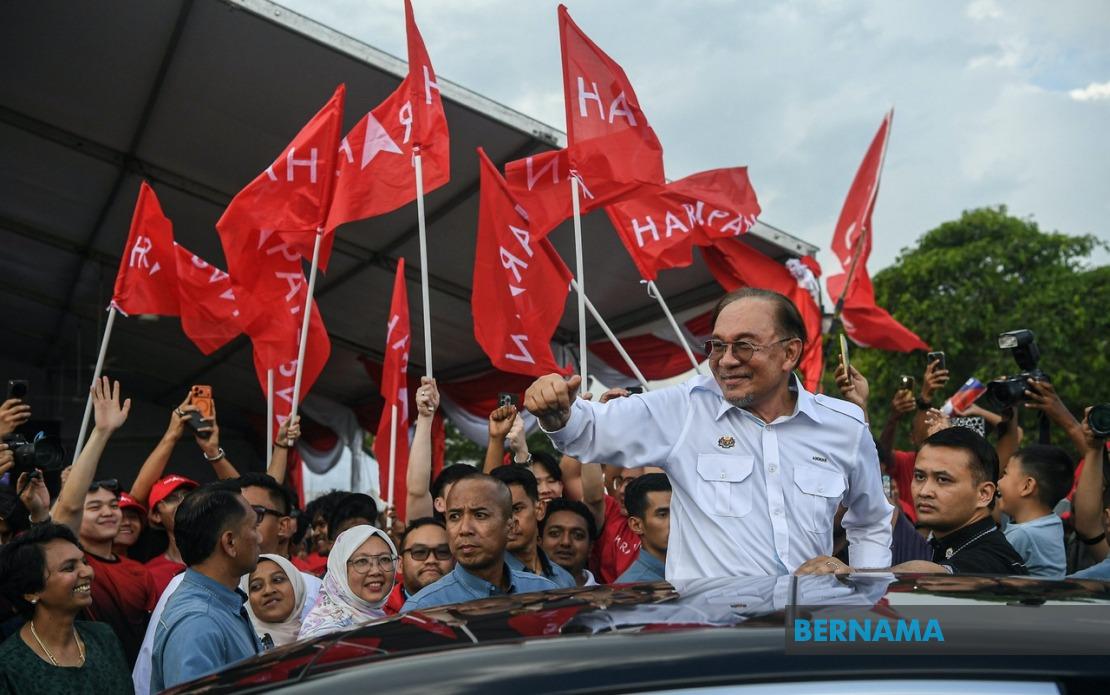
As Johor gears up for its 16th State Election with millions of voters heading to the polls this Saturday, the campaign landscape presents a study in contrasts. While political parties have embraced sophisticated digital strategies featuring creative online content and targeted social media campaigns, a recent Bernama survey illustrates that older Johor voters have not abandoned their preference for traditional, ground-level engagement with candidates and political leaders.
The research highlights a persistent pattern among senior voters across constituencies such as Perling and Sedeli: the appeal of meeting candidates in person transcends generational divides. For many in this demographic, a candidate's physical presence serves as an important barometer of sincerity—something they believe cannot be adequately conveyed through a screen. Retired teacher A. Chandra, 70, articulated this sentiment clearly, noting that attending campaign events in person generates an atmosphere and level of engagement that streaming events at home simply cannot replicate. The opportunity to observe a politician's demeanour, personality, and what voters describe as their "aura" remains central to how many seniors evaluate who deserves their vote.
However, the survey also captures a more nuanced picture than a simple generational divide. Many elderly respondents acknowledge that digital platforms have become genuinely valuable tools, particularly for voters facing time constraints, work obligations, or health limitations that make attending physical rallies impractical. Housewife Maimunah Ismail, 73, exemplifies this hybrid approach, explaining that while she prefers the direct engagement of campaign events, she regularly follows political developments on her mobile phone through social media—sometimes while managing household tasks. This flexibility has proven especially significant for voters with mobility challenges. M. Sivathramani, a 73-year-old retired civil servant dealing with physical injuries, stressed that platforms like TikTok have enabled him to remain politically informed without navigating crowded venues, though he still values meeting candidates in person when possible.
The effectiveness of digital campaigning, according to voters across Johor's constituencies, depends fundamentally on how political parties frame and communicate their messages. Fairuz Saif, a 59-year-old Kempas voter, challenged the stereotype that older citizens lack digital literacy, instead emphasizing that online campaigns must employ clear language and concise messaging to reach voters of all ages. He contended that while digital platforms offer convenience and reach, face-to-face campaigning remains superior because candidates can respond to questions directly, address concerns immediately, and build the personal rapport that inspires voter confidence.
The practical realities of working life have also shaped how voters consume political information. Lee Lian Chen, 58, a grocery shop owner in Bukit Permai, uses social media as an initial screening tool to review candidates' manifestos and policy platforms before making final assessments during in-person encounters. For this demographic, the stakes of voting—occurring only once every five years—make a candidate's proven track record and implementation capacity paramount considerations. Such voters treat both digital and physical campaigning as complementary sources of information rather than competing options.
Academic analysis from Universiti Tun Hussein Onn Malaysia provides broader context for these voting patterns. Dr Nazreena Mohammed Yasin, a senior lecturer in the Department of Social Sciences, observes that the contemporary political landscape has evolved beyond framing physical and digital campaigning as opposing strategies. Instead, they function as mutually reinforcing approaches to reaching voters across different demographic segments. Nazreena emphasizes that while social media has become a primary information source for many voters, in-person campaigns retain significant sentimental and psychological value, allowing voters to experience the election atmosphere directly and form their own assessments of candidates.
The generational and technological dimensions of voter behaviour reveal considerable complexity. Senior voters demonstrate varying relationships with digital platforms—some continue relying on traditional media such as newspapers and television, while others have integrated Facebook, TikTok, and WhatsApp into their political information diet. These different consumption patterns reflect not technological incapability but rather individual preferences shaped by age, lifestyle, and what voters find most reliable or convenient. Nazreena notes that seniors increasingly use digital platforms to watch live campaign broadcasts and access supplementary information, suggesting that technological adoption among older voters is progressing steadily if selectively.
Time constraints and mobility issues have become increasingly central to how voters engage with political campaigns. Working adults often lack the flexibility to attend physical rallies, making social media a pragmatic alternative for monitoring campaign developments and accessing candidate information. This practical consideration explains why many voters have adopted what Nazreena describes as a "hybrid approach"—combining firsthand experiences from attending campaign events with information gathered through social media channels before casting their ballots. This convergence suggests that successful political campaigns in Johor and across Malaysia must operate effectively across both traditional and digital domains.
The implications for political parties are substantial. While creative digital content and psychological messaging campaigns have become standard election tools, the survey findings suggest that investing solely in online strategies risks disconnecting from significant voting blocs who value personal interaction and traditional engagement methods. The 2.7 million voters expected to participate in Saturday's election represent a diverse coalition with differing preferences for how they receive political information and make voting decisions. Parties that recognize this diversity and maintain robust ground operations alongside digital presence appear better positioned to reach voters across age groups and circumstances.
Johor's 16th State Election thus represents a transitional moment in Malaysian political campaigning. Neither traditional nor digital methods have rendered the other obsolete. Instead, voters—particularly seniors—have demonstrated sophisticated ability to navigate both channels, extracting value from each while maintaining preferences shaped by personal circumstances, generational experience, and deep-rooted beliefs about what constitutes authentic political engagement. As the election concludes and Johor selects its 56 representatives, this survey reveals that understanding voter behaviour requires recognizing not polarization between old and new campaigning methods, but rather the complex, individualized strategies through which voters of all ages evaluate candidates and political platforms in contemporary Malaysia.

