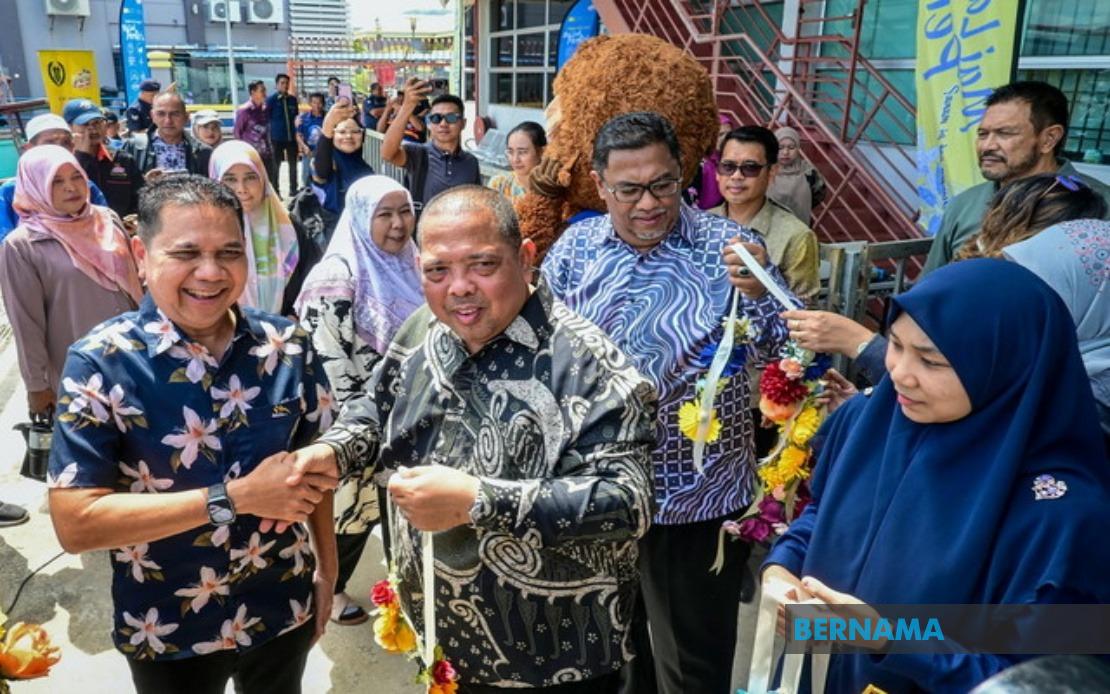
The Kuala Perlis-Satun ferry service has officially resumed operations today, marking a significant milestone for Perlis tourism following its suspension during the COVID-19 pandemic. Menteri Besar Abu Bakar Hamzah expressed optimism that the restored maritime connection would catalyse visitor growth to between 5.5 million and six million arrivals for the state this year, representing a substantial recovery for a sector that has been steadily rebuilding since international travel restrictions eased.
The reopening of this cross-border sea route carries strategic importance beyond tourism metrics. By linking Kuala Perlis directly to Satun province in Thailand, the ferry service creates a convenient alternative to traditional overland crossings, particularly the frequently congested Padang Besar border checkpoint. During peak travel periods such as school holidays and festive seasons, the availability of this additional maritime corridor is expected to distribute passenger flows more evenly, reducing bottlenecks that have historically disrupted travel schedules and visitor experiences.
Thai shoppers from Satun represent an emerging market opportunity for Perlis retailers and traders. Abu Bakar highlighted that increased accessibility via the ferry would likely draw more cross-border shopping traffic, generating retail revenue for local businesses while simultaneously strengthening commercial ties between the two jurisdictions. This consumer influx could provide meaningful economic benefits to merchants in Kuala Perlis and surrounding communities who have faced dampened demand during pandemic-related travel disruptions.
The 40-minute journey between the two ports offers more than mere transport convenience—it positions the crossing as an experiential element of a visitor's trip. The scenic coastal views along the route create opportunities for the service to function as a tourist attraction in its own right, enhancing perceptions of Perlis as a destination offering distinctive travel experiences rather than merely serving as a transit point to other Malaysian attractions.
However, the ferry terminal itself presents infrastructural challenges that threaten to undermine these optimistic projections. Abu Bakar acknowledged persistent berthing difficulties arising from fluctuating tidal patterns and shallow waters, which can disrupt service reliability and passenger comfort. To address this bottleneck, the state government is planning to install a floating pontoon system designed to accommodate vessels regardless of water level variations, a pragmatic engineering solution that could stabilise operations during seasonal changes.
The government's broader infrastructure ambitions extend considerably beyond the floating pontoon initiative. Discussions are underway regarding the reactivation of the Kuala Perlis-Satun Roll-on/Roll-off service, which would facilitate vehicle transport and enable more seamless cross-border commerce for commercial vehicles. This dimension recognises that tourism revenue represents only one component of the economic case for enhanced connectivity; streamlining logistics corridors for goods movement carries implications for regional trade integration and supply chain efficiency across the Perlis-Satun border zone.
Most ambitiously, state officials are in preliminary discussions with potential investors regarding a proposed RM500 million bridge project spanning approximately two kilometres into the sea. This mega-infrastructure initiative would represent a transformative investment designed to permanently resolve the shallow-water navigation constraints that have plagued ferry operations. Such a facility would constitute a landmark cross-border infrastructure project with potential to reshape regional transport geography and enhance Malaysia-Thailand connectivity.
The ferry resumption occurs within a broader context of Southeast Asian tourism recovery and sub-regional border management evolution. As travel patterns normalise post-pandemic, destinations throughout the region are prioritising improved cross-border connectivity to capture tourist flows and facilitate regional movement. Perlis, positioned as Malaysia's northwestern gateway to Thailand, stands to benefit disproportionately from infrastructure investments that reduce friction in cross-border travel.
For Malaysian policymakers monitoring sub-regional integration, the Kuala Perlis-Satun initiative exemplifies practical bilateral cooperation that generates mutual benefits across jurisdictional boundaries. Thai authorities benefit from enhanced tourist access to Malaysian attractions, whilst Perlis gains exposure to additional visitor markets and cross-border retail opportunities. This complementarity suggests the basis for continued collaborative infrastructure development, potentially encompassing expanded vessel capacity, improved port facilities, and eventually the proposed bridge infrastructure.
The diplomatic dimensions merit consideration as well. Abu Bakar's emphasis on strengthening Malaysia-Thailand ties through enhanced tourism connectivity reflects recognition that people-to-people linkages and commercial interdependence serve broader strategic interests. Regional cohesion within ASEAN depends substantially on maintaining robust sub-regional relationships, and small-scale infrastructure projects that facilitate everyday cross-border movement contribute meaningfully to this diplomatic architecture.
Realising the ambitious six-million-visitor target will require sustained attention to service quality, port infrastructure standards, and marketing coordination with Thai counterparts. Initial success in this reopening phase could establish momentum for the more ambitious infrastructure projects under discussion. If the floating pontoon effectively resolves berthing difficulties and passenger volumes grow as anticipated, the case for further investment in the Ro-Ro service and eventually the proposed bridge becomes increasingly compelling to both governmental and private investors.
For Perlis residents and businesses, the ferry service represents tangible economic opportunity following a prolonged period of restricted cross-border movement. The tourism multiplier effects—spanning accommodation, food service, retail, and transport—could meaningfully contribute to state revenue and employment in a sector representing significant importance to Perlis's economic profile. Realising these potential gains, however, depends on maintaining reliable operations and continuing to improve supporting infrastructure as visitor flows increase.

