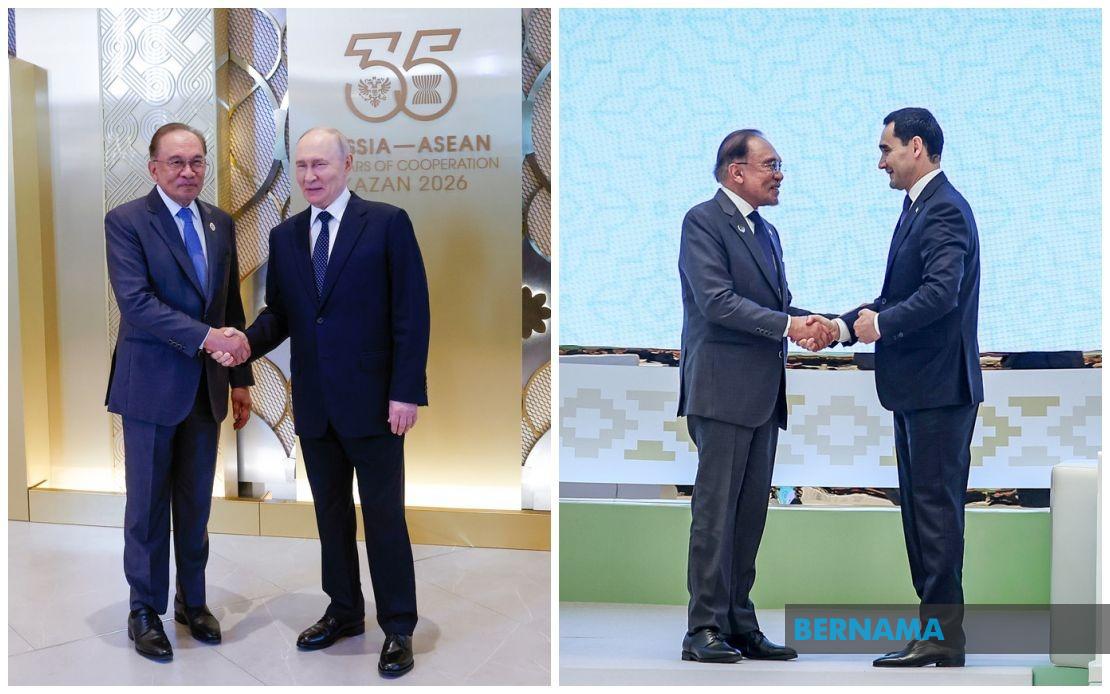
Prime Minister Datuk Seri Anwar Ibrahim's recent official visits to Russia and Turkmenistan have been lauded by senior government officials as landmark achievements that will substantially reinforce Malaysia's standing on the global stage whilst opening fresh avenues for economic growth and energy independence. The two-nation tour, which included stops in Kazan within Russia's Republic of Tatarstan, has generated tangible commitments from both countries that address pressing Malaysian priorities around long-term fuel security and corporate expansion.
Housing and Local Government Minister Nga Kor Ming highlighted energy security as the paramount prize from the Russian engagement, noting that Moscow has committed to supplying Malaysia with crude oil over a two-decade horizon. This arrangement represents a fundamental shift from conventional annual or seasonal procurement arrangements, establishing instead stable multi-year contracts that insulate Malaysia against volatile international markets and supply disruptions. The stability afforded by such a lengthy procurement framework will prove invaluable for maintaining domestic energy resilience as global geopolitical tensions continue to reshape energy trade patterns across Asia.
The broader energy security dividend extends directly to ordinary Malaysians through government fuel subsidy programmes. By securing reliable long-term petroleum supplies, the administration can sustain its BUDI MADANI RON95 initiative, which pegs subsidised RON95 petrol at RM1.99 per litre. Without assured access to crude reserves, Malaysia risks commodity price volatility that could strain state finances and necessitate politically contentious subsidy reductions. Nga, representing Teluk Intan, emphasised that the government's deliberate strategy of energy source diversification—moving away from over-reliance on Middle Eastern suppliers—remains central to this subsidy sustainability.
Yet the Russian visit's oil supply agreement represents only half the diplomatic breakthrough. Anwar's complementary journey to Turkmenistan has yielded what cabinet ministers describe as an even more strategically significant outcome: the appointment of Malaysia's national energy corporation Petronas as operator of one of the world's largest natural gas fields. Turkmenistan itself ranks among the globe's leading natural gas repositories, and securing operational control over a major development project positions Petronas to capture both immediate revenue streams and long-term resource rents from this hydrocarbon wealth.
The Petronas appointment carries profound implications for Malaysia's corporate stature internationally. Human Resources Minister Datuk Seri R. Ramanan and Nga both underscored that Petronas, currently ranked 139th in the Fortune Global 500 standings, possesses genuine potential to ascend into the top 100 echelon should this Turkmenistan opportunity be executed with strategic acumen and operational excellence. Such elevation would constitute a watershed moment for Malaysian business on the world stage, demonstrating that homegrown enterprises can compete with multinational energy giants in managing complex upstream development projects across continents.
Beyond the immediate commercial dimension, the Petronas mandate carries broader geopolitical weight. By entrusting a Southeast Asian corporation to lead development of critical energy infrastructure, Turkmenistan implicitly endorses Malaysia's political stability, institutional capacity, and professional standards. This international vote of confidence ripples outward, signalling to other nations that Malaysian companies merit serious consideration for major projects. For a medium-sized economy seeking greater influence in global energy markets, such validation from major gas-exporting nations represents immeasurable diplomatic capital.
The human capital and technological spillover effects merit equal consideration. Ramanan highlighted that the Turkmenistan project will generate collaboration opportunities spanning technology transfer, workforce skills development, and training pipelines for specialised personnel. These dimensions reflect how energy sector wins at the bilateral level cascade into educational advancement and labour market improvement domestically. Malaysian workers deployed across Petronas operations in Turkmenistan will accumulate world-class experience in managing complex offshore and onshore gas production systems, creating a multiplier effect as expertise circulates through the broader Malaysian workforce.
The strategic framing of these visits also underscores Malaysia's deliberate pivot toward energy geopolitics. Rather than remaining passive consumers of global hydrocarbons, the administration under Anwar is positioning Malaysia as an active participant capable of shaping regional and global energy flows. By simultaneously deepening energy partnerships with Russia and assuming operational leadership in Turkmenistan, Malaysia reduces dependence on traditional Middle Eastern suppliers whilst acquiring greater leverage within OPEC and international energy governance structures. This recalibration carries particular salience for Southeast Asia, where energy demand continues accelerating amid economic development and industrialisation.
The trade and investment architecture underpinning these bilateral arrangements extends well beyond hydrocarbon transactions. Both the Russian and Turkmenistan engagements encompassed broader frameworks encompassing tourism development, technology cooperation, and commercial partnerships across multiple sectors. These wider linkages create institutional pathways for sustained engagement, transforming what might otherwise be transactional energy deals into comprehensive strategic partnerships resistant to short-term political fluctuations.
For Malaysian policymakers and private sector leaders, these diplomatic victories illustrate the premium attached to sustained high-level engagement in energy diplomacy. The outcomes validate the government's strategy of portfolio diversification in fuel sourcing whilst simultaneously showcasing Malaysian corporate capability on the international stage. As Southeast Asia navigates energy transitions and geopolitical realignments, Malaysia's success in securing both supply agreements and operational mandates positions the country as a consequential actor in shaping regional energy security architectures for decades ahead.

