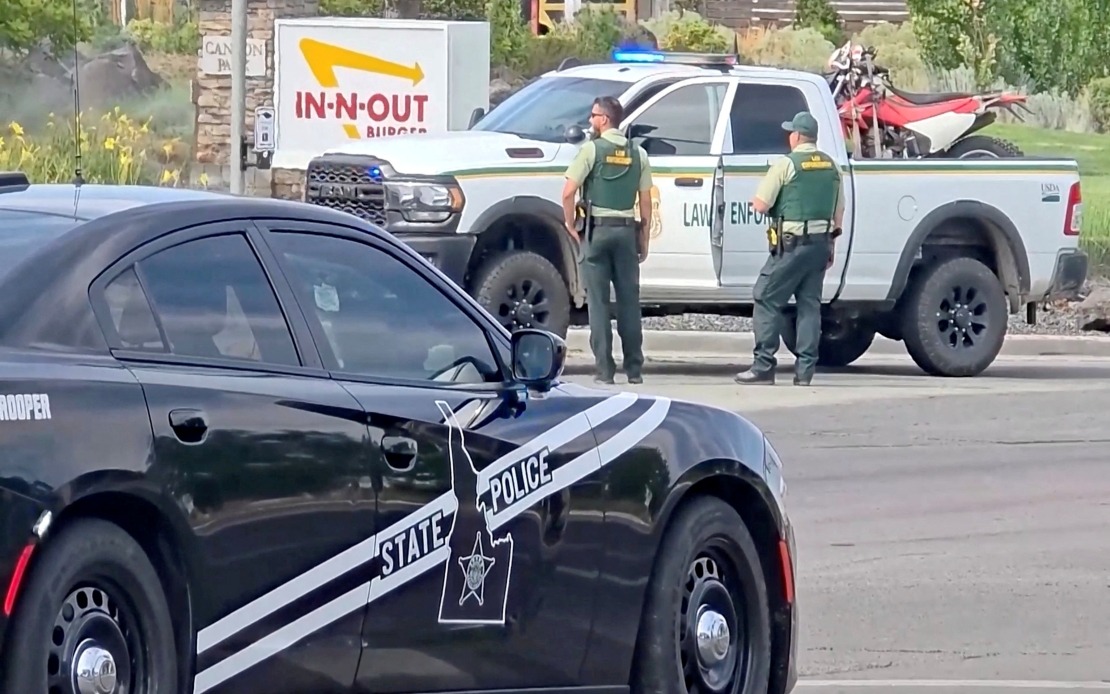
A mass shooting at an In-N-Out Burger outlet in Twin Falls, Idaho on Saturday resulted in the deaths of three people and injuries to seven others, as confirmed by local law enforcement officials. The incident unfolded around 2 pm local time at the fast-food restaurant situated within a busy shopping plaza, an area typically bustling with weekend shoppers and diners. The sudden eruption of violence sent shockwaves through the community and prompted an immediate emergency response from Twin Falls police and emergency services.
Authorities discovered the body of the suspected gunman in a location adjacent to the restaurant shortly after the shooting began. Twin Falls Police Chief Matthew Hicks addressed media at a subsequent press conference, assuring residents that the immediate threat to public safety had been neutralized. However, investigators were actively working to piece together crucial details about the gunman's identity and the circumstances that may have motivated the attack.
According to Joshua Palmer, public information coordinator for the city of Twin Falls, several of the injured individuals were reported to be in critical condition as they received medical treatment at local hospitals. The exact number of fatalities initially remained somewhat unclear, with authorities still determining whether the suspected shooter's death was included in the overall casualty count. This ambiguity is not uncommon in the immediate aftermath of such incidents, as comprehensive documentation takes time.
The shopping plaza where the restaurant is located was crowded at the time of the shooting, with hundreds of people present in the vicinity. Many would have witnessed the frightening moments as the violence unfolded, adding to the trauma experienced by the community. First responders had to navigate through panicked crowds while securing the scene and attending to the wounded, a challenging situation compounded by the public nature of the location.
Family notification procedures became a priority for authorities in the hours following the shooting. Investigators deliberately withheld the names, ages, and identifying details of the victims until all next-of-kin could be properly informed. This compassionate but necessary protocol ensures that families learn of tragic outcomes directly from officials rather than through news reports or social media.
The investigation into the shooting remained in its early stages, with multiple questions still requiring answers. Beyond identifying the gunman, police needed to establish motive, examine whether there were prior warning signs, and determine if the shooter had any connection to the victims or the location itself. These investigative threads typically take considerable time to unravel and often require cooperation from witnesses, surveillance footage analysis, and background checks.
For Malaysian observers, this incident reflects ongoing concerns about gun violence in the United States, a phenomenon that distinguishes that country from most developed nations. While Malaysia maintains strict firearm regulations and relatively low rates of gun-related incidents, mass shootings in the United States remain a recurring tragedy that commands international attention. The contrast in approach to gun ownership and regulation between Malaysia and the US underscores fundamentally different public safety philosophies.
The Twin Falls incident also underscores the vulnerability of public spaces in commercial areas. Shopping plazas and restaurants represent gathering spots where community members expect safety during ordinary weekend activities. The breach of that assumed security serves as a sobering reminder that violence can strike without warning, even in seemingly ordinary circumstances in the middle of the day.
Beyond the immediate human tragedy, such incidents carry broader implications for business operations and community recovery. The restaurant itself will likely remain closed during the investigation and subsequent cleaning, while the surrounding businesses may experience a temporary decline in foot traffic as residents process the trauma. Local authorities will need to implement enhanced security measures and provide psychological support services for affected residents and first responders.
The Twin Falls Police Department will face weeks or months of intensive investigation work, requiring collaboration with federal agencies and forensic specialists. Every detail matters in reconstructing the sequence of events and understanding what transpired during those devastating moments. Such investigations become blueprints for understanding and potentially preventing similar incidents, contributing to the broader conversation about public safety and violence prevention in communities across the United States.

