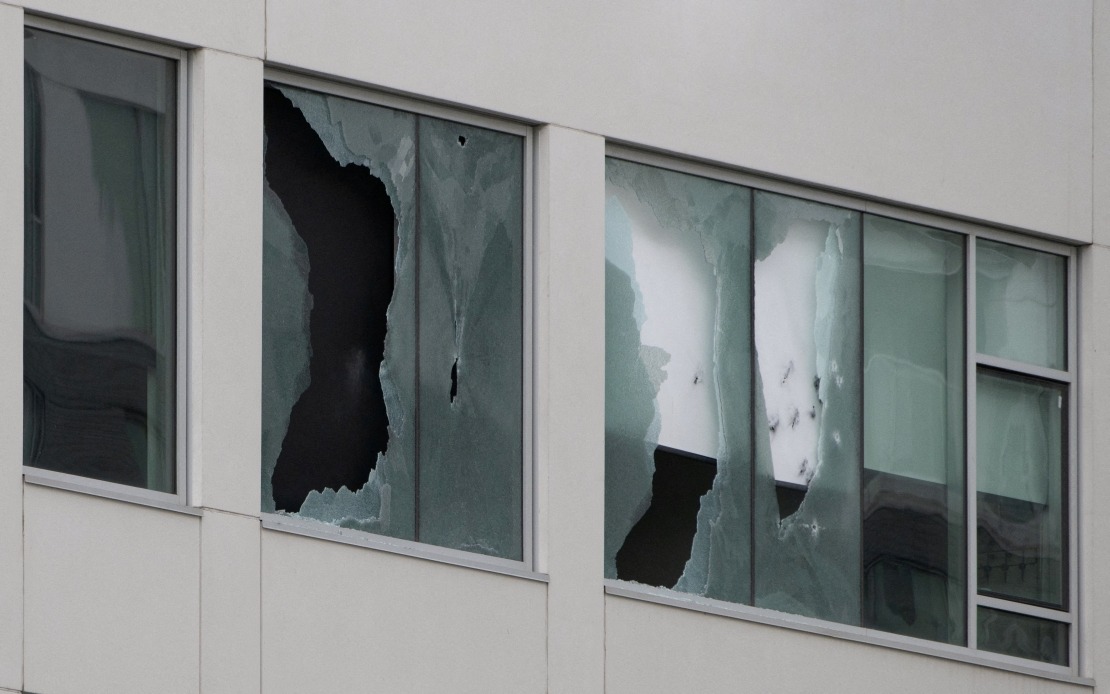
A deadly shooting in Montreal has claimed the lives of a police officer responding to the incident, a civilian resident and the suspected attacker, marking a tragedy that has shaken Canada's second-largest city. Montreal police announced the officer's death through social media on Monday, describing the loss as deeply sorrowful and confirming the officer fell while carrying out duty. The incident unfolded in the Côte-des-Neiges neighbourhood, a densely populated residential area on the slopes of Mount Royal, where the sequence of events led to a rapid escalation involving multiple casualties.
According to accounts from Montreal police chief Fady Dagher and subsequent statements from law enforcement, responding officers came under fire as soon as they arrived at the scene, setting the tone for what would become a fatal confrontation. The gunman was subsequently "neutralised" during the police response, though the exact circumstances of how the suspect was killed remain subject to ongoing investigation. Authorities reported that two additional individuals sustained injuries during the incident, including another police officer whose condition later improved such that he no longer faced life-threatening danger. This secondary officer's survival underscores both the intensity of the gunfire and the critical nature of emergency medical intervention in the aftermath.
Investigators moved quickly to assess the broader security threat posed by the incident. Law enforcement officials ruled out any connection to terrorism, a crucial determination that allowed authorities to narrow their investigative focus and provide the public with greater certainty about the nature of the threat. Security agencies also concluded that the shooter was acting in isolation rather than as part of an organised group or cell, meaning the immediate danger to the broader community had effectively ended with the suspect's death. This assessment permitted the lifting of emergency alerts that had prompted residents in the neighbourhood to remain indoors and secure their homes against potential further danger.
Initial police warnings had characterised the suspect as an "armed and dangerous individual," prompting a cautious response from residents and businesses in the area. The Côte-des-Neiges neighbourhood, situated on the flank of Mount Royal, includes several residential buildings, schools and community services frequented by both longtime residents and immigrants from diverse backgrounds. The decision to confine residents indoors during the active threat period reflected the genuine uncertainty surrounding the suspect's location and intentions in those crucial early hours, even as police worked to establish a perimeter and locate the shooter.
Media organisations, particularly Canadian broadcaster CBC, reported that authorities had issued directives instructing people to lock doors and remain sheltered indoors. These precautionary measures reflected standard protocol in active threat scenarios across North America, designed to minimise civilian exposure to potential gunfire while law enforcement engaged in tactical operations. The duration of these lockdown-like conditions and the eventual decision to lift the emergency alert represented a shift in police confidence that the immediate crisis had been resolved and the suspect contained.
Reports from media outlets suggested that the gunman may have prepared a written document containing hateful rhetoric aligned with the so-called incel movement, an online subculture characterised by anti-feminist ideology and narratives promoting traditional gender hierarchies. The incel movement has been linked to several violent incidents in North America over the past decade, including attacks where perpetrators explicitly referenced incel grievances in their manifestos or final communications. However, security authorities have not yet publicly confirmed the connection to incel ideology, leaving open the possibility that additional investigative details will emerge as the inquiry proceeds.
The nature of the suspect's written materials, should they be confirmed as incel-related, would represent a troubling pattern of violence rooted in online extremism rather than conventional political or religious radicalisation. The incel phenomenon has concerned law enforcement agencies across Canada and the United States, as the online community's normalisation of misogynistic violence creates an environment where real-world attacks can be framed as justified responses to perceived wrongs. Understanding the suspect's specific grievances and the content of any manifesto will be central to both the investigation and broader efforts to address online radicalisation.
For Malaysia and Southeast Asian observers, the Montreal incident reflects broader patterns of gun violence and online extremism affecting English-speaking democracies. While Malaysia has significantly stricter firearms regulations than Canada, the rise of incel ideology and other misogynistic movements online knows no geographic boundaries. Malaysian authorities and civil society organisations have noted increased exposure of young people to extremist online content regardless of jurisdiction, raising questions about how regional governments can better protect citizens from radicalisation occurring in virtual spaces beyond traditional law enforcement reach.
The investigation into the Montreal shooting remains ongoing, with authorities continuing to examine the suspect's background, digital footprint and any communications that might clarify motivations. The death of a police officer in the line of duty carries particular weight in Canadian society, prompting broader reflection on the dangers faced by law enforcement and the support systems required for officers and their families. The Montreal Police Service will likely conduct extensive after-action reviews to assess the tactical response and identify lessons applicable to future critical incidents.
This tragedy underscores the intersection of gun access, online extremism and mental health challenges that have become recurring features of mass violence in developed nations. The Montreal incident will inevitably prompt renewed discussions within Canadian political circles about firearms regulation, community safety and online content moderation, even as investigators work to establish the complete factual record surrounding the shooting and the events that precipitated it.

