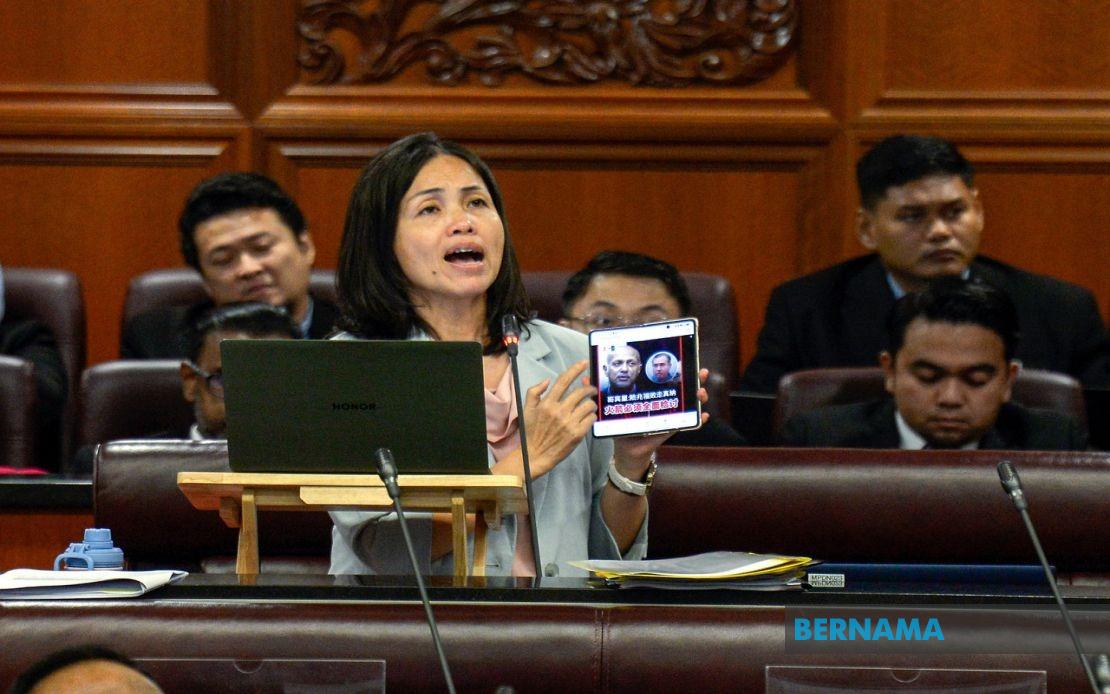
Malaysia's battle against online fraud has intensified dramatically, with authorities removing 99,693 scam-related content items from social media platforms during the first seven months of 2026 alone—a figure that already surpasses the entire previous year's tally of 98,503 removed posts. The startling acceleration in content takedowns underscores both the growing sophistication of digital deception and the heightened vigilance of Malaysian regulators in combating this persistent threat to public safety and national security.
Deputy Communications Minister Teo Nie Ching disclosed these figures while shepherding the Communications and Multimedia (Amendment) Bill 2026 through parliament, emphasising that the trajectory of removals reveals an alarming upward trend that demands sustained governmental intervention. The comparative data paints a striking picture: in 2024, authorities removed 63,652 items, while 2023 saw 6,297 removals and 2022 just 242. This exponential growth reflects not merely an increase in fraudulent activity itself, but also the government's expanding capacity and commitment to detecting and eliminating malicious content before it can victimise unsuspecting Malaysians who increasingly conduct their lives and financial transactions across digital platforms.
The amendment bill, which passed the lower house on July 15 before securing parliamentary approval following today's senate debate, represents a legislative response calibrated to address these escalating online threats. The legislation introduces the National Universal Service Provision (NUSP) initiative, a framework designed to protect national security interests while simultaneously reinforcing the legal authority of the Malaysian Communications and Multimedia Commission (MCMC) to implement this safeguarding measure. By grounding the NUSP initiative in clearer statutory language, the amendments empower the Minister to direct MCMC to support initiatives involving network services and digital applications, creating a more cohesive regulatory environment.
Central to the bill's passage through parliament was the government's assurance that enhanced powers would be exercised within robust accountability mechanisms. Teo clarified that any party aggrieved by MCMC decisions or ministerial directives retains recourse to an Appeals Tribunal established under the Communications and Multimedia Act 1998. This tribunal, chaired by a High Court judge, provides an intermediate appellate layer ensuring that regulatory action maintains judicial oversight. Moreover, dissatisfied parties may escalate matters to the ordinary courts for judicial review, thereby preserving the rule of law and preventing arbitrary administrative action despite the security-focused nature of the legislation.
The senate debate preceding the bill's passage reflected broader concerns about balancing security imperatives with transparency and accountability in governance. Senator Datuk Seri Prof Dr Noor Inayah Ya'akub articulated the principle that determinations concerning national security must rest upon clearly defined criteria and intelligible parameters, ensuring that ministerial decisions withstand public scrutiny and satisfy the constitutional requirement of reasonableness. This intervention signals that Malaysia's legislative body remains attentive to potential overreach, even when confronting genuine threats to public welfare posed by rampant cybercriminal activity.
Senator Sheikh 'Umar Bagharib Ali contributed a complementary perspective, characterising the communications sector itself as strategic national infrastructure foundational to Malaysia's digital economic aspirations and public protection objectives. His intervention underscored a nuanced understanding that securing digital platforms benefits not merely state interests but also private economic actors and ordinary citizens whose prosperity depends upon confidence in online systems. He emphasised that public willingness to serve as "strategic partners" with government in safeguarding national security depends fundamentally upon their conviction that state power is exercised equitably, openly, and in fidelity to established legal norms—a proposition that resonates throughout Southeast Asia's increasingly digitised societies where authoritarian governance often corrupts security rationales.
The dramatic escalation in scam content removal reflects Malaysia's position within a regional and global context of rising digital fraud. Neighbouring countries across Southeast Asia confront similar challenges as online scamming operations become increasingly transnational, sophisticated, and difficult to attribute to specific jurisdictions. Malaysian authorities' willingness to invest regulatory resources in content removal, coupled with legislative innovation, positions the country among more proactive regional respondents to this threat, though sustained effort remains essential as criminal networks continuously adapt evasion strategies.
The scale of removals—approaching 100,000 in merely seven months—demands consideration of whether takedown strategies alone suffice to address online fraud comprehensively. While removing scam content prevents immediate victimisation and disrupts fraudsters' operational reach, the continued proliferation of such material suggests that enforcement must be accompanied by public education, financial literacy programmes, and international cooperation targeting criminal networks' financial infrastructure. Malaysia's Communications Ministry has increasingly recognised this requirement, though resource constraints limit preventive initiatives relative to reactive content removal.
Looking forward, the amended legislative framework should enhance MCMC's capacity to coordinate across platforms, facilitate information-sharing with international counterparts, and support technological solutions enabling faster content detection and removal. The NUSP initiative, properly implemented under judicial oversight, might provide infrastructure enabling such coordination. However, success ultimately depends upon sustained political commitment, adequate resourcing of regulatory bodies, and technological investment—requisites that Malaysian policymakers must balance against competing budgetary pressures and competing national priorities.
For Malaysian citizens and residents, the removal figures offer modest reassurance that authorities are actively contending with online fraud, yet the sheer volume of removed content equally underscores the ubiquity of the threat. Those engaging with social media platforms for commerce, information-gathering, or social connection must maintain heightened vigilance against phishing schemes, investment fraud, and identity theft regardless of government enforcement activity. The legislative framework now in place reflects governmental recognition that digital safety demands both regulatory innovation and traditional accountability mechanisms—a calibration that Southeast Asian democracies will necessarily continue refining as technological change outpaces legal adaptation.

