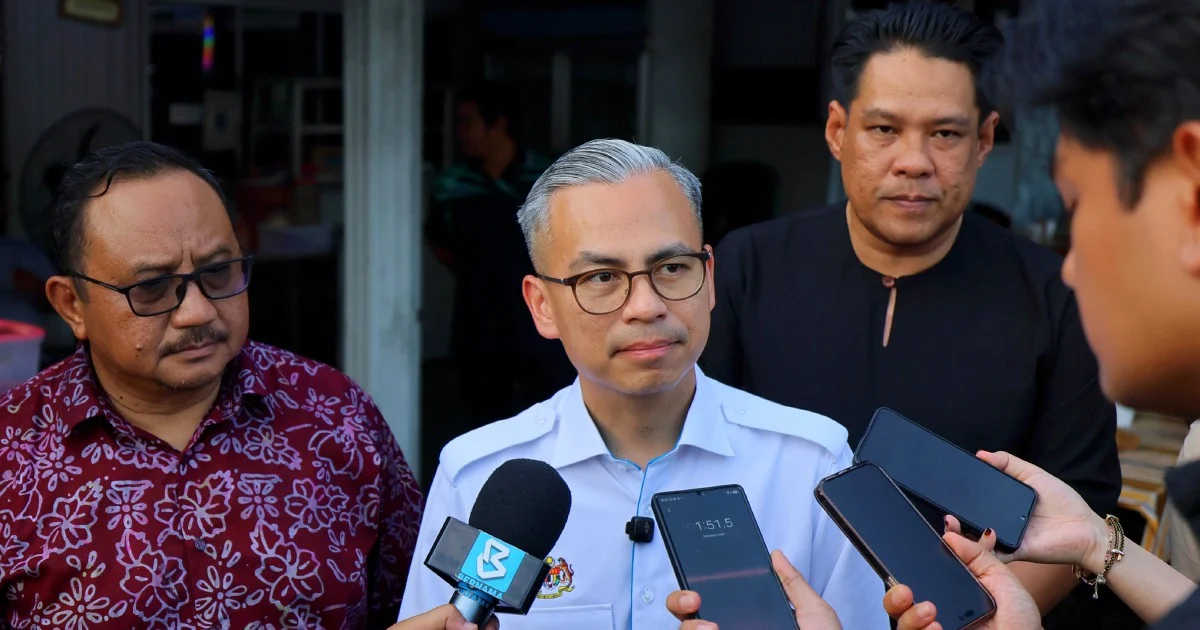
Pakatan Harapan is preparing a bifurcated campaign approach for the impending Johor state election, seeking to harness both digital platforms and traditional grassroots mobilisation to strengthen its electoral position in the southwestern state. Party leaders have signalled their intention to synchronise social media operations with on-the-ground voter engagement, recognising that effective political communication in modern Malaysia requires proficiency across multiple channels.
The blended strategy reflects a broader evolution in Malaysian electoral politics, where successful campaigns now demand competence in both traditional door-to-door outreach and sophisticated digital communication. By splitting efforts between online and offline fronts, Pakatan Harapan hopes to address the diverse communication preferences of Johor's electorate, from digital-native younger voters to older demographic cohorts that remain more responsive to face-to-face interactions. This acknowledgement of heterogeneous voter behaviour represents a pragmatic adaptation to Malaysia's increasingly fragmented media landscape.
Social media platforms have become indispensable tools for political mobilisation across Southeast Asia, enabling campaigns to disseminate messages rapidly and engage with constituents asynchronously. Pakatan Harapan's emphasis on digital outreach signals recognition that online channels allow for granular targeting and rapid message iteration—capabilities that traditional media cannot match. The party can deploy multiple concurrent narratives tailored to specific voter segments, amplifying messaging around local issues that resonate within different communities across Johor.
However, the coalition understands that algorithmic reach on social media platforms remains finite and unpredictable, necessitating complementary grassroots work. Ground campaigning builds genuine interpersonal connections, generates local momentum, and crucially, validates party presence in communities. Physical campaign infrastructure—from roadside banners to neighbourhood canvassing—signals organisational strength and commitment to constituents, qualities that abstract digital engagement cannot fully replicate. The combination thus addresses limitations inherent in either approach alone.
For Johor specifically, this dual approach carries particular significance. The state remains politically competitive, with Pakatan Harapan seeking to rebuild influence after years of Barisan Nasional and Perikatan Nasional dominance. Johor's demographic complexity—encompassing urban centres like Johor Bahru alongside rural districts—demands sophisticated microtargeting that hybrid campaigning facilitates. Different constituencies respond to different messaging; urban professionals might engage primarily through Instagram and Facebook, whilst rural voters depend more on word-of-mouth and community gatherings.
The digital component allows Pakatan Harapan to maintain campaign momentum between major public events, sustaining voter engagement without exhausting party volunteers. Strategic content distribution across WhatsApp, Facebook, TikTok, and YouTube enables continuous messaging without geographical constraints. This persistent presence proves particularly valuable in reaching diaspora communities and younger voters who consume news primarily through social platforms. Meanwhile, data analytics from digital campaigns can identify emerging issues and voter concerns, informing ground strategy in real time.
Grassroots campaigning provides essential counterweight to digital misinformation and established echo chambers. Direct conversations enable party representatives to address voter anxieties, clarify policy positions, and rebut competing narratives more persuasively than screen-based communication permits. Neighbourhood engagements also generate valuable intelligence about local grievances and priorities, intelligence that feeds back into central campaign messaging. This feedback loop between ground and digital operations creates a more responsive, adaptive campaign overall.
The resource allocation between online and ground efforts remains strategically delicate. Digital campaigns demand specialised expertise in content creation, paid advertising, and community management, requiring investment in personnel and platform spending. Ground operations require mobilising large volunteer networks, organising transport logistics, and scheduling candidate appearances. Pakatan Harapan must balance these competing resource demands whilst maintaining quality across both fronts. Underfunding either dimension risks undermining the entire hybrid approach.
Regional context amplifies the significance of Pakatan Harapan's methodological choice. Across Southeast Asia, political parties increasingly recognise that election victory demands proficiency in both analogue and digital spheres. Thailand, Indonesia, and the Philippines have all witnessed campaigns where sophisticated digital operations combined with ground mobilisation proved decisive. Malaysia's fractious political environment makes this integration even more critical, as campaigns must simultaneously combat disinformation, build coalition support, and address voter scepticism accumulated through years of political instability.
The Johor campaign will test whether Pakatan Harapan has successfully synthesised these approaches into an integrated system. Success requires not merely executing both strategies independently, but ensuring they amplify rather than contradict each other. Digital messaging must reinforce ground activities, and grassroots intelligence must inform online content. This integration challenges campaigns operationally, demanding sophisticated coordination between digital teams and field organisers.
Pakatan Harapan's dual-track strategy ultimately reflects maturation in Malaysian political campaigning. Rather than viewing online and offline efforts as competing alternatives, the coalition recognises them as complementary components of comprehensive electoral strategy. The approach acknowledges reality that Malaysian voters navigate multiple information environments simultaneously, consuming content across platforms and channels. Campaigns that master both domains whilst ensuring coherence between them will likely command decisive advantages in increasingly competitive elections.

