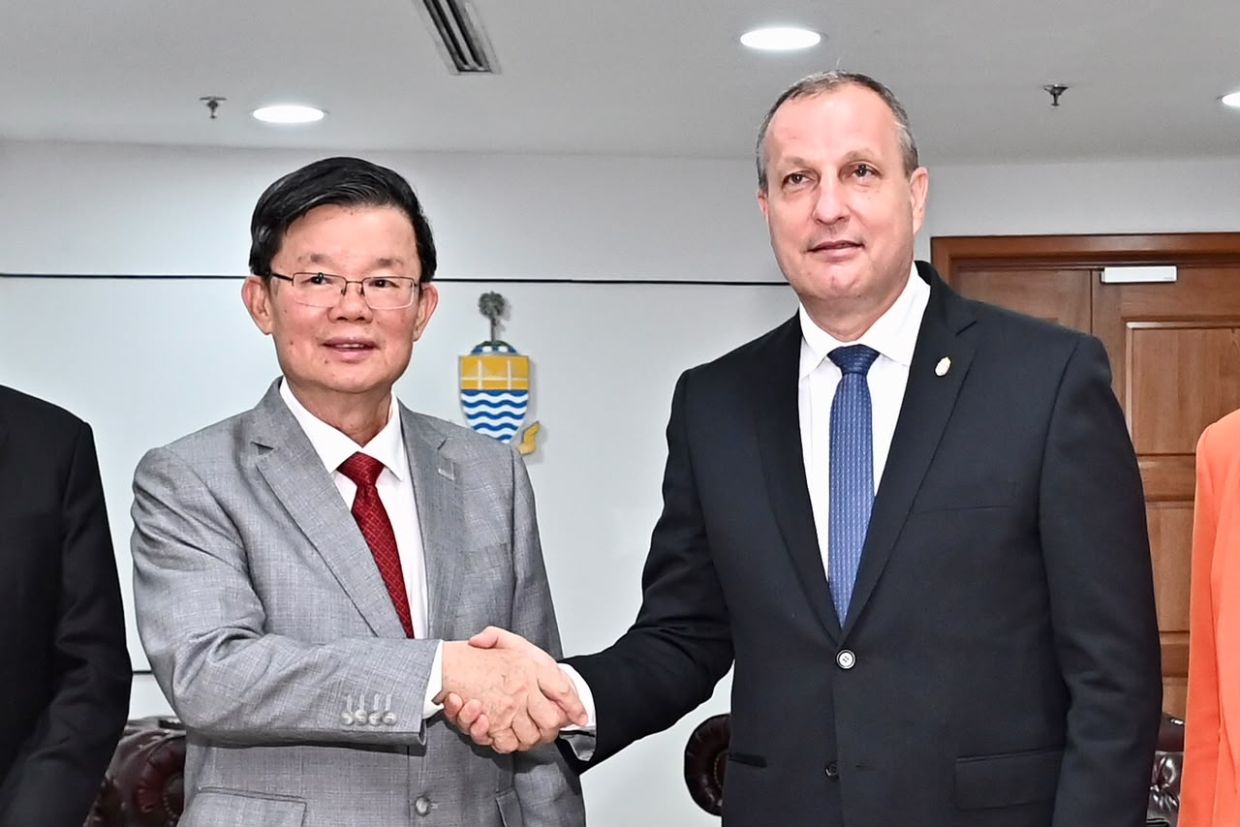
Penang is charting an ambitious course to strengthen bilateral cooperation with Hungary across multiple sectors, from higher education to green technology and water management, following productive discussions between state leadership and a delegation headed by Hungarian Ambassador to Malaysia Dr Sándor Sipos. The visit signals a broadening of Malaysia's European engagement beyond traditional economic partners, with the northern state positioning itself as a gateway for innovative collaboration on the continent's expertise.
Chief Minister Chow Kon Yeow emphasised Hungary's strategic value as a key European economy with proven capabilities in several domains that align with Penang's development priorities. The state government views the Budapest relationship as complementary to existing regional partnerships, offering access to advanced knowledge in sectors where Europe leads globally. Hungary's track record in environmental innovation and water management systems particularly appeals to Penang, which faces growing pressures on water security amid rapid urbanisation and climate variability across the region.
The scope of potential cooperation spans an unusually broad canvas. Beyond the headline education component, discussions explored heritage conservation—an area where Central European expertise in restoring historic city centres could inform Penang's own UNESCO World Heritage Zone management. Trade and investment pathways were also examined, with attention to how Hungarian companies operating in Southeast Asia might establish regional hubs in Penang's industrial zones. Renewable energy and research-and-development collaboration emerged as particularly promising avenues, given Hungary's advances in solar technology and water purification methods.
Education forms the backbone of the partnership framework. Hungary currently extends 40 fully funded scholarship places annually to Malaysian students, with Ambassador Sipos encouraging broader applications from Penang's universities and secondary schools. This scholarship mechanism is more generous than many comparable European offerings and reflects Budapest's strategic interest in nurturing future leaders across Southeast Asia. For Malaysian students, Hungarian universities provide affordable pathways to advanced degrees in engineering, environmental sciences and technology sectors, often taught in English and leading to recognised qualifications within European higher education frameworks.
Chow Kon Yeow specifically lauded the scholarship programme's role in facilitating talent development and fostering cross-cultural understanding. In the Malaysian context, where overseas education remains financially challenging for middle-income families, expanded access to European scholarships could significantly broaden opportunities for meritorious students from non-elite backgrounds. The Chief Minister framed educational exchange as foundational to deeper governmental and commercial ties, recognising that students who study abroad often become influential professionals and future ambassadors for bilateral relationships.
State executive councillors Goh Choon Aik and Gooi Zi Sen engaged the Hungarian delegation separately on more targeted collaboration domains. Their meetings prioritised trade, investment climate discussions, youth engagement, and an intriguing sports cooperation framework. Gooi indicated that Penang's sports authorities would conduct feasibility studies on which athletic disciplines might benefit from Hungarian technical expertise and exchange programmes. This reflects an emerging trend across Southeast Asian states to leverage bilateral partnerships for sports development, particularly in specialised coaching and athlete-training methodologies.
The inclusion of sports cooperation within the partnership agenda points to Hungary's broader soft-power strategy in Asia. The nation has built competitive advantages in specific sports disciplines—swimming, fencing, table tennis and athletic coaching—and views Asia-Pacific engagement as mutually beneficial. For Penang, such cooperation could enhance local sports standards while creating employment opportunities for coaches and sports scientists working with Hungarian methods.
From Malaysia's diplomatic perspective, the Penang-Hungary deepening reflects a deliberate effort to diversify international partnerships beyond traditional Asian and Middle Eastern relationships. Hungary, situated at the crossroads of Central and Eastern Europe, maintains robust connections within the European Union and increasingly serves as a bridge for non-EU Asian nations seeking European engagement. Penang's proactive courtship of Budapest signals the state government's confidence in its ability to leverage independent foreign relations—a prerogative increasingly asserted by Malaysia's more developed regions.
The emphasis on sustainability and heritage preservation in partnership discussions carries particular relevance for Malaysian audiences. Water security has become an acute issue across Peninsular Malaysia, with Selangor and Kuala Lumpur regularly rationing supplies during dry seasons. Hungary's expertise in water treatment, recycling and sustainable management offers practical solutions applicable to Malaysian contexts. Similarly, Hungary's experience in preserving Ottoman and Austro-Hungarian heritage sites within historic city centres could inform Penang's stewardship of its own colonial and pre-colonial architecture facing pressures from commercial development.
The partnership also reflects pragmatic economic calculations. Hungary maintains no significant trade barriers to Malaysian products and serves as a potential entry point for Southeast Asian goods into European markets via Central European supply chains. While bilateral trade volumes remain modest compared to Malaysia's engagement with larger European economies, strategic investments in specific sectors—particularly in green technology manufacturing and food processing—could expand economic ties meaningfully.
Chow Kon Yeow's public commitment to translating discussions into concrete projects underscores that both governments view this as foundational rather than ceremonial engagement. Follow-up mechanisms will likely include government working groups, academic institutional partnerships, and possibly a joint business council. The ambassador's reciprocal enthusiasm for deepening ties across education, research and innovation suggests Hungary is equally committed to this relationship rather than viewing the visit as a routine diplomatic exercise.
For Malaysian stakeholders across education, technology and environmental sectors, the Penang-Hungary partnership presents tangible opportunities. Universities can explore research collaborations in sustainable technologies; startups in Penang's technology parks can access European market insights and innovation methodologies; and government agencies addressing water and environmental challenges gain exposure to European best practices. The coming months will reveal whether initial optimism translates into binding institutional arrangements that create lasting bilateral value.

