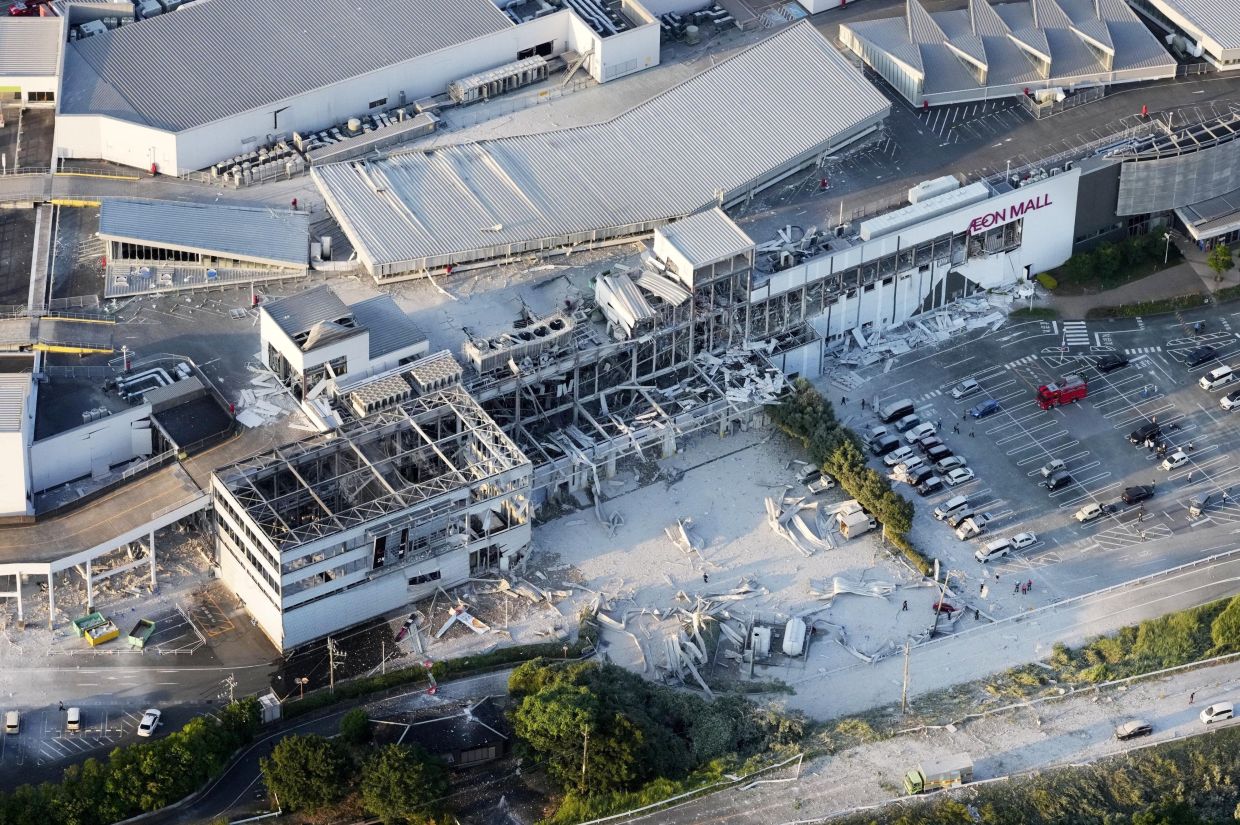
A powerful earthquake measuring 7.1 on the magnitude scale rocked southwestern Japan on Tuesday afternoon, marking the most severe seismic event to strike the island nation since January 2024. According to the Japan Meteorological Agency, the tremor originated in Kumamoto Prefecture at a relatively shallow depth of approximately 10 kilometres and struck at 4.27 pm local time, unleashing destructive forces across a densely populated region.
The earthquake registered a maximum intensity of 7 on Japan's seismic scale in the municipalities of Uki and Hikawa within Kumamoto Prefecture, with surrounding areas experiencing upper 6 intensity tremors. This classification represents extreme shaking where individuals cannot maintain a standing position and may be forcibly lifted off the ground. The last time Japan recorded a seismic intensity of 7 was during the Noto Peninsula earthquake in January 2024, underscoring the rarity and severity of Tuesday's event for a nation accustomed to frequent seismic activity.
Emergency response teams mobilised quickly across the prefecture as reports of injuries began filtering in. The Uki Fire Department confirmed receipt of numerous emergency calls throughout the afternoon, indicating multiple casualties, though exact figures were not immediately available. Firefighters were simultaneously investigating a fire that broke out following the earthquake, adding another layer of complexity to the disaster response efforts. The dual challenge of managing injury victims while containing fire hazards demonstrated the compounded dangers posed by major seismic events in urban areas.
The earthquake's immediate impact extended to essential infrastructure, leaving approximately 48,000 households without power across Kumamoto Prefecture. The disruption to electricity supplies compounded challenges for residents and emergency services alike, particularly affecting hospitals, emergency shelters, and communication facilities that rely on consistent power. Local authorities and power companies worked to assess damage and restore services, though restoration timelines remained unclear in the aftermath of the disaster.
Transportation networks across the prefecture ground to a halt within minutes of the earthquake. All operational lines under JR Kyushu, encompassing both the region's high-speed bullet train services and conventional local rail networks, suspended operations as inspectors examined track integrity and structural safety. Aso Kumamoto Airport, a key regional hub, closed its runways at 4.40 pm local time with no immediate indication of when normal flight operations could resume. These transport disruptions isolated communities and impeded the movement of rescue personnel and medical supplies.
While tsunami warnings were initially issued for the Ariake and Yatsushiro seas in response to the seismic event, these advisories were subsequently lifted after monitoring indicated no significant wave activity. Officials nevertheless urged residents and beach-goers to vacate coastal areas and avoid returning to the water as a precautionary measure, reflecting Japan's rigorous approach to tsunami safety developed through decades of experience with devastating coastal earthquakes.
Nuclear facilities in the broader region remained secure following comprehensive inspections by plant operators. Kyushu Electric Power confirmed that both the Sendai nuclear power plant in Kagoshima Prefecture and the Genkai nuclear power plant in Saga Prefecture registered no abnormalities despite the significant seismic stress. These assurances provided important relief to communities still bearing the psychological weight of the Fukushima disaster and heightening public sensitivity to nuclear safety during major earthquakes.
The tremor was felt across a considerable geographical footprint, with neighbouring Kagoshima Prefecture recording upper 5 intensity and both Fukuoka and Saga prefectures experiencing lower 5 intensity shaking. This widespread impact meant that disruptions rippled beyond Kumamoto, affecting transport connections, power grids, and public services across southern Honshu and Kyushu. The broader regional scope of the earthquake underscored its magnitude and the interconnected nature of Japan's critical infrastructure.
Japanese meteorological authorities issued urgent warnings emphasizing the heightened risk of secondary disasters in the earthquake's immediate aftermath. Officials cautioned residents about the potential for building collapses, particularly in structures damaged by the initial tremor, and warned of increased landslide hazards on hillsides destabilized by the shaking. Authorities advised the public to maintain heightened alertness over the following days, as follow-up earthquakes of comparable intensity remained a realistic possibility based on historical seismic patterns in the region.
Kumamoto Prefecture carries deep collective memory of seismic devastation from a decade earlier, when consecutive earthquakes measuring 6.5 and 7.3 magnitude struck the same region in 2016. That catastrophic sequence claimed 270 lives and caused widespread destruction across communities that were still in the process of recovery. The emergence of another major earthquake in the same prefecture raised concerns among residents and disaster management officials about whether the region's reconstruction efforts and reinforced building codes would prove adequate to withstand this latest seismic assault.
For Malaysia and the broader Southeast Asian region, Japan's earthquake response demonstrates the critical importance of earthquake preparedness in tectonically active zones. While Southeast Asia experiences fewer major earthquakes than Japan, countries including Indonesia and the Philippines sit along similar tectonic boundaries, making Japanese disaster management protocols and technological innovations relevant to regional planning. The rapid deployment of emergency services and nuclear safety protocols highlight international best practices worth examining as nations strengthen their own resilience frameworks.
The incident also underscores the cascading economic and logistical impacts of major seismic events on regional and international commerce. Disruptions to transportation networks, power supplies, and manufacturing facilities in one of Japan's prefectures can reverberate through regional supply chains affecting countries throughout Asia. The earthquake's interference with normal economic activity serves as a reminder of how natural disasters in major economies create ripple effects that extend far beyond the immediate impact zone.

