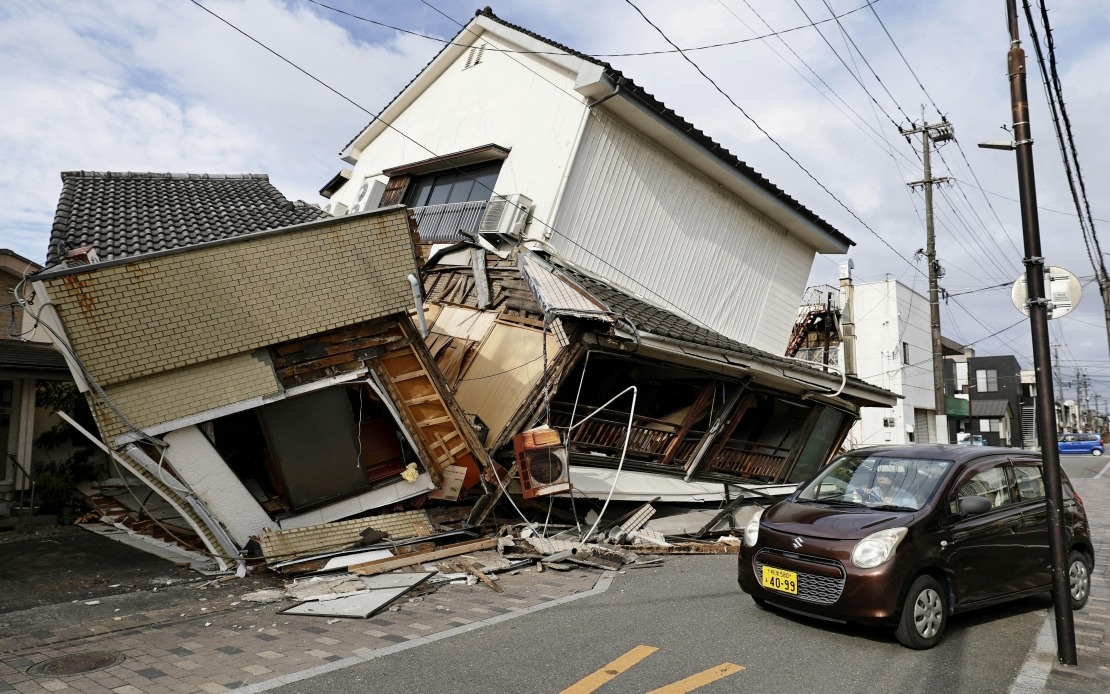
A devastating magnitude 7.1 earthquake that struck southwestern Japan's Kumamoto Prefecture on Tuesday afternoon has claimed at least 13 lives, Prime Minister Sanae Takaichi confirmed on Wednesday. The disaster has triggered a major response from Japanese authorities, with emergency personnel actively searching for additional missing individuals as rescue operations remain in full swing across the affected region.
The tremor, which occurred at 4:27 pm local time, registered the maximum level 7 on Japan's seismic intensity scale in several areas of Kumamoto, indicating extreme ground movement and structural damage. This maximum-level rating represents the highest classification on the Japanese scale and typically corresponds to severe destruction of buildings and infrastructure. The intensity of the shaking has compounded recovery challenges, with authorities now racing against time to locate survivors in the devastated areas.
The Tokyo Metropolitan Police have mobilized significant resources to assist in the search and rescue efforts. The force has dispatched at least one helicopter and a specialized eight-member emergency rescue team trained specifically for disaster response operations. These teams are working in coordination with local authorities and other agencies to systematically search through collapsed buildings and debris fields throughout Kumamoto Prefecture.
One particularly tragic incident occurred at a major shopping mall in Kashima, Kumamoto Prefecture, operated by the Aeon Group. An explosion rocked the facility following the initial earthquake, resulting in the confirmed deaths of two women and leaving one woman unresponsive. Five additional people sustained injuries in the incident. Approximately 200 individuals had been safely evacuated from the mall before its second floor collapsed, preventing what could have been a significantly higher casualty count at that single location.
The earthquake has severely disrupted transportation networks across the region, affecting millions of commuters and travelers. The Kyushu Shinkansen bullet train line, a crucial transportation artery linking major cities in southwestern Japan, remains completely suspended following the quake. Operator announcements have not yet indicated a timeline for service resumption, leaving passengers stranded and forcing alternative travel arrangements. Additionally, Japan Airlines Co. cancelled 11 flights while All Nippon Airways Co. cancelled two flights due to the earthquake's impact on airport operations and safety considerations.
Local transit services are slowly resuming operations with significant restrictions in place. The Kumamoto City Transportation Bureau announced that trams would return to service but only at reduced speeds as a precautionary measure. Authorities have warned that these services could be suspended immediately should another powerful earthquake strike the region, demonstrating the ongoing threat of aftershocks that typically follow major seismic events in Japan.
Infrastructure damage extends beyond transportation, with several thousand households experiencing power outages in the aftermath of the earthquake. Utility companies and local authorities are working to restore electricity to affected homes, though the scale of damage to power distribution networks suggests recovery will take considerable time. Business operations throughout the region have been severely disrupted, with numerous establishments choosing to remain closed as a precautionary measure while structural safety assessments are conducted.
For Malaysian readers and regional observers, this earthquake underscores the ongoing seismic vulnerability of Japan, which sits on the Pacific Ring of Fire—a geologically active zone responsible for approximately 90 percent of the world's earthquakes. While Japan possesses world-leading earthquake engineering standards and early warning systems that have saved countless lives, the recurring nature of such disasters reflects the immense natural forces at work beneath the region.
The incident also highlights the interconnectedness of modern supply chains and transportation networks in East Asia. Disruptions to Japan's rail and aviation infrastructure have implications beyond Japan's borders, affecting regional trade, tourism, and business operations throughout Southeast Asia. Companies with operations or supply chain links to Kumamoto Prefecture are likely experiencing delays and logistical challenges.
Japan's response to this disaster demonstrates the country's institutional preparedness for seismic emergencies, developed through decades of experience with frequent earthquakes. The rapid deployment of rescue teams, coordinated government response from the Prime Minister's office, and established protocols for evacuation and emergency services all reflect an institutional memory shaped by previous major earthquakes including the devastating 1995 Kobe earthquake and the 2011 Tōhoku earthquake and tsunami.
The search and rescue phase typically remains most critical in the immediate aftermath of earthquakes, with the first 72 hours considered most crucial for locating survivors beneath rubble. As Kumamoto Prefecture enters this critical window, rescue teams will be working around the clock to maximize recovery rates. The physical and emotional toll on both survivors and rescue workers will be substantial, requiring significant mental health and social support resources in the coming weeks and months.

