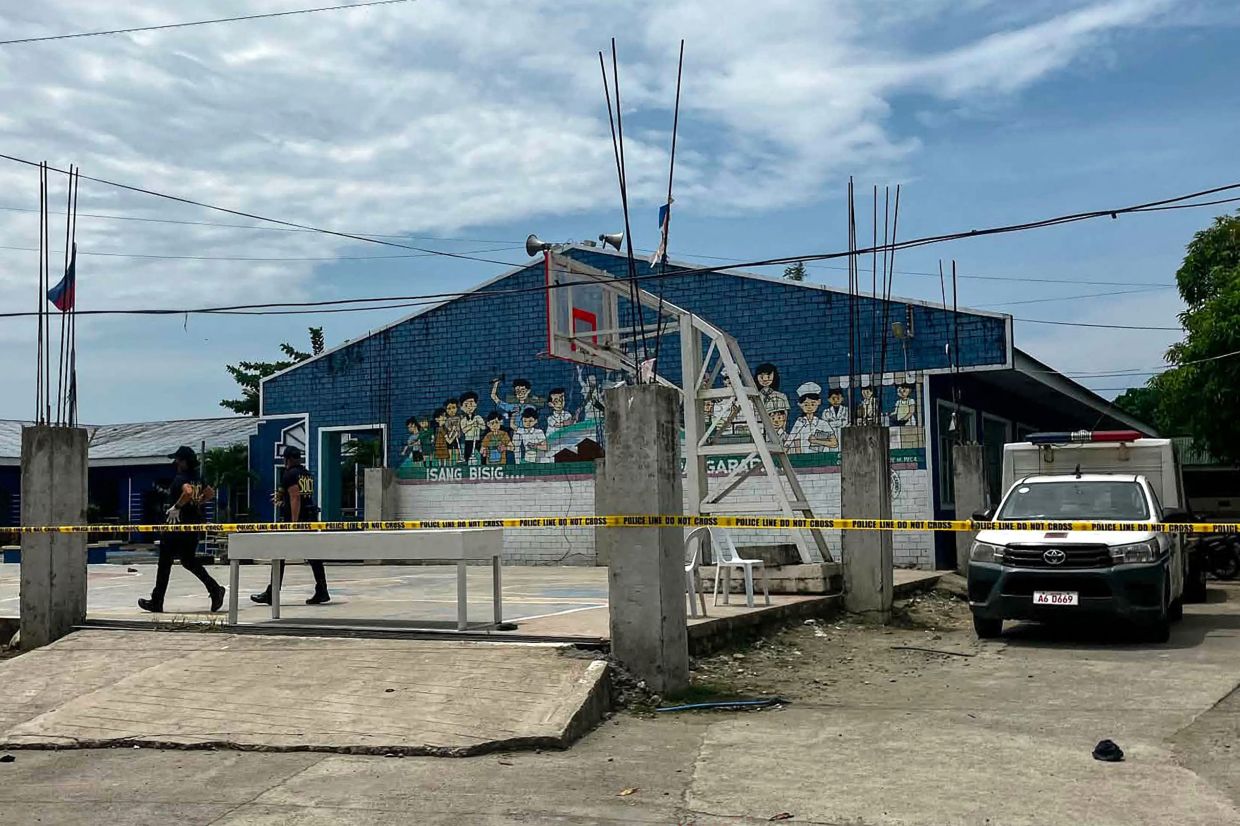
A shooting at San Jose National High School in Tacloban city in the central Philippines on Monday morning left three students dead and seven others injured, shocking a nation where such incidents remain uncommon despite widespread gun violence. The two perpetrators, aged 14 and 15, were swiftly apprehended following the midday rampage at the government-run school, which serves more than 1,500 students across its campus. Regional police chief Brigadier General Jason Capoy confirmed that both the suspects and all victims were students attending the institution, marking a significant security failure at an educational facility.
The circumstances of the attack revealed alarming gaps in school safety protocols. According to Capoy's account, the assailants exploited minimal security measures to bring firearms onto campus—one had obtained a 9 mm pistol from his aunt, a police officer now under investigation, while the other carried a calibre 38 revolver. The school's vulnerability became apparent when authorities discovered that only a single security guard was stationed to monitor multiple entry and exit points. This skeletal security presence allowed the armed teenagers to proceed undetected into the facility and onto school grounds where students were gathered.
The shooting unfolded in brutal fashion as the suspects targeted multiple locations within the school. After firing in an initial classroom, students fled in panic, prompting the assailants to pursue some victims into a second room where further gunfire erupted. Police recovered at least forty shell casings from the scene, underscoring the intensity and sustained nature of the attack. The majority of those killed and wounded were female students, according to police statements, though the specific identities and circumstances surrounding individual victims remained under investigation.
Harrowing video footage that circulated online captured the terror gripping the school community. In one recording, students huddled beneath desks in a locked classroom could be heard screaming and crying as gunshots rang out nearby, with some desperately calling their mothers. Other videos documented the chaotic evacuation, showing visibly frightened students streaming from the campus, many clinging to one another for support and comfort amid the confusion and fear.
Initial questioning of the two suspects pointed to bullying as a potential motive for the violence. Capoy disclosed that both teenagers claimed they had experienced harassment at school, though he declined to provide specific details about the nature or extent of such mistreatment. Neither suspect possessed a prior criminal record, suggesting this was not part of an established pattern of criminal behaviour. The revelation has sparked broader concerns about the psychological toll that bullying can inflict on young people and whether school administrators had been adequately aware of or responsive to the alleged incidents.
The arrest sequence highlighted further security weaknesses at the institution. One suspect was apprehended on school grounds immediately after the shooting concluded, but the second managed to flee and initially evaded capture by hiding in a nearby residential house. Police located him only after residents in the area alerted authorities to his presence, demonstrating that even after the violence stopped, securing all suspects required community vigilance and cooperation. The incident unfolded with such rapidity that coordinated law enforcement response could not have prevented the tragedy once the shooting commenced.
President Ferdinand Marcos Jr. responded swiftly to the tragedy by ordering a comprehensive investigation and directing law enforcement to enhance security measures across all schools, workplaces, and public gathering spaces. Communications Undersecretary Claire Castro conveyed the president's deep concern about the incident, noting that such violence inevitably causes profound distress among parents and the broader community. The presidential directive signalled that security shortcomings revealed by this attack would not be overlooked and that systemic measures to prevent future incidents would be prioritized at the highest government level.
The legal treatment of the young suspects presents significant complexities under Philippine law. Both teenagers are expected to be transferred to government welfare officers upon completion of the police investigation. Crucially, the 14-year-old falls below the criminal liability threshold established by a 2006 Philippine law that sets fifteen years as the minimum age for criminal prosecution of minors. Even the 15-year-old can only be held criminally responsible if authorities determine with certainty that the suspect fully understood the criminal nature of their actions and comprehended the consequences of those acts. This legal framework means that despite the gravity of the attack, the suspects may face juvenile rather than adult court proceedings.
Gun violence remains deeply entrenched in Philippine society, with estimates suggesting millions of unlicensed firearms circulate throughout the country, many obtained through corrupt police and military officials or smuggling networks. However, school shootings represent a distinct category of incident that occurs with far less frequency than other forms of armed violence. The 2022 attack at an upscale university in Metro Manila, in which a gunman killed three people including a former municipal mayor with whom he had a longstanding personal dispute, represented a previous high-profile instance of campus violence. That the Tacloban incident occurred just two years later suggests that institutional safeguards against such attacks remain inadequate across the educational system.
For Southeast Asian observers, the incident underscores challenges that extend beyond the Philippines, as urbanization, youth mental health pressures, and firearm accessibility create dangerous combinations in the region. Malaysia and other neighbouring nations have generally maintained stricter licensing controls, but the ease with which a serving police officer could make a firearm available to a teenager raises questions about enforcement and oversight mechanisms throughout the region. The apparent role of bullying as a motivating factor also reflects broader concerns about social pressures on young people in rapidly developing societies where competitive educational environments and social hierarchies create psychological stress.

